
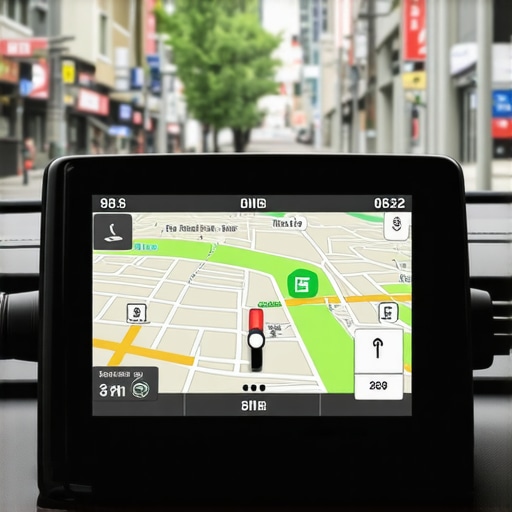
Targeting Hyperlocal Traffic to Reach Stranded Drivers Faster Than the Competition
Imagine it is 2:00 AM. A driver pulls over on a deserted stretch of road, smoke billowing from the engine, or perhaps they realize with a sinking heart that their keys are dangling in the ignition of a locked car. In this moment of high-stress urgency, they don’t open a laptop to conduct extensive market research. They pull out a smartphone, type “towing near me” or “emergency locksmith,” and click the first credible result that appears in the Google Map Pack.
For service-based businesses like locksmiths, towing companies, and roadside assistance providers, this scenario represents the ultimate “moment of truth.” If you aren’t visible in that immediate 3-5 mile radius, you don’t exist to that customer. This is the essence of hyperlocal SEO. It is no longer enough to rank for a city-wide term; you must dominate the specific intersections and neighborhoods where your customers are stranded. To achieve this, a robust google business profile seo strategy is the engine that drives your lead generation.
The Psychology of the Stranded Driver: Speed of Discovery Equals Revenue
When a driver is stranded, their psychology shifts from “browsing” to “buying” in a matter of seconds. They are looking for three specific things: proximity (how fast can you get here?), credibility (will you actually show up and do the job?), and ease of contact (can I call you with one tap?).
Hyperlocal SEO is the art of being visible precisely when and where these emergencies occur. For roadside assistance industries, mobile-first visibility is not just a suggestion – it is a mandatory requirement for survival. Data suggests that over 80% of emergency service searches happen on mobile devices, and the vast majority of those clicks go to the top three results in the Google Maps interface. If you are not in that “Map Pack,” you are losing the race to a competitor who has optimized their profile for hyperlocal intent.
The 2026 Local Ranking Algorithm Breakdown
As we navigate the SEO landscape of 2026, the algorithm governing local search has become significantly more sophisticated. While the core pillars remain, the weight assigned to various factors has shifted to prioritize the user’s immediate context. To reach stranded drivers faster, you must understand how Google balances the “Proximity, Relevance, and Prominence” triad.
Historically, proximity was the king of local search. If you were the closest business to the user, you often won the top spot. However, Google’s 2025 and 2026 updates have refined this. Today, Google Business Profile (GBP) signals account for approximately 30-35% of the total ranking weight. Proximity still holds a significant 20-25%, but it is now heavily balanced by relevance (how well your profile matches the specific query) and prominence (your brand’s overall authority and review history).
Google now uses advanced AI to determine if a business is truly capable of serving a specific hyperlocal area. It looks for “behavioral signals” – such as how many people in a specific neighborhood click for directions or call your business – to validate your relevance. If you want to outperform the competition, you cannot rely on proximity alone; you must build relevance through localized content and high-quality profile signals.
Turning Your GBP into a “Call Magnet”
Your Google Business Profile is your digital storefront. For a stranded driver, it is the only thing they see before deciding to spend money with you. To rank higher on google maps, you need more than just a verified listing; you need a profile optimized for high-conversion emergency calls.
The GBP Optimization Checklist for Emergency Services:
- Primary Category Selection: This is the most critical technical setting. A locksmith should ensure “Locksmith” is the primary category, while a towing company must lead with “Towing Service.” Adding secondary categories like “Roadside Assistance” helps capture broader queries, but your primary category must align with the most common emergency search terms.
- High-Resolution Branded Visuals: Stranded drivers are looking for signs of legitimacy. Upload photos of your branded trucks, your technicians in uniform, and the specialized tools you use. This builds immediate trust and differentiates you from “ghost” listings or lead-gen scams.
- The “Tap-to-Call” Button: Ensure your phone number is primary and verified. In the mobile Map Pack, the “Call” button is the most prominent CTA. Any friction here – such as a non-functional number or a complex IVR system – will result in a lost lead.
- Attributes and Hours: If you offer 24/7 service, this must be explicitly stated. Google highlights “Open 24 hours” in green text for emergency searches, which is a massive psychological trigger for someone stranded at night.
For more detailed tactics, check out these 7 Essential Google Business Profile Tips for Local Locksmiths in 2026 to stay ahead of the curve.
Hyperlocal Content & Service Area Pages
A common challenge for towing and locksmith businesses is ranking in neighborhoods where they don’t have a physical office. If your shop is in the city center, how do you reach the driver stranded in a suburb 10 miles away? The answer lies in Service Area Pages (SAPs) and neighborhood-specific content.
To win these calls, you must create pages that are “hyper-focused” on specific local landmarks, intersections, and neighborhood names. Instead of a generic “Locksmith in Chicago” page, create a page for “Emergency Locksmith near O’Hare Airport” or “Car Unlocking Services in Lincoln Park.” Mention specific landmarks like local parks, shopping centers, or major highway exits (e.g., “Serving drivers near the I-90 and I-94 interchange”).
Furthermore, creating service area pages that win emergency lockout calls requires more than just changing the city name. You need local relevance. This is where neighborhood-specific backlinks come into play. A link from a local neighborhood association blog or a community news site carries more weight in hyperlocal SEO than a generic link from a national directory. It signals to Google that you are an active, trusted member of that specific micro-community.
Trust Signals and Review Velocity
In the emergency service industry, the “velocity” of your reviews is just as important as your overall star rating. Review velocity refers to how frequently you receive new reviews. A stranded driver looking at a profile with 500 reviews – the last of which was posted six months ago – will wonder if the business is still operating. Conversely, a profile with 50 reviews, five of which were posted in the last 48 hours, signals reliability and active service.
The 2026 algorithm updates prioritize these behavioral and fresh signals. Google wants to see that people are interacting with your business *now*. Encourage your technicians to ask for a review immediately after a successful jump-start or lockout service. Mentioning the specific neighborhood in the review (e.g., “Fastest towing service in Brooklyn Heights!”) further boosts your hyperlocal relevance.
Remember, the goal is to convert the view into a lead. When a driver sees a “Review from 2 hours ago” stating that you arrived in 15 minutes, the competitive battle is won. They won’t even look at the second result.
Auditing and Automation Tools
Managing hyperlocal SEO across multiple neighborhoods or cities is a complex task that requires the right tech stack. You cannot manually check your rankings at every intersection. You need local seo tools that provide a “grid-based” view of your visibility. These tools show you exactly where your ranking drops off, allowing you to focus your optimization efforts on the specific zip codes where you are losing ground.
Using a dedicated google maps lead generation tools suite allows you to track not just rankings, but actual conversions. Are people clicking the call button, or are they just viewing your photos? By using local seo software, you can automate the monitoring of your GBP health, ensuring that your business information remains accurate and that you are notified the moment a competitor attempts to “map spam” your service area.
Conclusion: Dominating the Local Map Pack
Hyperlocal dominance is not a “set it and forget it” strategy. It is a continuous process of optimizing for the immediate needs of your community. In the high-stakes world of emergency roadside services, the difference between a thriving business and a struggling one often comes down to a few blocks of visibility on a digital map.
By focusing on the psychology of the stranded driver, mastering the 2026 algorithm shifts, and utilizing neighborhood-specific content, you can ensure that your business is the first one called when disaster strikes. Don’t let your competitors capture the leads that should be yours. It is time to take a hard look at your current digital presence and identify the gaps that are costing you money.
Ready to see where you stand? Start by performing a brutally honest audit of your Google Business Profile today. The drivers in your city are waiting – make sure they can find you.