
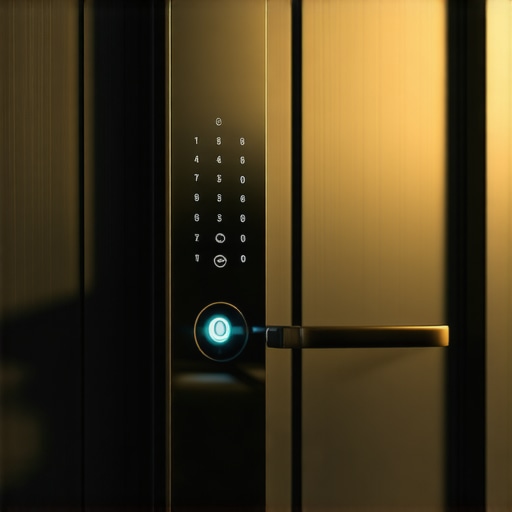
The Illusion of Modern Security
I have spent over two decades at a bench, surrounded by the smell of brass shavings and the tactile resistance of high-tension springs. Most people see a lock and think of a key. I see a physics problem involving tolerances, shear lines, and metallurgical durability. In the world of security, there is a dangerous gap between what a product marketing team tells you and what a master locksmith knows to be true. As we move toward 2026, the trends in smart home access are shifting from simple connectivity to integrated ecosystems, but the physical fundamentals remain the same. A burglar does not care if your lock has a sleek touchscreen if the internal bolt is made of cheap zinc that snaps with a single blow from a hammer.
The Reality of the $29 Service Call
Before we analyze the future, you need to understand the present. A lady came into my shop crying because a scammer drilled her lock and charged her nearly six hundred dollars for a fifteen-minute job. She had called a number from an ad promising a twenty-nine-dollar service fee. This is the classic ‘Trunk Slammer’ tactic. They arrive in an unmarked car, tell you the lock is ‘unpickable high security’ (it was a basic Kwikset), and proceed to destroy the hardware with a drill. They then install the cheapest, most porous pot-metal deadbolt they have in their trunk and demand an astronomical price. This experience is why I advocate for education over convenience. Knowing how to choose a reliable locksmith near me starts with looking for a physical address, a business license, and a tech who carries a Lishi tool instead of a power drill.
“Security is always a trade-off between convenience and protection.” – Industry Axiom
Trend 1: Sustainable Eco-Friendly Locks for Homes
By 2026, the industry is moving toward sustainable eco-friendly locks for homes. This isn’t just about ‘green’ marketing; it is about the move away from disposable hardware. For years, the market has been flooded with ‘Big Box’ hardware that is designed to be thrown away after three years of use. These locks use plastic internal actuators and thin springs that fatigue under the slightest environmental stress. The new trend focuses on high-grade recycled brass and stainless steel components that can be serviced and repaired rather than replaced. A sustainable lock is one that lasts fifty years because it was built with the physics of wear in mind. We are seeing a return to modular designs where the electronic brain can be upgraded while the heavy-duty mechanical chassis stays on the door. This reduces electronic waste and ensures that your physical barrier remains solid even as software evolves.
Trend 2: Multi-Family Building Lock Rekeying and Digital Credentials
The management of multi-family buildings is undergoing a massive shift. Historically, rekeying an entire apartment complex meant hours of manual labor, handling master wafers and pinning kits. The problem with traditional master keying is that every master wafer added to a cylinder creates additional shear lines. This makes the lock exponentially easier to pick or bump because there are more ‘correct’ positions for the pins to reach. In 2026, multi-family building lock rekeying will rely on digital credentials. This allows property managers to ‘rekey’ a door by simply revoking a digital token. However, as a locksmith, I warn that the physical cylinder must still be a high-security grade to prevent manual bypass. The trend is moving toward ‘Offline’ smart locks that don’t rely on the building’s Wi-Fi but use encrypted Bluetooth or NFC, ensuring that even if the internet goes down, the tenants are not locked out of their homes.
Trend 3: Touchless Entry Systems for Offices
In the commercial sector, the demand for touchless entry systems for offices is skyrocketing. We are moving past the era of the physical keypad, which is a vector for both germs and ‘shoulder surfing’ where someone watches you type your code. The 2026 standard involves Ultra-Wideband (UWB) technology. This allows the door to detect an authorized smartphone or fob within a precise radius and unlock automatically as the person approaches. From a technical standpoint, this requires a robust electric strike or a motorized latch retractor. The physics of these systems are complex. The door must be perfectly hung; if there is even an eighth of an inch of ‘binding’ on the bolt, the motor will burn out trying to overcome the friction. This is why professional installation is non-negotiable for commercial access control.
“A lock is only as strong as the door frame it is mounted to.” – Security Manual
Trend 4: High Security Locks vs Standard Locks Comparison
The debate between high security locks vs standard locks comparison remains a cornerstone of residential safety. A standard lock you buy at a hardware store is typically an ANSI Grade 3. It has wide tolerances, meaning the gap between the pin and the cylinder wall is large. This makes it easy for a beginner to use a rake pick and open the door in seconds. High-security locks, like those from Medeco or Mul-T-Lock, are ANSI Grade 1. They feature hardened steel inserts to break drill bits, and they use biaxial or telescopic pinning systems that require the pins to be lifted and rotated simultaneously. When you look at how to upgrade your home security on a budget, don’t just buy a new smart lock. Start by replacing your strike plate screws. Most doors use half-inch screws that barely grab the wood trim. I tell my apprentices to use three-inch hardened steel screws that anchor directly into the wall studs. This simple change can be the difference between a door that stays shut and one that is kicked in with a single foot.
Trend 5: Unified Automotive and Home Security
We are seeing an intersection between car remote programming tutorials and home access. In 2026, the same secure enclave on your phone that stores your EV car key fob replacement costs 2026 data will also manage your home deadbolt. Modern EVs use sophisticated rolling codes and encrypted handshakes to prevent relay attacks. This technology is finally trickling down to home hardware. However, this level of tech comes with a cost. If you lose your digital access, you can’t just call a guy with a slim jim. You need a technician who understands transponders and EEPROM programming. This is why auto lockout services are becoming more specialized; it is no longer about prying the window to pull a lock peg, but about interfacing with the vehicle’s ECU to authorize a new key.
The Technical Reality of the Smart Lock Install
When you are looking at the benefits of installing smart locks for home security, remember that the electronics are only the ‘key’ part of the equation. The ‘lock’ part is still a piece of metal sliding into a hole. If your door is misaligned due to humidity or house settling, the smart lock will fail. In many regions, the humidity swells wood doors, causing the bolt to rub against the strike plate. A human can pull the door tight to turn the key, but a small battery-powered motor cannot. My advice for anyone looking for the future of access is to prioritize the mechanical integrity first. Ensure you have a solid wood or metal door, a reinforced frame, and a high-security cylinder. Only then should you add the layers of smart technology. Security is a layered system of physics and logic. If you ignore the physics, the logic won’t save you.