
The Psychology of the Entry Point: Why Most Locks Fail Before the First Pick
Most homeowners look at a shiny new smart lock and see convenience. I look at it and see a physics problem involving torque, shear lines, and material fatigue. I have spent 25 years behind a workbench, and I can tell you that a burglar does not care about your fancy app; they care about the weakest link in your door assembly. Usually, that is the strike plate or a cylinder made of cheap zinc that snaps like a dry twig under a pair of channel locks. When we talk about the most reliable smart deadbolts with biometric entry, we are not just talking about software. We are talking about the mechanical integrity of the bolt and the reliability of the sensor in 100-degree humidity or a freezing rainstorm.
The Scam Victim: A Lesson in Hardware Integrity
A lady came into my shop crying because a scammer drilled her high-end smart lock and charged her six hundred dollars for a replacement that was basically a plastic toy. She had a lockout because the batteries died, and the ‘technician’ she found online told her it was ‘undrillable’ and ‘unpickable,’ then proceeded to destroy her door frame with a hammer and a drill. This is what happens when you prioritize the ‘smart’ over the ‘lock.’ A real professional understands that a biometric lock must have a physical override that is just as secure as the fingerprint scanner. If the cylinder is a five-pin cheapie with no security pins, your thousand-dollar smart system is a joke.
“Security is always a trade-off between convenience and protection.” – Industry Axiom
Mechanism Zooming: The Physics of Biometric Reliability
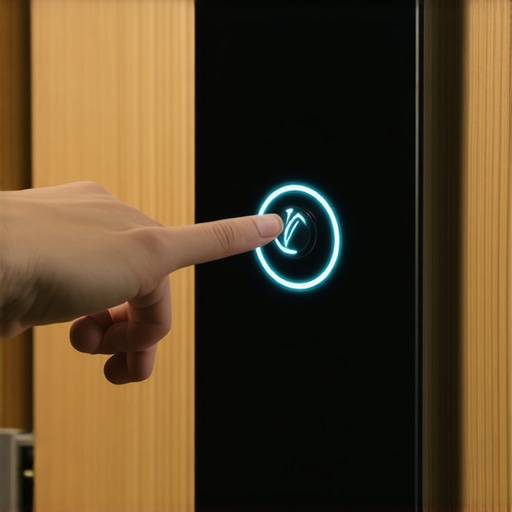
When you press your thumb against a biometric sensor, several things happen in a fraction of a second. Most high-end units use capacitive sensors. These don’t just take a picture of your finger; they measure the electrical charge between your skin and the sensor plate. This prevents the old ‘photograph of a fingerprint’ trick. However, the reliability issue often lies in the motorized bolt. In a standard deadbolt, your hand provides the torque to move the bolt. In a smart lock, a tiny DC motor and a series of plastic or metal gears do the work. If your door is misaligned by even a sixteenth of an inch, the motor will bind. This is why I always tell my apprentices: a smart lock is only as good as the door’s hang.
High Security Locks vs Standard Locks: The Metallurgy
Standard locks from big-box stores are typically made of zinc alloys or thin brass. High-security locks, especially those built for door reinforcement for security, use hardened steel inserts and solid brass housings. When testing anti-pick locks for front doors 2026, we look for ‘Mushroom’ or ‘Spool’ pins. These are top pins with a narrow center that get caught on the shear line when a picker tries to lift them, giving a ‘false set.’ In a smart deadbolt, the cylinder is often overlooked. You want a lock that utilizes a restricted keyway if possible, ensuring that no one can make a copy of your backup key at a grocery store kiosk. Commercial restricted keyways are the gold standard because they provide true key control.
Access Control for Co-working Spaces and Commercial Needs
If you are looking at access control for co-working spaces, the requirements change. You need a system that can handle hundreds of cycles a day without the gear train stripping. This is where electronic gate lock systems and panic bar installation and repair for commercial buildings come into play. A residential smart lock will fail in weeks in a high-traffic office environment. You need Grade 1 hardware. The American National Standards Institute (ANSI) grades hardware from 1 to 3, with Grade 1 being the toughest. Most residential locks are Grade 3. I never recommend anything less than Grade 2 for a front door.
“The strength of a lock is determined by the resistance it offers to forced entry and the complexity of its internal mechanism.” – ANSI/BHMA Standard 156.36
The App-Controlled Door Locks Security Risks
Every time you add a chip to a lock, you add a vulnerability. App-controlled door locks security risks include everything from ‘replay attacks’ to simple firmware bugs that can leave the bolt retracted. This is why I prefer biometric systems that store the fingerprint data locally on the device rather than in the cloud. You want a ‘local-first’ architecture. When we tested the best residential door locks for safety and durability, the ones that stayed operational during a Wi-Fi outage were the clear winners. If your lock needs the internet to let you into your own house, you don’t own the lock; the server provider does.
Installation Mastery: Beyond the Screwdriver
Installing a biometric deadbolt requires more than a Phillips head screwdriver. You need to ensure the strike pocket is deep enough. If the bolt doesn’t fully extend, the ‘deadlocking’ feature won’t engage. This means a thief can ‘shim’ the bolt back with a piece of plastic. I always install three-inch screws through the strike plate into the wall stud. If you use the half-inch screws that come in the box, one good kick will rip the door frame apart. For those in unique situations, like a mobile locksmith for RVs and campers, weight and vibration resistance are the keys. A lock that works on a stationary house might rattle apart on a washboard road in the desert.
The Verdict on Smart Deadbolts
After decades of seeing what works and what fails, the most reliable smart deadbolts are those that combine a capacitive biometric sensor with a Grade 1 or 2 mechanical chassis. Look for locks with a physical key override that uses a high-security cylinder. Avoid anything that feels light or ‘hollow’ in your hand. Security is about mass and precision. If you are worried about the humidity in coastal areas or the dry heat of the southwest, ensure the electronics are IP65 rated. A deadbolt is a mechanical sentry; don’t let the ‘smart’ features distract you from the fact that its primary job is to stay closed when someone tries to force it open.