
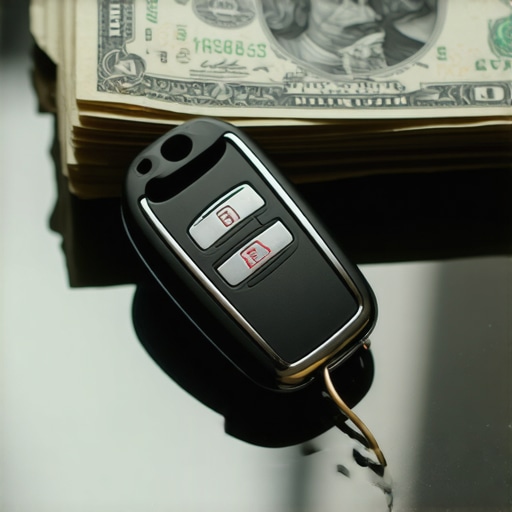
A lady came into my shop crying because a scammer drilled her lock and charged her eight hundred dollars for a five minute job that actually ruined her car’s computer system. She had found a twenty nine dollar service call ad online and thought she was being savvy. Instead, she ended up with a dead vehicle and a bill that tripled the cost of a legitimate repair. This is the reality of the automotive security world in 2026. As a locksmith with over twenty five years at the bench, I see this tragedy play out weekly. The hardware has changed from simple brass wafers to encrypted silicon, but the scams remain as old as time. When we discuss the real cost of car key duplication in 2026, we are not just talking about a piece of metal. We are talking about the high stakes physics of cryptographic handshakes and precision engineering.
The Anatomy of a Modern Key: Mechanism Zooming
To understand the price, you have to understand the internal physics of the device in your pocket. A modern car key is a dual component system consisting of a physical blade or proximity chip and an electronic transponder. Inside an EV car key fob, there is a printed circuit board containing a microchip, an antenna coil, and a battery. When you press a button or simply stand near your vehicle, the car sends out a low frequency signal. The antenna coil in the fob picks up this energy through induction and powers the chip just enough to broadcast a response. This response is not a simple password. It is a rolling code generated by a complex algorithm. If the vehicle and the fob do not agree on the next number in the sequence, the engine remains an expensive paperweight. The sheer level of 128 bit encryption used in 2026 means that duplication requires specialized diagnostic computers that must maintain a constant, paid connection to the manufacturer’s secure servers. This is why EV car key fob replacement costs 2026 have stabilized at a higher tier than older models.
“Security is always a trade-off between convenience and protection.” – Industry Axiom
When I perform a residential lock cylinder replacement, I am aligning pins and springs to a shear line. The physics are tactile. In the automotive world, the shear line is digital. If the software handshake fails, the physical cut of the key is irrelevant. For those seeking a locksmith for vintage car keys, the process is different. We go back to the basics of impressioning, where I smoke a blank with a candle and turn it in the lock to see where the wafers leave marks. It is a slow, methodical art that modern trunk slammers cannot perform because they do not understand the metallurgy of brass vs zinc. They only know how to use a drill, which is why they destroy locks instead of opening them.
The Scam Buster: Tools of the Trade
A real locksmith uses surgical tools, not demolition equipment. For EV keyless entry troubleshooting, I utilize an oscilloscope to check the signal frequency and a Lishi pick to decode the physical lock wafers without ever pulling the handle. A Lishi tool is a masterpiece of engineering that allows me to feel the resistance of each individual spring and determine the height of every wafer in the cylinder. A scammer will tell you the lock is high security and must be drilled. That is a lie. Ninety nine percent of automotive locks can be decoded without damage by a technician with the right training. When you see a technician reach for a power tool first, you are looking at a scammer who lacks the intellectual property to do the job right. They bypass the security because they do not have the equipment to communicate with it. This is particularly dangerous for EV charging station lock security, where a forced entry can short out high voltage components.
The Cost Breakdown: Where the Money Goes
People often ask why they should pay two hundred dollars for a key that looks like a thirty dollar part from an online marketplace. The answer lies in the material science and the software. Cheap aftermarket fobs often use low grade solder and inferior capacitors that fail after a few months of vibration in a pocket. Moreover, the chips in those budget keys are often clones that cannot handle the rolling code updates of a modern ECU. When I provide a key, I am providing an OEM or high tier aftermarket part with a warranty. I am also paying for the software licenses. In 2026, a legitimate shop spends thousands of dollars annually on subscriptions to NASTF and other security clearinghouses to ensure we can legally and safely access your car’s computer.
“The strength of a system is only as good as its weakest link, which is often the human element.” – Security Manual 101
. If you try to save fifty dollars by using an unvetted mobile tech, you are risking a three thousand dollar Body Control Module. We see this often in business access control audits 2026 as well. Low cost hardware leads to high cost failures.
Maintenance and Prevention
To avoid these costs, maintenance is key. Many people think they should use WD-40 in a sticky lock. Stop. That is a death sentence for precision pins. It attracts dust and creates a grinding paste that wears down the brass. Use a dry synthetic lubricant or a high quality PTFE spray. This is especially true for weatherproof outdoor locks reviews you might read; even the best locks need the right lubrication to survive the humidity and salt air. If you are looking into budget home security upgrades 2026, start with your strike plates and long screws before you jump into expensive electronics. For car keys, always have a spare. The cost of duplicating a working key is always half the cost of generating a key from a total loss situation. When a car has no working keys, we have to perform a full system reset, which is time intensive and requires higher level permissions. Security involves trust, not just metal. Know your local locksmith, visit their shop, and ensure they have a bench and a lathe. If they only work out of a trunk and have no physical address, you are gambling with your security.