
The 3 AM Signal Ghost: A Locksmith’s Forensic Report
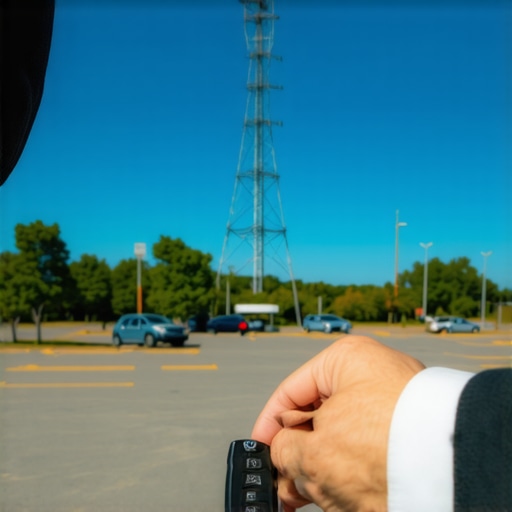
I once had a customer call me at 3 AM because his high-end German sedan was sitting dead in an airport parking lot, right under a massive array of cellular transmitters. The man was exhausted, the rain was coming down in sheets, and he was convinced his car had been hacked or the battery had suffered a catastrophic failure. I drove out there, not with a jump box, but with a piece of specialized kit designed to sniff out radio frequency interference. When I pulled up, my frequency analyzer spiked so hard it nearly clipped the audio. The car wasn’t broken. The key fob wasn’t dead. The car was simply stone-deaf because of the invisible wall of electromagnetic noise being pumped out by those towers. This is the reality of the 2026 security landscape, where the physics of radio waves and the physics of physical brass pins are colliding in ways that leave the average consumer stranded and frustrated.
“Security is always a trade-off between convenience and protection.” – Industry Axiom
The Anatomy of RF Interference: Why Your Car Goes Deaf
To understand why a cell tower kills your key fob, you have to look at the superheterodyne receiver tucked inside your vehicle’s Body Control Module. Most automotive key fobs in North America operate on the 315 MHz frequency, while European models often lean on 433.92 MHz. These are low-power, short-range signals. When you stand near a high-output cellular array or a massive municipal microwave link, those towers are pumping out signals at much higher wattages. Even though they are on different frequencies, the sheer power of the ‘noise floor’ creates a condition called desensitization. Think of it like trying to hear a whisper at a heavy metal concert. The whisper is your fob; the concert is the cell tower. In 2026, as we push more data through the air for 5G and 6G infrastructure, this problem is only getting worse for 24/7 mobile locksmith for apartments and commuters alike.
The Mechanism Zoom: Inside the Digital and Physical Lock
When you press that button, a rolling code is generated. This isn’t just a simple ‘open sesame’ command. It is a cryptographic packet that includes a sync counter. If the car’s receiver is being bombarded by RF noise, it misses the packet. If you press the button too many times away from the car, the sync counter gets out of whack. This is where the cost of hiring a professional locksmith in 2026 becomes a factor. A real tech doesn’t just ‘slim jim’ a door anymore. We use Lishi tools to pick the wafer tumbler lock by feeling the individual resistance of each stainless steel leaf. A wafer tumbler in a car door is a delicate assembly. You have a series of flat brass or stainless steel plates held under tension by tiny springs. If you use a ‘trunk slammer’ locksmith who tries to drill your door, you are looking at a repair bill in the thousands. A professional understands the shear line of those wafers and can decode the mechanical bitting to get you back in without a single scratch.
Commercial Security and Panic Hardware for Office Buildings 2026
The problem of interference and mechanical failure isn’t limited to cars. I am seeing a massive uptick in requests for business access control audits 2026 because office buildings are becoming Faraday cages of interference. When we talk about panic hardware for office buildings 2026, we are looking at the intersection of life safety and security. A panic bar, or ‘exit device,’ must allow free egress regardless of the electronic state of the door. The internal mechanism of a high-quality panic bar involves a series of dogging actions and a star-wheel latch or a Pullman bolt. These components are often made of investment-cast stainless steel. Cheap hardware uses pot metal or zinc, which shears off after five thousand cycles. In a high-traffic office, you hit five thousand cycles in a month. This is why panic bar code compliance 2026 is so strict; the hardware must fail-safe to allow people out during a fire, even if the building’s smart system is fried by an electrical surge or RF interference.
“The strength of a system is determined by its weakest point of failure, often the human element or the cheapest alloy in the assembly.” – Security Manual 101
Master Key Systems for Hotels 2026: The Hidden Vulnerability
Hotels are another beast entirely. We are moving toward master key systems for hotels 2026 that utilize BLE (Bluetooth Low Energy) and NFC. But underneath every fancy electronic reader is usually a mechanical override, often a Small Format Interchangeable Core (SFIC). The physics of a master key system is a beautiful, dangerous thing. It relies on ‘master wafers’ inside the pin tumbler lock. By adding a third bit of metal between the driver pin and the key pin, you create two different shear lines. This allows a room key to work and a master key to work. However, the more master wafers you add, the more ‘ghost’ keys can potentially open that lock. This is why periodic audits are mandatory. You need to know how many keys are out there that can bypass your digital security. If your hotel’s electronic locks are failing near a cell tower, it is likely the NFC reader is being overwhelmed, forcing you back onto that mechanical master system which might not have been updated in a decade.
Rekeying vs Replacing Locks: Which is Better?
I get asked this every single day: should I rekey or replace? If you have a solid brass housing, like an older Schlage or Baldwin deadbolt, you should always rekey. Rekeying involves removing the cylinder, dumping the old pins, and installing new ones that match a different depth of cut on a new key blank. It is cost-effective and retains the high-quality housing. However, if you bought a budget smart lock starter kit from a big-box store, it is likely made of zinc or thin-gauge steel. In that case, replacing is better because the housing itself is the weak point. A professional deadbolt installation DIY vs pro debate usually ends when the homeowner realizes they didn’t use three-inch screws to anchor the strike plate into the jack stud. A deadbolt is only as strong as the wood behind it. If you are just screwing into the decorative trim, a ten-year-old can kick your door in with one try.
The 2026 Landscape of Professional Locksmithing
As we move further into 2026, the job of a locksmith is becoming half-mechanic and half-RF engineer. Whether it is dealing with a car that won’t start because of a 5G tower or installing panic bar code compliance 2026 hardware in a new skyscraper, the principles remain the same. You cannot ignore the physics of the materials. If you are looking for a 24/7 mobile locksmith for apartments, make sure they aren’t coming at you with a drill first. A real pro will check the frequency, look at the shear line, and understand the metallurgy of the lock. If your key fob stops working, try holding it against your chin to use your skull as an antenna, or better yet, look for the hidden mechanical key slot that every car manufacturer is required to provide. Don’t let a bit of radio noise turn into a thousand-dollar mistake. Security is about understanding the environment, not just buying the most expensive gadget on the shelf. Keep your pins lubricated with a PTFE-based spray, avoid the ‘trunk slammers’ who advertise twenty-dollar service calls, and always prioritize ANSI Grade 1 hardware for anything that protects your family or your business. That is the only way to ensure that when you turn the key, or press the button, the physics works in your favor instead of against you.