
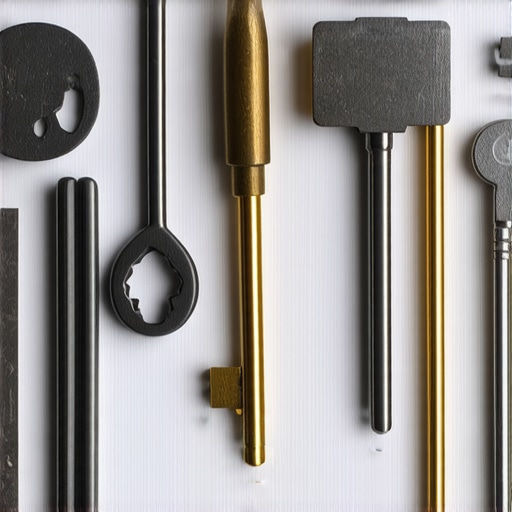
The Sound of Failure: Why Your Key Just Snapped
Every locksmith knows that distinct, hollow tink. It is the sound of metal fatigue meeting resistance. I teach my apprentices that if you have to force the key, you’ve already lost. That extra quarter-turn of torque does not open the door; it just ensures you will be standing on your porch for the next hour waiting for my van to pull up. When a key snaps inside a lock cylinder, it is rarely a fluke. Usually, it is a combination of a worn-out brass key and a lock plug that hasn’t seen a drop of proper lubricant in a decade. We are looking at a physics problem: the shear line is blocked, the pins are binding, and the weakest point of the metal blade simply gave up. If you are dealing with best residential door locks for safety and durability, the tolerances are so tight that even a microscopic burr can cause a seizure.
“Security is always a trade-off between convenience and protection.” – Industry Axiom
The Forensic Autopsy of a Broken Key
To understand how we get it out, you have to understand what is happening inside the bible of the lock. Inside that cylinder, you have top pins, bottom pins, and springs. When the key is inserted, it lifts those pins to the shear line. If the key is broken, half of it is still holding some of those pins at varying heights. If it snapped while you were turning, the plug is now stuck in an intermediate position, meaning the pins are physically trapped between the plug and the housing. This is a nightmare scenario for a DIYer but a standard Tuesday for a master locksmith. We don’t just reach in with tweezers. We have to analyze the material. Most modern keys are made of brass or nickel-silver, while cheaper big-box hardware uses pot metal that shears like butter. In 2026, we are seeing more hybrid systems where integrated smart lock hubs 2026 are connected to traditional deadbolts, making the mechanical extraction even more delicate because of the sensitive electronics nearby.
The Professional’s Toolkit: Beyond the Paperclip
When I arrive at a job, I see the scratches. Homeowners always try the paperclip or the steak knife first. All they do is shove the broken fragment deeper, wedging it behind the sixth pin where I can’t reach it. A real pro uses a specific set of extractors. Spiral extractors are my go-to. These look like miniature drill bits but with a much more aggressive, reverse-threaded bite. We slide them along the side of the key blade, where the milling provides a tiny gap, then twist and pull. Then there are saw-tooth extractors. These have tiny hooks that are designed to grab the bitting of the key. I also keep a set of surgical-grade hemostats and thin-profile pliers for when the fragment is flush with the face of the plug. For vintage car keys, we often have to use even thinner tools because those old wafers are incredibly fragile. Using a 24/7 mobile locksmith for apartments is often necessary because apartment hardware is usually high-traffic and low-maintenance, leading to frequent metal failure.
The Mechanical Reality of Extraction
The process starts with lubrication, but never that greasy spray everyone has in their garage. We use dry PTFE or graphite-based lubricants that won’t gum up the pins. Once the cylinder is slick, we use a tension wrench to ensure the plug is perfectly aligned. If the plug is even a fraction of a degree off, the pins will bind the fragment, and no amount of pulling will move it. I’ve seen ‘trunk slammers’ try to drill out a cylinder just because they didn’t know how to align the shear line. That is a scam. A professional should be able to extract a key from almost any residential keypad locks or standard deadbolts without destroying the lock. We look for the ‘sweet spot’ where the springs are exerting the least amount of pressure on the blade fragment. It is a game of millimeters and tactile feedback. You feel the extractor ‘bite’ into the brass, and then it is a slow, steady pull. No jerking, no force.
“High-security cylinders shall meet the requirements of ANSI/BHMA A156.30, ensuring resistance to forced entry and unauthorized key duplication.” – ANSI Security Standard
The Cost of Expertise in 2026
People ask about the cost of hiring a professional locksmith in 2026. You aren’t just paying for the five minutes it takes me to pull the key. You are paying for the 25 years I spent learning exactly where to hook that extractor. You are paying for the fact that I won’t tell you that you need a whole new $300 lockset. In the current market, a standard emergency extraction usually runs between $150 and $250. This price reflects the specialized tools and the mobile overhead. If you have fire-rated panic hardware options on a commercial property, the price goes up because those mechanisms are far more complex and require specific certifications to service. For businesses, we often integrate this with business key management software to track why the failure happened. Was it a duplicated key that was out of spec? Was the door closer misaligned, forcing the employee to pull on the key to latch the door? We solve the root cause, not just the symptom.
Smart Locks and Future-Proofing
We are seeing a massive shift toward smart home security integration 2026. Even these systems have mechanical overrides. Whether it is smart locks for pet doors or high-end residential entries, there is almost always a physical keyway as a fail-safe. And guess what? Those keyways are often the cheapest part of the smart lock. They use low-grade pins that are prone to corrosion. I recommend my customers look for locks with ANSI Grade 1 ratings, which test for cycle counts in the hundreds of thousands. If your lock feels ‘crunchy’ when you turn the key, that is the metal-on-metal screaming for help. Don’t wait for it to snap. A quick service call to clean and shim the cylinder is a lot cheaper than a 3 AM emergency lockout in the freezing rain. Keep your keys fresh, too. If the peaks on your key look rounded or shiny, the metal is thin. Get a new key cut from the code, not a copy of a copy, to ensure the geometry matches the factory specs of the lock.