
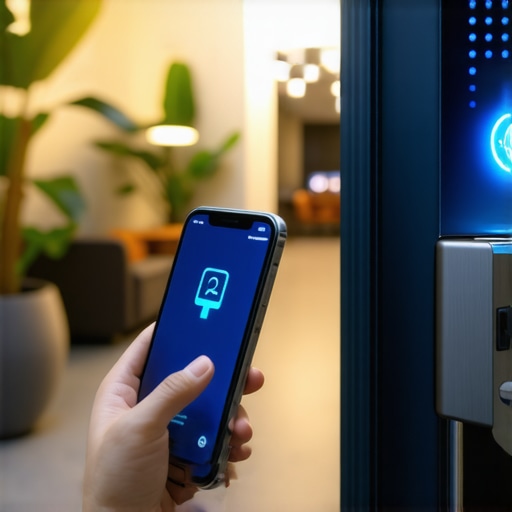
The Hard Truth About High-Traffic Access
I teach my apprentices that if you have to force the key, you have already lost. That lesson is not just about the physical metal hitting the pins, it is about understanding the physics of the entire door assembly. When I walk into a co-working hub and see a jar of 50 brass keys sitting behind a desk, I see a security failure waiting to happen. For 25 years, I have worked at a bench filing down wafers and setting spool pins, and I can tell you that mechanical locks were never designed for the chaotic rotation of a modern shared office. Physical keys are a liability because people are careless. They lose them, they lend them to friends, and they ignore the warning signs of a failing cylinder until they are stuck outside at midnight.
“Security is always a trade-off between convenience and protection.” – Industry Axiom
In a co-working environment, the trade-off usually favors convenience, which is why keyless entry systems have become the standard. When you are managing 200 members, you cannot rely on the physical integrity of a standard pin-tumbler lock. Every time a member inserts a key, they are wearing down the brass pins. Over time, the shear line—the critical point where the top and bottom pins separate—becomes sloppy. This slop leads to key hangups and eventually a snapped blade in the keyway. A locksmith for smart home ecosystems or commercial hubs knows that the move to digital is not just about fancy apps, it is about removing the mechanical friction that causes 90 percent of our emergency calls.
The Physics of Electronic Lock Failure and Success
When we talk about access control for co-working spaces, we are looking at the internal physics of the strike. Most of these hubs use an electric strike or a magnetic lock. An electric strike replaces the standard strike plate on the door frame. Inside that plate is a solenoid—a coil of wire that creates a magnetic field to pull a plunger. When the user presents their credential, that solenoid fires, the keeper moves, and the door opens. If the door is not hung perfectly, if the wood has swelled due to local humidity, that latch will bind. This is where the cheap installers fail. They do not account for the lateral pressure on the strike. If there is more than a few pounds of pressure, that solenoid cannot pull. You will hear a click, but the door stays shut.
Compare this to the automotive locksmith vs dealership for car key replacement dynamic. When a dealership replaces a key, they are often just selling you a piece of plastic. When a real locksmith does it, we are looking at the rolling codes and the ECU handshake. Keyless entry for buildings is very similar. We are moving away from simple RFID cards toward integrated smart lock hubs 2026 standards. This means the lock is not just a dumb piece of metal, it is an encrypted node on a network. Modern transponder chip key cloning 2026 techniques have shown us that simple fixed-code signals are useless. We need 128-bit encryption at the door, or you might as well just leave it unlocked.
“A lock is only as strong as the frame it is mounted to.” – Security Standards Manual
The Hardware Reality: ANSI Grades and Zinc vs. Steel
Do not let a “Trunk Slammer” talk you into a $50 smart lock from a big-box store for a commercial space. Those locks are usually made of pot metal—zinc alloys that have the structural integrity of a soda can. For a co-working hub, you need ANSI Grade 1 hardware. This means the lock has been tested to withstand a million cycles and multiple heavy strikes. A Grade 3 residential lock will disintegrate under the foot traffic of a busy office in six months. The internal components of a high-grade keyless system use hardened steel pins and reinforced chassis that can take the vibration of a door being slammed a hundred times a day.
When I install electronic locks for Airbnb properties or shared offices, I focus on the throw of the latch. If the latch does not extend fully into the strike, the deadlocking plunger—that little half-moon pin next to the main latch—cannot do its job. If that plunger falls into the strike hole, a thief can shim the door open with a piece of plastic in three seconds. This is why a professional installation involves sensory checks. I listen for the specific “thunk” of a flush fit. I feel the resistance of the latch. If it is not smooth, it is not secure.
Keyless Entry Systems: Pros and Cons in 2026
While I advocate for digital, we have to be honest about the keyless entry systems pros and cons. The primary pro is the audit trail. In a co-working space, if something goes missing at 2 AM, I can pull the logs and tell you exactly whose credential was used. You cannot do that with a master key system. The con is dependency on power and connectivity. This is why any reputable locksmith will insist on a mechanical override or a battery backup system that is regularly serviced. We are also seeing a shift toward mobile locksmith for RVs and campers technology being applied to fixed buildings—compact, high-security modules that can be managed via a smartphone without needing a massive server rack in the basement.
The best residential door locks for safety and durability are often moving toward these same commercial standards. People want their home to talk to their office. They want one credential for their front door, their office, and their car. But this creates a single point of failure. If your phone dies or your cloud account is hacked, you are effectively erased from your own life. This is why I always recommend a hybrid approach: high-end electronic access for daily use, and a high-security mechanical cylinder (like a Medeco or Assa Abloy) as a fail-safe. These cylinders use sidebars and angled cuts that make them virtually pick-proof to everyone but the most dedicated professional.
The Installation Process: Avoiding the Scams
I have seen people crying in my shop because some scammer drilled out a $400 architectural lock because they did not know how to bypass a simple electronic glitch. A real technician uses tools like Lishi picks or diagnostic decoders before they ever reach for a drill. When upgrading a co-working hub, the installation must be surgical. We have to route wires through the core of the door—a process called power transfer—so that no wires are exposed to be snipped. We check the hinges to ensure the door is not sagging, because a sagging door is the number one killer of electronic locks.
If you are looking for a locksmith for smart home ecosystems, ask them about torque requirements and duty cycles. If they look at you blankly, show them the door. A professional knows that the alignment of the strike plate is more important than the software on the screen. We are dealing with physics here. If the metal does not line up, the software is useless. We ensure that the strike is reinforced with three-inch screws that anchor directly into the wall studs, not just the flimsy door casing. This prevents the most common form of entry: the kick-in.
Final Assessment of the Digital Shift
Security involves trust, not just metal. In the modern world, the physical key is becoming an artifact of a slower time. For a co-working hub, keyless entry is the only way to maintain a professional atmosphere while keeping the bad actors out. It allows for instant revocation of access, time-based permissions, and a level of oversight that mechanical systems simply cannot match. Just remember: stay away from the cheap zinc hardware, ensure your installer knows the difference between a solenoid and a motor, and always keep a mechanical backup hidden away. Real security is about layers, and a well-installed keyless system is the strongest first layer you can buy.