
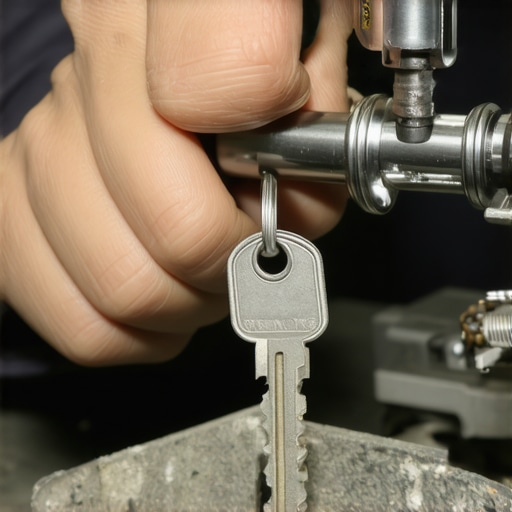
The Reality of Key Control and the $800 Drill Bit
A lady came into my shop crying because a scammer drilled her lock and charged her eight hundred dollars for a fifteen-dollar zinc deadbolt. It is a story I hear at least twice a month. She had a lockout, called a number from a search engine, and instead of a professional with a Lishi pick or a bypass tool, she got a guy with a cordless drill and a predatory invoice. This is what happens when you treat security as a commodity rather than a discipline. Security is not just about having a piece of metal in your door. It is about the physics of denial and the legal framework of key control. When we talk about restricted keyways, we are talking about the difference between a door that stays shut and a door that is merely an invitation. Most people think they can take any key to a big-box store or a kiosk and get a copy for a few bucks. With commercial restricted keyways, that is impossible by design, and that is exactly why you need them.
“Security is always a trade-off between convenience and protection.” – Industry Axiom
The Physics of the Restricted Cylinder
In my twenty-five years at the bench, I have seen the internal guts of every lock from cheap Chinese imports to high-security Medeco and Schlage Primus cylinders. To understand why only a locksmith should handle restricted keys, you have to understand the mechanism. A standard pin-tumbler lock relies on a simple shear line. You have a plug, a shell, bottom pins, and top pins. When the correct key is inserted, the gaps between those pins align perfectly with the shear line, allowing the plug to rotate. In a restricted keyway, we add layers of complexity that a standard hardware store machine cannot even touch. We are talking about sidebars, check pins, and unique milling profiles. A restricted key blank is not available to the general public. You cannot buy them on the internet, and you cannot find them at the local hardware store. The manufacturer only sells these blanks to authorized locksmiths who have signed a contract to maintain strict records. This is what we call Key Control. If you hand your key to a valet or a contractor, and that key is on a restricted commercial profile, they cannot go down the street and make a copy. They are blocked by the physical profile of the keyway and the legal restrictions of the patent.
Why Material Science Matters in 2026
As we look toward panic bar code compliance 2026, the industry is shifting toward more durable, high-tolerance materials. Most consumer-grade locks are made of die-cast zinc or pot metal. They are designed to fail. A professional locksmith deals in solid brass, stainless steel, and hardened steel inserts. When I zoom in on the internal physics of a high-security restricted cylinder, I am looking at tolerances of three-thousandths of an inch. A standard key machine has a margin of error that is far too wide for these systems. If the blade is off by even a hair, the sidebar will not drop, and the lock will stay seized. This level of precision is why commercial restricted keyways are the backbone of any real security plan. It is not just about the key; it is about the cylinder’s ability to resist physical attacks like bumping, picking, and drilling. We use paracentric keyways that are so narrow and twisted that a standard pick cannot even reach the pins. This is the fortress mindset.
“Hardware is the physics of denial.” – Security Manual
Keyless Entry Systems and the 2026 Horizon
I get asked a lot about keyless entry systems pros and cons lately. While the world moves toward digital, the physical bypass remains the most critical point of failure. Even the most advanced 2026 wireless lock protocols explained in recent manuals still rely on a mechanical override for emergencies. If that override is a cheap, non-restricted cylinder, your entire digital security system is moot. We are also seeing a massive surge in EV charging station lock security requirements. These stations are high-value targets, and they require restricted access to prevent tampering and copper theft. Similarly, fingerprint lock reliability tests have shown that while biometric tech is improving, it cannot replace the sheer reliability of a high-security mechanical lock in harsh weather. In our region, the humidity and salt air can eat through cheap electronics in a single season. A mechanical restricted keyway does not care about battery life or software updates. It just works.
The Technical Reality of Duplication
When you bring a restricted key to my shop, I do not just stick it in a duplicator and grind away. I check the registry. I verify that you are the authorized person on the account. I check the signature on file. This is the human element of security. A machine at a grocery store does not care if you are the owner or a disgruntled ex-employee. It just cuts the metal. Real locksmithing involves maintaining a database of every key ever issued for a commercial property. We track the master wafers and the pin segments. If you are managing an apartment complex and need 24/7 mobile locksmith for apartments, you want a professional who understands the liability of key control. If a tenant moves out and you have a restricted system, you do not necessarily have to rekey every time if you can account for every key. That is the cost-saving power of a restricted system.
Automotive and High-Tech Integration
The world of automotive transponder keys 2026 updates is also merging with traditional locksmithing. We are no longer just cutting metal; we are programming EEPROM chips and managing rolling codes. Whether it is keyless ignition repair services or duplicating a high-security laser-cut key, the precision required is the same. You cannot trust a trunk slammer with a five-hundred-dollar transponder key for a modern vehicle. They do not have the equipment to handle the ECU handshake. They will likely fry your car’s computer and leave you with a bricked vehicle on your driveway. A legitimate locksmith invests tens of thousands of dollars in legitimate software and hardware to ensure that your vehicle stays secure and functional. The same applies to residential security. When looking for the best residential door locks for safety and durability, look for ANSI Grade 1 ratings and restricted cylinders. Do not settle for the blister-pack garbage at the big-box store. Your family’s safety is worth more than a twenty-dollar deadbolt made of recycled soda cans.
The Final Verdict on Security
Security is a layered process. It starts with a solid door and a reinforced strike plate, but it is anchored by the keyway. Restricted key duplication is the only way to ensure that you know exactly how many keys to your property exist. It removes the risk of unauthorized copies and forces any duplication through a vetted, professional channel. If you value your property, your inventory, or your peace of mind, you will move away from open-market keys and into a restricted system. Do not wait for a 3 AM lockout or a break-in to realize your hardware is inadequate. Take control of your keys before someone else does. Trust the bench experience and the technical precision of a master locksmith. We do not just sell locks; we solve physics problems so you can sleep at night. “, “image”: {“imagePrompt”: “A high-detail close-up of a professional locksmith’s workbench showing a high-security restricted lock cylinder partially disassembled with brass pins, a sidebar, and a uniquely milled key blank, lit with industrial workshop lighting.”, “imageTitle”: “High-Security Restricted Keyway Anatomy”, “imageAlt”: “Detailed view of a restricted lock cylinder and high-security key on a locksmith’s bench”},”categoryId”: 0,”postTime”: “”}