
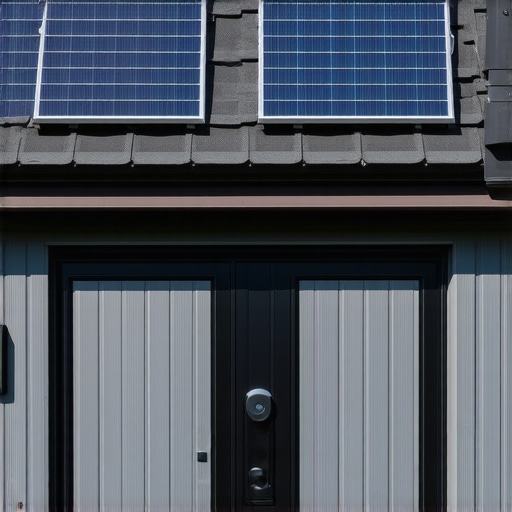
The Physics of Remote Security and the Solar Solution
When you are fifty miles from the nearest paved road, security is not a matter of brand names or flashy apps. It is a matter of mechanical reliability and energy management. In my twenty five years at the bench, I have seen more smart locks fail in remote cabins than I have seen successful ones last a full winter. The primary culprit is always the same: power management. Traditional battery operated units depend on alkaline or lithium AA cells that lose half their voltage the second the thermometer hits freezing. If you are relying on a standard residential keypad lock in a high altitude environment, you are essentially gambling with a lockout. Solar-powered smart locks change the equation by utilizing constant trickle charging to maintain a capacitor or internal battery at peak voltage, ensuring the actuator has the torque necessary to throw a bolt even when the door frame has swollen from humidity.
A Lesson from the Apprentice Bench
I teach my apprentices that if you have to force the key, you have already lost. This is a fundamental law of locksmithing. I remember one kid, eager to show off, trying to manhandle a stuck deadbolt on an old cedar cabin door. He did not understand that the wood had absorbed moisture, shifting the strike plate by a mere three millimeters. Instead of diagnosing the alignment, he applied torque until the brass tailpiece sheared right off. That is the same mistake people make with cheap electronic locks. A motor inside a standard smart lock is a fragile thing. When the door frame shifts, that motor struggles. A solar-powered unit, typically built for more rugged environments, often features higher torque motors and reinforced gear trains that can handle the minor friction of a shifting cabin door without burning out the circuit board.
“Security is always a trade-off between convenience and protection.” – Industry Axiom
Mechanism Zooming: The Internal Physics of Solar Locks
To understand why these units are superior, we need to look at the internal physics. A standard off the shelf smart lock uses a small DC motor to drive a plastic gear train. These gears are often made of nylon or glass filled polymer. In sub zero temperatures, these plastics become brittle. Solar-powered locks designed for remote use typically utilize sintered metal gears or reinforced steel drive cams. The solar panel itself is not just a gimmick; it feeds a power management IC (Integrated Circuit) that regulates the draw. When the sun hits that panel, it stores energy in a high capacity capacitor or a weather resistant lithium iron phosphate cell. This provides a consistent discharge rate. Unlike alkaline batteries, which suffer from a drop in internal resistance when cold, these power systems ensure the solenoid has enough kick to fully retract the bolt. This is critical because a partial retraction is what leads to those frustrating 2 AM calls where the motor is spinning but the door remains locked.
Comparing High Security Locks vs Standard Locks
In a high security locks vs standard locks comparison, the materials tell the story. Most big box smart locks are made of zinc die-cast housing. Zinc is cheap, soft, and easy to drill. A professional grade solar smart lock usually features a solid brass or stainless steel chassis. This matters for cabins because of the threat of forced entry. A burglar in a remote area has all the time in the world to work on a lock. They are not worried about neighbors. If your lock has a zinc core, a simple flathead screwdriver and a hammer can bypass it in seconds. We look for ANSI Grade 1 certification. Most residential keypad reviews focus on the software, but they ignore the physical bolt strength. An ANSI Grade 1 bolt can withstand ten strikes of 75 foot pounds. That is the difference between a cabin that stays secure and one that gets cleaned out by opportunistic thieves.
The Biometric Threshold and Remote Access Control
Many cabin owners ask about affordable biometric door hardware. Biometrics in the woods are tricky. Capacitive fingerprint sensors, like the one on your phone, hate moisture and cold fingers. However, the latest generation of solar-powered locks often uses optical sensors with 3D mapping. These are more resilient. When we talk about access control for co-working spaces, we focus on high traffic and audit trails. In a cabin context, that same technology allows you to grant temporary codes to guests or maintenance crews without having to hide a key under a rock. But remember, if your cabin lacks Wi-Fi, you need a lock that supports offline code generation or Bluetooth mesh networking. The solar panel ensures that the radio, which is the biggest power hog in any smart lock, never drains the primary emergency reserve.
“The strength of a lock is inversely proportional to the number of people who hold a key.” – Locksmith Wisdom
Environmental Stress and Component Failure
Remote cabins face environmental stressors that suburban homes never do. We see accelerated corrosion on the PCB (Printed Circuit Board) due to condensation. High quality solar locks are often potted, meaning the electronics are encased in a resin to prevent moisture ingress. This is the same logic we use for mobile locksmith for RVs and campers. If the hardware can handle the vibration of a highway and the salt of the coast, it can handle a mountain winter. Furthermore, we must address the strike plate. In my shop, I never install a high security lock without a four inch steel strike plate and three inch screws that anchor deep into the wall stud. If you are mounting a solar smart lock to a flimsy pine frame with half inch screws, you have a high tech gate on a paper fence.
Maintenance: Beyond the Digital Interface
Do not use WD-40. I tell customers this every single day. WD-40 is a solvent, not a true lubricant; it will gum up the pins and attract dust, eventually turning into a sticky paste that prevents the shear line from clearing. For a remote cabin lock, you want a dry PTFE spray or a high quality synthetic grease on the actuator. If the lock has a keyway backup, a puff of graphite is acceptable, but PTFE is better for cold climates. Check your door alignment every spring. As the ground thaws, cabins shift. If you notice your solar lock is struggling to engage, do not keep pressing the button. You are just wearing out the motor. Adjust the strike plate so the bolt has a flush fit with zero friction. This mechanical hygiene is what keeps a lock functional for decades rather than months.
Emergency Scenarios and Troubleshooting
What happens when things go wrong? Even with solar power, you should have a backup plan. This is why we still value automotive key programming near me or mobile locksmith services. For EVs and modern vehicles, we see EV keyless entry troubleshooting becoming a major part of the job. The same logic applies to smart cabins. If the electronics fail, you need a physical override. Never buy a smart lock that does not have a hidden mechanical keyway. Even the best solar tech can be defeated by a freak storm that covers the panel in ice for two weeks. When that happens, you want a high security cylinder that is resistant to picking and bumping. Look for locks that use spool pins or serrated drivers to prevent low skill attacks. Locksmith response times 2026 averages suggest that help will be slower in rural areas, so being self-sufficient with a physical key is your ultimate insurance policy against an auto lockout or a residential lock failure.