
The 3 AM Call and the Ghost of a Transponder
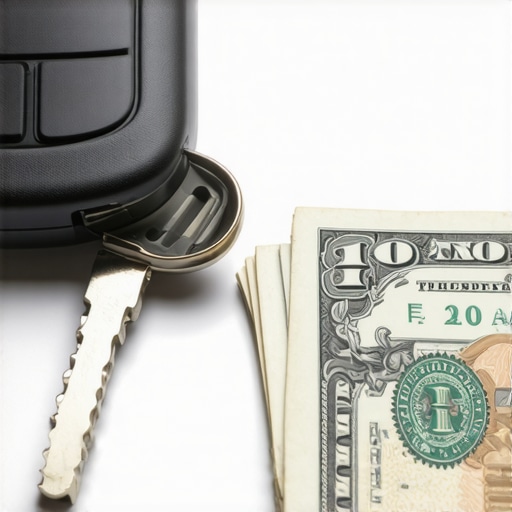
I once had a customer call me at 3 AM because she was stranded at a gas station two counties away. She had lost her keys to a 2022 luxury SUV. The dealership told her she would have to tow the vehicle to their lot, wait three days for a key to arrive from the manufacturer, and then pay a 600 dollar programming fee on top of the 400 dollar key. That is a thousand dollars plus towing. I drove out there with a mobile lab, cut the emergency blade using a Lishi pick to read the wafers, and programmed a new proximity fob in forty minutes for less than half their quote. That is the difference between a service department and a master locksmith. Dealerships view a car key as a profit center. I view it as a physics challenge involving encrypted signals and precision milling.
“Security is always a trade-off between convenience and protection.” – Industry Axiom
The Anatomy of the Modern Key: Physics Over Plastic
Most people think a car key is just a piece of metal or a plastic fob. In reality, it is a sophisticated radio-frequency identification (RFID) system. When you press the start button, an induction coil around the ignition or within the dash sends an electromagnetic pulse at 125kHz. This pulse powers a tiny transponder chip inside your key. That chip then broadcasts a unique digital signature back to the Engine Control Unit (ECU). If the bits do not align, the fuel injectors stay closed. The dealership tells you only they have the codes, but that is a lie. We use specialized diagnostic tools that interface with the On-Board Diagnostics (OBD-II) port to pull the pin codes and sync the rolling codes manually. The rolling code is a security measure where the key and the car agree on a new password every time the engine starts. If your key goes out of sync, the dealership will try to sell you a whole new module. A real locksmith just resyncs the sequence.
The Dealership Convenience Tax
Why is the dealer so expensive? It is not because their keys are better. In fact, many OEM keys are made of the same pot metal and recycled polymers as high-quality aftermarket ones. The markup comes from the service advisor commission, the marble floors in the showroom, and the fact that they have a captive audience. They assume you have no choice but to tow it to them. Furthermore, dealerships often lack the specific skill of mechanical lock manipulation. If your door lock cylinder is damaged, a dealer will replace the whole assembly, which requires a new key, which then requires you to carry two keys or rekey the entire car. When considering rekeying vs replacing locks which is better, the answer is almost always rekeying. A locksmith can take the existing cylinder apart, swap the brass wafers to match your original key, and save you the cost of new hardware. This applies to your home and office just as much as your car.
2026 Trends in Automotive Security
As we look toward 2026 trends in automotive security, we are seeing a shift toward Ultra-Wideband (UWB) and Bluetooth Low Energy (BLE) systems. These are designed to prevent relay attacks where a thief boosts the signal from your key inside your house to start the car in the driveway. However, these systems are more prone to software glitches. We are already seeing an uptick in car lockout services for Tesla models because of phone-as-key failures. When the app crashes or the 12V battery dies, you are locked out of a computer on wheels. A master locksmith carries the specialized air wedges and reach tools to bypass these electronic gates without damaging the frameless glass or the weather stripping. Smart locks with geofencing features in the residential sector are following this trend, often leaving homeowners stranded when their GPS signal drifts or their firmware updates mid-cycle.
“The primary goal of any security system is to increase the work factor required for an unauthorized individual to gain access.” – Master Locksmith Handbook
Commercial Grade Protection and Office Security
The logic of car security extends to the workplace. Many managers ask about push-button locks for offices to avoid the cost of lost keys. While convenient, these mechanical or electronic deadbolts need to be Grade 1 certified to withstand the heavy traffic of a commercial environment. For larger facilities, we are installing panic hardware for office buildings 2026 compliant, ensuring that fire codes are met while maintaining high-security perimeters. If you are a small business owner, do not settle for budget smart lock starter kits from a big box store. Those are often made with zinc alloy components that can be snapped with a simple pipe wrench. You want door reinforcement for security, which includes long strike plates and hardened steel pins that prevent kick-ins. Even sustainable eco-friendly locks for homes are now using recycled brass, which is fine, provided the internal shear line is still machined to a tolerance of 0.003 inches.
The Forensic Autopsy of a Failed Lock
When a lock fails, it usually gives you a warning. It is that slight “crunch” you feel when the key turns, or the way you have to jiggle it to get the pins to set. This is a symptom of metal fatigue. Over time, the brass pins in the cylinder wear down, and the springs lose their tension. If you ignore this, the pins will eventually fail to reach the shear line, and you will be stuck. Do not use WD-40. It is a solvent, not a lubricant. It attracts dust and turns into a sticky paste that jams the springs. Use a dry PTFE or high-quality graphite spray. If the lock is already spinning, the actuator or the tailpiece has likely sheared off. This is where emergency safe cracking services logic comes into play. We do not just drill a hole; we identify the exact point of failure and use a bypass tool to retract the bolt. Security is about finesse, not force. Whether it is a car or a high-security safe, the goal is to preserve the hardware while restoring access.