The Apprentice Lesson: Why Force Is the Enemy of Security
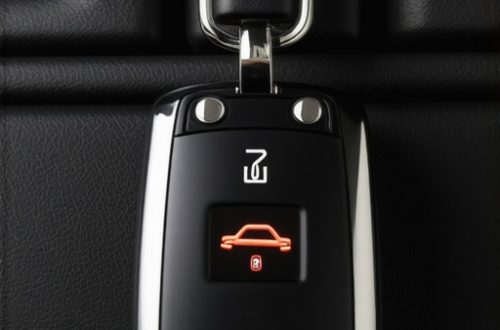
I teach my apprentices that if you have to force the key, you have already lost. This was true back when we were hand-filing brass blanks in the eighties and it remains the golden rule in 2026. These days, a car key is not just a piece of metal, it is a localized computing node. When a customer walks into my shop holding a dead proximity fob or a non-responsive transponder, they usually expect a mechanical failure. But security in 2026 is a physics problem wrapped in a cryptographic shell. If your vehicle refuses to start, it is likely because the handshake between the induction coil and the EEPROM chip has been severed. We are going to look at the forensic reasons why these high-tech tools fail and why your local dealership is usually the most expensive, least efficient way to solve the problem.
“Security is always a trade-off between convenience and protection.” – Industry Axiom
1. Rolling Code Desynchronization and EEPROM Drift
The first major cause of failure in automotive transponder keys 2026 updates involves the rolling code algorithm. Modern vehicles do not use a static password. Instead, they use a hopping code where the car and the key both calculate the next value in a mathematical sequence every time the button is pressed. If you have been fiddling with the buttons in your pocket while out of range, or if the internal clock of the chip has drifted due to thermal stress, the vehicle and the key lose their place in the sequence. This is not a simple fix of changing a battery. It requires a locksmith with advanced diagnostic tools to perform a hard reset of the immobilizer logic. Unlike the big box hardware stores that sell zinc-cast junk, a professional shop uses high-end programmers to realign the encrypted packets. This is a common issue we see when providing 24/7 mobile locksmith for apartments where residents often experience RF interference from dense electronic environments.
2. Mechanical Fatigue in the Induction Coil
Inside every transponder key is a tiny copper winding known as an induction coil. When you insert the key into the ignition, or bring a proximity fob near the dash, the car sends out a 125kHz or 13.56MHz electromagnetic burst. This field induces a tiny current in the key coil, powering the chip just long enough to scream its ID back to the ECU. Over years of vibrations and being dropped on the pavement, the microscopic solder joints connecting that coil to the circuit board can fracture. You cannot see this with the naked eye, but the physics of the connection are broken. This is where mechanism zooming matters: a hairline crack in the solder means the antenna cannot draw power. The car remains a two-ton paperweight because the fuel pump will not prime without that specific digital signature.
“The immobilizer system is not a lock, it is a cryptographic challenge-response protocol.” – Security Engineering Manual
3. The Reality of the Locksmith Tools Market Outlook 2026
The tools required to fix these issues are becoming increasingly specialized. While the market sees a flood of cheap Chinese knock-off programmers, a legitimate bench technician invests in licensed hardware that can bypass the latest gateway modules. When we look at the locksmith tools market outlook 2026, we see a shift toward cloud-based key generation. If your key has stopped working, a locksmith vs dealership car key replacement comparison often comes down to the toolset. A dealership will want to replace the entire ECU for thousands of dollars. An expert locksmith uses a Lishi tool to decode the mechanical wafers and a programmer to write a new transponder ID directly to the car’s existing brain. It is about surgical precision rather than parts-cannon replacement.
4. Environmental Stress and Sustainable Hardware Failures
In recent years, the push for sustainable eco-friendly locks for homes and vehicles has led to a change in material science. Some manufacturers are using bio-polymers and recycled alloys in their key shells. While good for the planet, these materials sometimes have different thermal expansion rates than the internal electronics. In areas with extreme temperature swings, the plastic shell can put physical pressure on the surface-mount components of the PCB, causing components to pop off the board. This is essentially a door lock jamming fix 2026 scenario but for your electronics. If your key worked in the morning but failed in the heat of the afternoon, material physics is likely the culprit. Always ensure you have a high-security euro cylinder lock on your home as a backup, but for your car, a lock shield installation for doors can prevent physical tampering while you wait for a mobile technician to arrive and re-flash your transponder data.
The Verdict on Car Key Recovery
If you find yourself stranded, do not let a trunk-slammer drill your ignition. A real pro will diagnose the signal first. We use frequency testers to see if the key is even broadcasting. If the light is on but nobody is home, it is a programming issue. If there is no signal, the hardware is dead. Always vet your technician and ask about their experience with 2026 transponder updates. Security is about trust and technical mastery, not just a flashy website.