
The Psychology of Entry and the Digital Gatekeeper
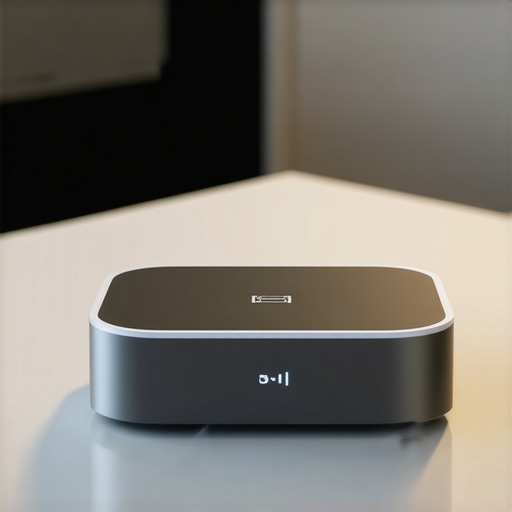
Burglars do not care about your high-resolution cameras or your fancy doorbell chime if the physical barrier is a joke. After twenty-five years at the bench, I can tell you that most people treat home security like a decoration rather than a physics problem. They spend five hundred dollars on a sleek touchscreen lock but mount it on a soft pine door with half-inch screws. By 2026, the game has shifted. We are no longer just looking at bits of brass and steel; we are looking at how a central brain, or an integrated smart lock hub, manages the mechanical integrity of your home. A burglar is looking for the path of least resistance. If your smart hub has high latency or fails to verify a deadbolt position, you have given them a digital crowbar.
I teach my apprentices that if you have to force the key, you have already lost. This technical wisdom applies doubly to the world of automation. In my shop, I see the aftermath of forced entries where the smart lock was perfectly intact but the door frame was splintered because the hub failed to alert the owner that the bolt had not fully seated into the strike plate. A real security setup in 2026 requires a hub that understands the mechanical tolerances of the hardware it controls. We are talking about micron-level precision in how a motor drives a bolt into a pocket. If that hub is not communicating over a robust protocol, you are just playing house.
“Security is always a trade-off between convenience and protection.” – Industry Axiom
The 2026 Protocol Landscape: Thread, Matter, and Local Processing
When choosing integrated smart lock hubs 2026, you must look past the marketing fluff. We are currently seeing the total dominance of Thread and Matter 2.0. In the old days, we dealt with Z-Wave and Zigbee, which were fine but often required proprietary bridges that created single points of failure. The 2026 wireless lock protocols explained simply mean one thing: mesh networking with local processing. You do not want your front door security relying on a server in another country. If your internet goes down, your hub must still be able to manage the rolling codes and encrypted handshakes required to let you in.
Mechanism zooming reveals why this matters. Inside a high-quality 2026 smart lock, there is a hardened steel core wrapped in a nickel-brass alloy. When you send a command from your hub, an electrical impulse hits a solenoid or a high-torque micro-motor. This motor must overcome the lateral friction of the bolt against the strike plate. A cheap hub might send the signal, but a high-end integrated hub monitors the voltage draw. If the motor is struggling because the house settled and the door is misaligned, the hub should diagnose that as a mechanical failure, not a successful lock. This is the difference between a gadget and a security tool.
High Security Locks vs Standard Locks Comparison
Most people walking into my shop do not understand the difference between an ANSI Grade 1 and an ANSI Grade 3 deadbolt. A standard lock you buy at a big-box store is usually zinc or pot metal on the inside. You can snap those with a heavy screwdriver. High security locks, especially those integrated into 2026 home automation, use hardened steel inserts and anti-drill pins. When we talk about high-tech lock bumping prevention, we are looking at sidebar mechanisms and telescopic pin-in-pin designs that make traditional bumping impossible.
Smart locks with video integration are the new standard for 2026, but the hub must be able to handle the bandwidth. You are not just sending a ‘lock’ or ‘unlock’ command; you are streaming encrypted 4K video data. If your hub is underpowered, the lag between seeing a visitor and operating the lock can be upwards of ten seconds. In a security situation, ten seconds is an eternity. We look for hubs with dedicated NPU chips to handle the facial recognition locally, ensuring that the biometric data never leaves your premises. This is how to prevent future house lockouts while maintaining a fortress-like perimeter.
“The lock is only as strong as the door frame it sits in.” – ANSI Security Standard Observation
Commercial Keyless Entry Benefits and Hardware Integrity
In the commercial sector, the stakes are higher. I often handle panic bar installation and repair for commercial buildings, and the trend in 2026 is moving toward integrated home security lock bundles that cross over into the light commercial space. Commercial keyless entry benefits include granular access control. You can see exactly which employee used which code and at what millisecond. But again, the hardware must be industrial. We use Interchangeable Cores (IC) so that if the electronics fail, we can swap the mechanical cylinder in seconds.
For business owners, 2026 trends in automotive security are also bleeding into building access. We are seeing ultra-wideband (UWB) technology being used for hands-free entry. Your hub detects your phone or your car’s transponder as you approach and prepares the shear line for engagement. However, as a master locksmith, I warn you: the more automated the system, the more critical the physical installation. If your strike plate is not reinforced with three-inch screws going into the wall studs, the smartest hub in the world will not stop a shoulder-check.
The Verdict on 2026 Smart Hub Integration
If you are looking to secure your property this year, skip the cheap plastic hubs. Look for a unit that supports local-first communication and has a battery backup that can last at least 48 hours. The integration should include your locks, your lighting, and your perimeter sensors. Most importantly, ensure your smart lock has a physical key bypass. I have spent too many nights at 3 AM drilling out expensive smart locks because the internal gears stripped and there was no way to use a traditional key. Lubricate your locks with a high-quality synthetic grease or PTFE spray. Avoid graphite in smart locks, as it can interfere with the sensitive electronic contacts and optical sensors inside the 2026 models. Security is a lifestyle of maintenance, not a one-time purchase. Keep your firmware updated and your hinges tight. That is how you keep the trunk slammers and the burglars at bay. “,”image”:{“imagePrompt”:”A professional locksmith workshop bench with a disassembled 2026 high-tech smart lock showing internal brass pins, a micro-motor, and a sleek central smart home hub in the background with glowing blue status lights, macro photography, industrial style.”,”imageTitle”:”Inside the 2026 Smart Lock Mechanism”,”imageAlt”:”A detailed view of smart lock internal components and a home automation hub.”},”categoryId”:0,”postTime”:””}