
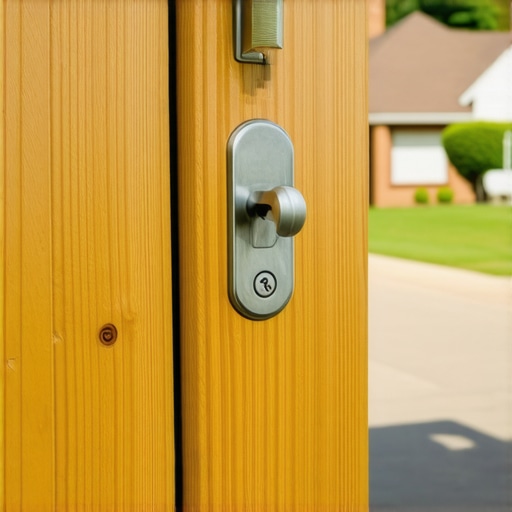
I teach my apprentices that if you have to force the key, you have already lost. It means the physics of the cylinder are fighting you, and in this trade, physics always wins. I remember a kid named Danny who thought he could muscle a deadbolt into a misaligned strike plate. He ended up snapping a nickel-silver key blank right in the plug. That is the moment I explained the ‘Golden Rule’ of residential security: the lock is a brain, but the strike plate is the backbone. Most people living in quiet cul-de-sacs think their security starts with the keyway. They spend hundreds on high-tech lock bumping prevention or biometric keyless entry for cars but then leave their front door held together by half-inch screws and a piece of flimsy stamped zinc. A burglar does not care about your high-security cylinder if they can kick the entire door frame in with one solid strike. They are looking for the path of least resistance.
“Security is always a trade-off between convenience and protection.” – Industry Axiom
When we talk about the psychology of a break-in, we are talking about time and noise. A standard ANSI Grade 3 strike plate is basically a decorative piece of metal. It is designed to hold the door shut against a breeze, not a 200-pound man. If you look at the anatomy of a standard door frame, you have the decorative trim, the jamb, and then the actual structural studs of the house. Most builders use tiny screws that only reach the jamb. When a kick occurs, the wood of the jamb splits along the grain like a piece of kindling. This is where the reinforced strike plate comes in. We are talking about a heavy-duty piece of cold-rolled steel, at least 10 inches long, with staggered screw holes. This displacement of force is critical. Instead of focusing the impact on a two-inch area, you are spreading it across the king stud of the house. You need three-inch, heat-treated steel screws that bite deep into the framing. If you are debating deadbolt installation DIY vs pro, this is the part where people fail. A pro knows how to mortise that plate so it sits flush. If it protrudes even a millimeter, it can interfere with the door seal, leading to issues with weatherproof outdoor locks reviews where people complain about moisture getting into the mechanism. The gap between the door and the frame should be no more than 1/8th of an inch. Any more, and you are giving a pry bar a free invitation. This brings us to the question of rekeying vs replacing locks which is better for a new home. If the hardware is solid but the keys are out in the wild, rekeying is the way to go. You change the pin stacks, the drivers and the key pins, to a new biting. But if your hardware is ‘big box’ pot metal, you replace. You want an ANSI Grade 1 deadbolt with a full one-inch throw. Inside that bolt, there should be a hardened steel roller pin. Why? Because if a thief tries to saw through the bolt, the roller pin just spins, preventing the teeth of the saw from catching. It is a simple physics solution to a brute-force problem.
“A lock is only as strong as the door frame it is attached to.” – Security Standards Manual
People often call me asking what to do when locked out of your car or house, and while we offer mobile locksmith services for lost car keys and lost wallet key replacement fast, my real goal is to make sure you never need me for a burglary repair. In the year 2026, the cost of hiring a professional locksmith in 2026 is expected to rise due to the complexity of the tools required, like Lishi picks for automotive or specialized software for access logs for smart locks. But a reinforced strike plate is a one-time mechanical upgrade that does not need a software update or a battery. It is about the material science of the brass versus the steel. When I am at the bench, I see how cheap zinc alloys crumble under pressure. A real strike plate should be heavy in the hand. It should require a proper chisel job to sit right. This is the difference between feeling safe and being safe. When you turn that key and the bolt slides home with a heavy, metallic thunk instead of a hollow click, that is the sound of geometry working in your favor. We also have to consider the environment. In humid regions, wood swells. If your strike plate is not perfectly aligned, that swelling will put lateral pressure on the bolt. This lateral pressure binds the pins in the cylinder, making it hard to turn the key. This is why some people think they need a new lock when they actually just need a screwdriver and a chisel to realign the strike. If you are looking into high-tech lock bumping prevention, remember that the best bump-proof lock in the world is useless if the strike plate pops out of the pine frame like a cork from a bottle. It is about the entire assembly. The shear line in your cylinder is a masterpiece of tolerances, usually within .003 of an inch. That is thinner than a human hair. We treat the strike plate with the same respect. We ensure the screws are driven at a slight angle to catch the meat of the stud, not just the edge. This is the fortress mindset. It is not about buying the most expensive gadget; it is about reinforcing the weakest point of the physical structure. The physics of a kick-in are simple: the energy travels through the door, hits the bolt, and the bolt acts as a lever against the strike plate. If the plate is weak, the jamb splits. If the plate is strong and anchored to the studs, the energy must break the steel or move the entire wall. Most thieves will move on after the first failed attempt because the noise of a second kick is too risky. This is the reality of residential security. We do not just sell locks; we manage kinetic energy. Whether you are checking access logs for smart locks on your phone or using a traditional high-security key, the physical barrier remains the most important part of the equation. Do not be the person who buys a five hundred dollar smart lock and attaches it to a fifty-cent strike plate. That is a recipe for disaster. Talk to a real locksmith who knows how to prep a door for maximum resistance. Your peace of mind is worth more than a quick DIY job that fails when it matters most.