
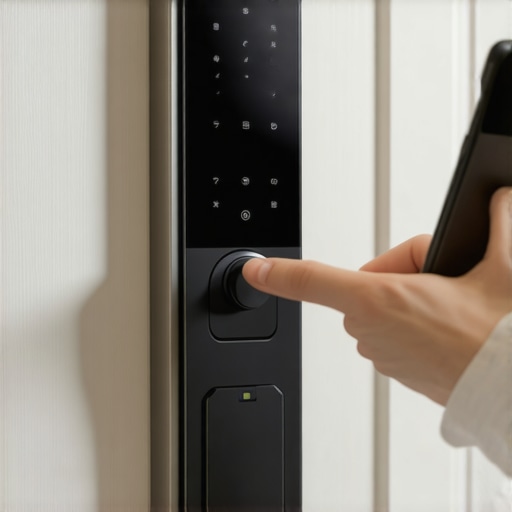
The Vulnerability of the Brass Key
A burglar does not look for a key. They look for a weakness in the physics of the door frame and the inherent flaws in the pin-tumbler design. For twenty-five years, I have sat at my bench, pinning cylinders and cutting keys, and I can tell you that the traditional physical key is the greatest liability in your rental property portfolio. A lady came into my shop crying because a scammer drilled her lock and charged her six hundred dollars for a twenty dollar deadbolt. This is what happens when you rely on the ‘Trunk Slammer’ economy and outdated hardware. The scammer did not even attempt a Lishi pick or a bypass tool; they went straight for the drill because they did not understand the internal mechanics of a high-security cylinder. This heartbreak is avoidable if we move toward eliminating physical keys for your rental property management. When we talk about high-tech lock bumping prevention, we are talking about removing the mechanical interface that allows a bump key to manipulate the top pins across the shear line. In a standard lock, a bump key uses kinetic energy to throw the top pins into the Bible of the lock, creating a temporary vacuum at the shear line. Digital systems eliminate this physical vulnerability entirely.
“Security is always a trade-off between convenience and protection.” – Industry Axiom
The Physics of the Keyless Transition
If you are managing properties, you are likely exhausted by the constant rekeying cycle. Every time a tenant moves out, you are either swapping cylinders or paying for a locksmith to repin the plug. Most cheap hardware found in big-box stores uses zinc die-cast components that wear down after a thousand cycles. When we move to affordable biometric door hardware, we are replacing mechanical wear with electronic precision. A biometric sensor, specifically a capacitive one, maps the electrical current in the ridges of a finger. This is not some science fiction gimmick; it is a robust method of access control that prevents ‘lost key’ emergencies. Inside these units, the motor drive engages a clutch. Unlike a mechanical lock where your hand provides the torque to throw the bolt, the motor does the work. This means the alignment of the door must be perfect. If your door is sagging or the strike plate is misaligned by even an eighth of an inch, the motor will burn out. This is why professional installation is the difference between a secure property and a service call at midnight. I tell my apprentices that the door is a system, not just a slab of wood. The best residential door locks for safety and durability are those that combine a hardened steel bolt with a motor that has enough torque to overcome minor weather stripping resistance.
Access Logs and the Management Edge
The real power of smart locks for rental management lies in the data. Access logs for smart locks allow you to see exactly when a contractor entered the unit or when a tenant arrived home. This is critical for commercial applications and locksmith services for vacation homes. Imagine a scenario where a tenant claims they never received a maintenance visit. The log provides the forensic proof. We are talking about time-stamped entries that are cryptographically signed. When we install push-button locks for offices or rental units, we are creating a digital trail. The internal PCB (Printed Circuit Board) of a high-quality smart lock is coated in an epoxy resin to prevent moisture damage. This is essential in climates where humidity can cause shorts in the circuitry. In my shop, I have seen ‘smart’ locks from overseas that fail because a static shock from a carpeted floor fried the logic board. Professional-grade hardware is tested for ESD (Electrostatic Discharge) protection. This is what you pay for when you avoid the bargain bin.
[IMAGE_PLACEHOLDER]
Commercial Requirements and Egress Safety
For those managing multi-family units or commercial spaces, the rules change. You cannot just slap a residential deadbolt on a fire-rated door. This is where panic bar installation and repair for commercial buildings becomes mandatory. A panic bar, or exit device, is a complex piece of engineering designed to allow immediate egress. The internal chassis contains a heavy-duty return spring and a latch bolt that must retract with less than fifteen pounds of force. If you are integrating keyless entry here, you are likely looking at an electric strike or an electrified mortise lock. The mechanical override must still exist for fire safety, but the ‘key’ becomes an RFID card or a smartphone credential. I often see property managers try to DIY these installs, and they end up violating life-safety codes. A door that does not open during a fire is a death trap. My shop specializes in ensuring that your high-tech lock bumping prevention does not interfere with the mechanical override required by the NFPA (National Fire Protection Association).
“The strength of a lock is only as good as the frame it is mounted in.” – Locksmith Manual
The Evolution of Keyless Technology
We are seeing a massive shift in how we think about entry. This extends even to the automotive side of my business. We provide keyless ignition repair services and EV keyless entry troubleshooting because the logic is the same across the board: shifting from physical teeth on a key to encrypted bitstreams. In the rental market, this means you no longer have a ‘master key’ that can be copied at a kiosk for two dollars. Instead, you have a master code or a digital token. If you are managing a property in a region with high salt air or extreme cold, the mechanical parts of a lock will seize without regular lubrication. Digital locks still have moving parts, but they are often sealed. However, you must avoid graphite in electronic locks; it is conductive and can short the board. I recommend a synthetic PTFE-based lubricant for the bolt and the strike interface. This keeps the movement fluid and reduces the load on the motor, extending battery life from six months to over a year.
Material Science: Why Grade 1 Matters
When I talk about hardware, I am talking about metallurgy. Most residential locks are Grade 3, which is essentially pot metal. They use zinc cylinders that can be snapped with a pair of vice grips. For my rental clients, I insist on ANSI Grade 1 hardware. This grade requires the bolt to withstand ten blows of 145 foot-pounds of force. The internal components are usually hardened steel or high-quality brass. When we integrate affordable biometric door hardware into a Grade 1 chassis, we are creating a fortress. The ‘logic’ is the lock, but the ‘metal’ is the muscle. The strike plate should be secured with three-inch screws that anchor into the king stud of the wall, not just the decorative trim. If your ‘locksmith’ is using the half-inch screws that came in the box, fire them. They are not protecting your property; they are just putting on a show. Professional locksmithing is about understanding the shear strength of those screws and the tensile strength of the bolt. Eliminating keys is about more than just convenience; it is about upgrading the entire physical security posture of your building.
Final Verdict on Keyless Systems
Transitioning to a keyless system is a logistical hurdle that pays for itself in three tenant turns. You stop paying for the labor of rekeying and start managing your assets with a dashboard. You gain the ability to revoke access instantly, which is invaluable in eviction scenarios or when a disgruntled employee leaves. Whether it is push-button locks for offices or complex access control for vacation rentals, the goal is the same: absolute control over who crosses the threshold. Do not trust your security to a software company that happens to make locks; trust it to a locksmith who understands the physics of the door and the reality of the street. Security is not a product you buy at a warehouse; it is a system of physics, logic, and professional installation. Stop carrying a ring of brass and start carrying a digital master. Your peace of mind is worth the investment in real hardware.