
The Hard Truth About Family Home Security
I have spent twenty-five years behind a locksmith bench, surrounded by the smell of brass shavings and machine oil. In that time, I have seen every way a lock can fail and every way a person can be exploited. A lady came into my shop crying because a scammer drilled her lock and charged her six hundred dollars for a fifteen-dollar deadbolt he pulled off a big-box store shelf. This happens because people wait until an emergency to think about their security. When you have small children, the stakes are not just about a stolen television; they are about keeping those wandering toddlers inside and ensuring you can get back in when your hands are full of groceries and a screaming infant. Biometric locks are often marketed as a luxury, but for a family, they are a functional necessity if you buy the right hardware.
“Security is always a trade-off between convenience and protection.” – Industry Axiom
The Physics of a Fingerprint: Why Quality Matters
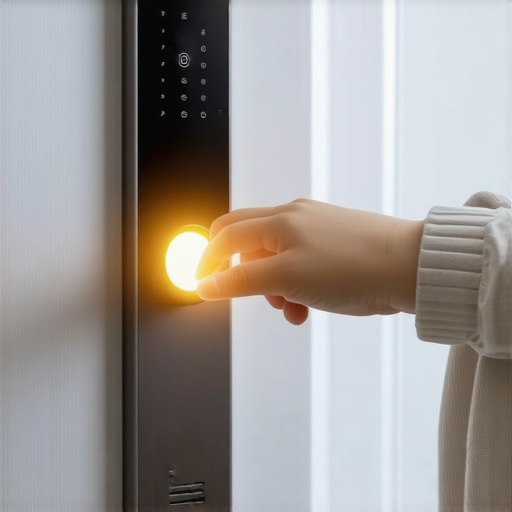
When we talk about the best biometric locks for families with small children, we are discussing the physics of capacitive versus optical sensors. Most cheap smart locks use optical sensors that essentially take a photo of the finger. These are easily fooled and fail constantly when a child’s finger is slightly sticky or dirty. A professional grade biometric deadbolt uses capacitive sensing. This technology measures the electrical sub-dermal ridges of the skin. It does not just look at the surface; it feels the physical structure of the fingerprint. For a growing child, whose fingerprints are smaller and less defined, you need a high-resolution sensor with a low False Rejection Rate (FRR). If the sensor resolution is below 500 DPI, you are buying a headache, not a security solution.
The Mechanical Bone Structure: ANSI Grade 1 vs Grade 3
A lock is only as strong as its bolt. I tell my customers that the electronics are just the brain; the mechanical parts are the muscle. Most hardware store locks are ANSI Grade 3, made of pot metal and thin zinc. A kick-in will snap the bolt housing in seconds. For a family home, I only recommend ANSI Grade 1 hardware. This means the deadbolt has been tested to withstand ten strikes of 75 foot-pounds of force. Internally, look for a hardened steel pin inside the bolt. This pin spins when a saw attempts to cut through it, making it nearly impossible for a burglar to bypass. When you are looking for how to choose a reliable locksmith near me, ask them if they stock Grade 1 hardware or if they just carry the same cheap stuff you can find at a department store. A real professional knows that weight equals quality. If the lock feels light in your hand, it is junk.
[IMAGE_PLACEHOLDER]
Small Children and the Wandering Factor
The biggest fear for parents of toddlers is the midnight wanderer. Standard thumbturns are easy for a three-year-old to manipulate. High-end biometric locks now feature integrated door sensors and auto-lock timers. You can program the lock to throw the deadbolt the moment the door is closed. Furthermore, many AI-powered locksmith services 2026 will include predictive analytics that alert your phone if the door is opened at an unusual hour. This is not just about keeping intruders out; it is about keeping your children in a safe environment. We are seeing these same security philosophies applied to EV charging station lock security and even mobile locksmith for RVs and campers setups, where space and movement require precision engineering.
The Scam of the $29 Service Call
If you find yourself locked out because your biometric batteries died and you lost your manual override key, do not call the first number on a search engine that promises a $29 service fee. That is the classic bait-and-switch. A legitimate mobile locksmith has thousands of dollars in equipment, from transponder chip key cloning 2026 machines to Lishi picking tools. They cannot drive to your house for $29. A real pro will give you a clear range over the phone and will never start by reaching for a drill. If a technician says they must drill your Grade 1 deadbolt without trying a pick or an electronic bypass first, send them away. They are a trunk-slammer, not a smith.
Technical Integration and Key Control
Modern biometric systems for families should offer multiple layers of redundancy. You want a lock that provides a physical keyway hidden behind a magnetic plate. This is vital for what to do when locked out of your car scenarios where you might need to grab a spare house key from a hidden automotive lockbox. I also suggest families look into transponder chip key cloning 2026 technology for their vehicles so they have a unified security protocol. If you have a lost wallet key replacement fast situation, having a biometric lock on your home means you are not truly stranded. You can still get inside, reset your codes, and handle the emergency from a position of safety.
“The strength of a chain is limited by its weakest link, and in home security, that link is often the strike plate.” – Security Manual 101
Hardening the Strike Plate
Even the most expensive biometric lock is useless if it is installed into a soft pine door frame with half-inch screws. To protect your family, you must use a heavy-duty strike plate with at least four three-inch screws that anchor directly into the wall studs behind the door frame. When I perform emergency lock changes after break-in, the most common failure I see is the wood of the door frame splintering because the screws were too short. A biometric lock with a high-torque motor needs a perfectly aligned strike to function. If the bolt has to rub against the plate to close, it will drain the batteries in weeks and eventually burn out the motor. This is why professional installation is superior to DIY. We use forensic alignment tools to ensure a flush fit.
Future-Proofing with AI and Access Control
As we move toward 2026, AI-powered locksmith services will become the norm for diagnosing hardware issues before they lead to a lockout. Imagine a lock that senses the friction increasing in the shear line and sends a notification that the internal pins are wearing down. This level of detail is already common in panic hardware for office buildings 2026, and it is trickling down to residential use. For families, this means never being surprised by a malfunctioning door. You get a warning while the lock is still operational, allowing you to schedule a repair instead of an emergency call-out.
Maintenance and Lubrication: The Golden Rules
Stop putting WD-40 in your locks. It is a solvent, not a long-term lubricant. It attracts dust and creates a sticky paste that will eventually gum up the capacitive sensors and the mechanical pins. Use a dry Teflon or graphite-based lubricant. Every six months, check the battery levels on your biometric lock. Even if the lock claims to have a one-year battery life, the constant scanning and motor cycles of a busy family home will deplete it faster. Treat your door hardware like you treat your car’s engine. It requires periodic inspection and high-quality fuel, or in this case, high-quality power cells.
The Final Verdict for Parents
When selecting a biometric lock, ignore the flashy apps and focus on the hardware specifications. You want a capacitive sensor, a Grade 1 metal chassis, and a physical override. Do not settle for plastic components. Your family’s safety depends on the integrity of the shear line and the strength of the deadbolt. Whether you are dealing with a lost wallet key replacement fast or just trying to simplify your morning routine, a high-quality biometric lock is the best investment you can make for your home. Remember, security is a process, not a product. Keep your firmware updated, your strike plates reinforced, and your local locksmith’s number saved for when you truly need professional expertise.