
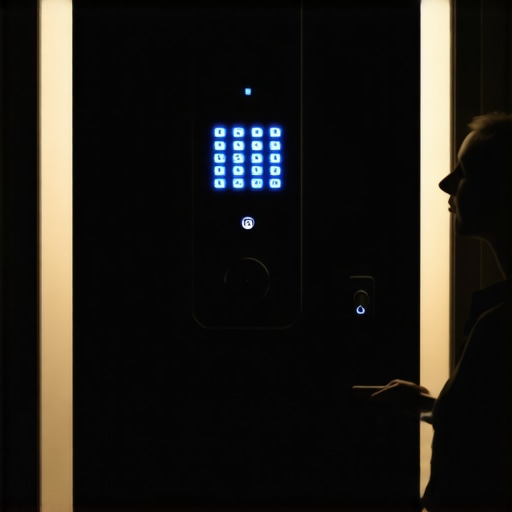
The Psychological Reality of Entry
A burglar does not look at your door the way you do. You see a stylish entrance; they see a series of physics-based vulnerabilities. They look for the path of least resistance, which in 2026 is increasingly becoming digital rather than physical. While a physical kick-in remains a threat, the most efficient way into a home is through an existing credential. This brings us to the massive security hole currently plaguing the residential market: inherited access codes from previous homeowners, tenants, or contractors.
The Hidden History of Your Door Hardware
A lady came into my shop crying last week because a scammer she found online drilled her high-end electronic deadbolt and charged her four hundred dollars, only for her to find out later that the person who entered her home didn’t even pick the lock. They simply used an old code she never bothered to change after buying the house. She thought the ‘smart’ in smart lock meant it was smart enough to know the previous owner moved out. It isn’t. When you move into a new property, you are not just inheriting the keys; you are inheriting a digital legacy of every person who ever had access to that door. Contractors, dog walkers, cleaning crews, and the previous owners themselves still hold the virtual keys to your sanctuary. This is why budget home security upgrades 2026 must start with a total credential purge.
“Security is always a trade-off between convenience and protection.” – Industry Axiom
Mechanism Zooming: The Physics of the Smart Deadbolt
To understand the risk, you have to understand what is happening inside that housing. In a standard mechanical deadbolt, the security lies in the shear line. This is the precise point where the top pins and bottom pins must align to allow the plug to rotate. In a smart lock, we add a layer of complexity: the solenoid and the clutch assembly. When you enter a code, the PCB (Printed Circuit Board) sends a low-voltage pulse to a motor. This motor drives a small gear that engages a clutch. Once engaged, the thumbturn or an automated actuator can retract the bolt. The bolt itself is usually a hardened steel alloy, but if the internal clutch is engaged by a legacy code, all that hardened steel moves out of the way without a fight. Many modern units also feature smart locks with video integration, which adds a layer of surveillance, but if the system recognizes a ‘valid’ code, it may even disable the camera or alert features, thinking a trusted user has arrived. This digital handshake is the most vulnerable part of your home security.
Why Factory Resets Are Often Insufficient
Most homeowners think a quick press of the ‘reset’ button on the back of the lock fixes everything. It does not. Many smart locks are tethered to cloud accounts. If the previous owner did not ‘unpair’ the device from their mobile app, they may still have remote access even if you have changed the local keypad codes. In the locksmith trade, we see this constantly. You must ensure the administrative ownership of the device is transferred. Furthermore, for those looking at weatherproof outdoor locks reviews, the environmental seals on these units often make accessing the reset button a chore, leading many to skip this vital step. If the lock uses a physical backup key, you must also consider the cylinder. If it is a cheap 5-pin C-keyway, it is child’s play for a trunk-slammer to rake open. I always recommend upgrading the cylinder to something with spool pins or serrated pins to prevent basic picking attacks.
“A lock is a mechanical device that must be maintained to resist physical force and bypass techniques.” – ANSI/BHMA Standards
The 2026 Security Landscape: Beyond the Front Door
Home security is an ecosystem. While focusing on the front door, do not ignore the garage. Garage door lock upgrades 2026 are focusing on encrypted rolling codes to prevent ‘code grabbing’ devices. Similarly, in the automotive world, car key duplication costs 2026 are rising because of the complexity of automotive transponder keys 2026 updates. Transponder chip key cloning 2026 now requires specialized diagnostic tools that interface directly with the vehicle’s ECU. If you are inheriting a smart home, you are also likely inheriting an old garage opener and perhaps even spare car keys. The same rule applies: purge the memory. For commercial properties, commercial keyless entry benefits include the ability to audit exactly who entered and when, a feature that residential users should utilize to identify any ‘ghost’ codes still active in their system.
Hardware Grades: ANSI Grade 1 vs. Grade 3
When you go to a big box store, you are usually buying ANSI Grade 3 hardware. It is made of thin, cast zinc and pot metal. In my shop, we only push Grade 1 or high-quality Grade 2. The difference is in the cycle count and the impact resistance. A Grade 1 deadbolt is tested to withstand significantly more hammer blows and torque than the stuff you find in a blister pack. When upgrading your smart lock, look for one that houses a Grade 1 mechanical chassis. This ensures that even if the electronics fail, the physical barrier remains stout. If the strike plate is held in by half-inch screws, the best lock in the world won’t matter. You need three-inch hardened steel screws that anchor into the wall stud, not just the decorative trim.
How to Choose a Reliable Locksmith Near Me
Finding a pro in 2026 is harder than it should be. The internet is flooded with dispatch centers masquerading as local shops. A real locksmith will have a physical address you can visit. They will have a van stocked with thousands of dollars in specialized equipment like Lishi decoders and key programmers, not just a drill and a hammer. When you call, ask if they are licensed and insured. If they quote a ‘starting at $29’ price, hang up. That is a classic bait-and-switch scam. A professional will give you a fair range based on the hardware you have. They will also provide lock maintenance tips for winter 2026, such as using a synthetic PTFE-based lubricant rather than graphite, which can gum up the sensitive electronics in a smart lock during freezing temperatures. Trust is earned through technical expertise, not through a low-ball price tag.
Practical Steps for Your Move-In
First, perform a hard factory reset of all smart hardware. Second, rekey the physical cylinders. Rekeying is the process of changing the internal pins so the old physical keys no longer work, which is far cheaper than replacing the entire lock. Third, install a high-security strike plate with long screws. Finally, update the firmware on any smart devices to patch known security vulnerabilities. This is the only way to ensure that your new home is actually yours. Metal and logic are the only things that keep a door shut; don’t let a ghost code from three years ago be the reason your security fails.