
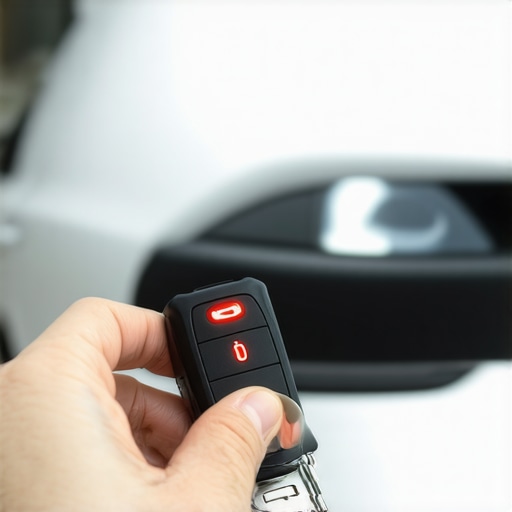
The 3 AM Ghost in the Machine
I once had a customer call me at 3 AM because he was standing in a torrential downpour next to his brand-new 2026 luxury sedan. The biometric sensor on the door handle, which usually recognized his thumbprint with surgical precision, was dead. His fob? Completely unresponsive. He was frantic, thinking he needed a tow truck or a window smash. I told him to stay calm and look for the hidden physical bypass. People forget that beneath the layers of sleek glass and biometric sensors, there is still a mechanical heartbeat. As a locksmith with over 25 years on the bench, I see this daily. High-tech fails; physics remains.
“Security is always a trade-off between convenience and protection.” – Industry Axiom
The Anatomy of a Biometric Fob Failure
When your biometric fob dies, it is rarely the biometric sensor itself that has failed. Usually, the lithium-ion coin cell or the internal capacitor has reached its end-of-life cycle. In 2026 trends in automotive security, we are seeing more Ultra-Wideband (UWB) chips that drain power faster than the old-school 315MHz transmitters. When that power drops below the threshold, the encrypted handshake between the fob and the vehicle’s ECU (Engine Control Unit) breaks. The rolling codes stop syncing, and you are effectively locked out of your own rolling computer. This is why understanding the mechanical backup is vital. Every door handle with an electronic actuator still has a physical wafer tumbler hidden somewhere. Usually, it is behind a plastic cap on the driver’s side handle. You have to pop that cap without scratching the paint, revealing a lock cylinder that has likely never seen a key. This is where a sticking door lock mechanism becomes a problem. If you never use the physical lock, the grease inside turns to a hard, waxy resin that traps the wafers. If you try to force it, you will snap the emergency key blade, which is often made of cheap pot metal rather than high-quality nickel-silver.
The Emergency Bypass Process
Step one is locating the mechanical key hidden inside your fob. There is usually a small slide switch or a tension button. Pull it, and a thin, laser-cut blade emerges. Insert this into the hidden cylinder. If the key feels stiff, do not torque it. This is a common mistake that leads to expensive repairs. A professional would use a specific penetrant, not WD-40, to loosen those seized wafers. Once the door is open, the alarm will likely trigger because the physical entry does not satisfy the electronic immobilizer. To stop the noise and start the car, you must find the inductive coil. In most modern vehicles, this is located in the center console or at the base of the steering column. Even with a dead battery, the car can send a small burst of energy to the fob via an RFID field, allowing it to read the transponder chip and authorize the ignition. It is a proximity-based fail-safe designed for this exact scenario.
“Mechanical redundancy is the ultimate fail-safe against digital failure.” – Security Manual 101
Upgrading Your Security Logic
Whether you are looking at how to upgrade your home security on a budget or managing a fleet, the principles are the same. For those interested in budget home security upgrades 2026, the lesson from automotive lockout is redundancy. Do not rely solely on a smart lock or a voice-activated locks setup tutorial. Always have a high-quality deadbolt with a physical keyway. In the commercial sector, business access control audits 2026 are emphasizing this hybrid approach. Hotels and offices are moving toward master key systems for hotels 2026 that use electronic credentials but keep an Interchangeable Core (IC) for emergency overrides. This prevents a total facility lockout during a power grid failure or a server crash. If you are managing a business, investing in business key management software helps track these physical backups so they do not get lost in a drawer. If you ever experience emergency lock changes after break-in, make sure your locksmith installs hardware with a UL 437 rating. This ensures the lock can withstand both physical picking and drilling, unlike the zinc junk you find at big-box retailers. Keep your locks clean, use a synthetic lubricant every six months, and remember: if the technology fails, the metal won’t. “