
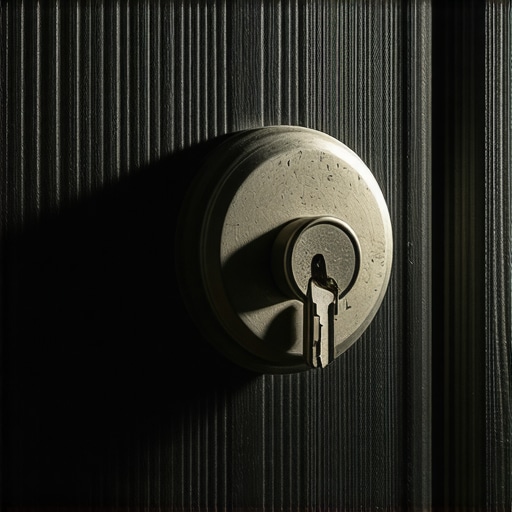
The Illusion of Safety: Why Your Front Door Is at Risk
A lady came into my shop crying because a scammer drilled her lock and charged her six hundred dollars for a fifteen dollar deadbolt that offered zero protection. This was a classic bait and switch from a unlicensed trunk-slammer who didn’t even know how to use a pick set. The lock he installed was a cheap zinc-alloy piece of junk that any teenager with a bump key could open in under five seconds. As a locksmith with over twenty-five years on the bench, seeing people get ripped off while their security remains compromised is what drives me to explain the cold hard physics of lock failure. We are currently seeing a massive spike in kinetic attacks, specifically lock bumping, because standard residential hardware is built to a price point, not a security standard. When you buy a lock from a big-box retailer, you are essentially buying a psychological deterrent, not a physical one. Most of these locks are ANSI Grade 3, the lowest possible rating, meant for interior doors where security isn’t a priority. But people put them on their front doors every single day.
“Security is always a trade-off between convenience and protection.” – Industry Axiom
The Physics of the Bump: A Mechanism Zooming Perspective
To understand why your deadbolt is failing, you have to look at the internal anatomy of the pin-tumbler cylinder. Inside that brass or zinc plug, there are usually five or six vertical chambers. Each chamber contains a spring, a driver pin, and a key pin. In a resting state, the driver pins cross the shear line, which is the physical boundary between the rotating plug and the stationary hull. This prevents the lock from turning. When you insert the correct key, the bitting heights lift the pins to the exact level where the gap between the key pins and driver pins aligns perfectly with the shear line. Lock bumping exploits a principle of physics similar to Newton’s Cradle. A bump key is a specially cut key where every valley is cut to the maximum depth. The attacker inserts this key, applies a slight amount of rotational tension, and strikes the back of the key with a heavy object. The kinetic energy travels through the key and hits the bottom of the key pins. Because of the laws of motion, the energy is transferred almost instantly to the driver pins above them. The key pins stay in place, but the driver pins jump into the hull for a fraction of a millisecond. If the timing is right, the shear line becomes clear, and the lock turns. This is not sophisticated; it is pure material science and kinetic transfer. Most standard deadbolts have no countermeasures against this. They lack the mass and the specialized pin geometry required to dissipate that energy. This is why rekeying after burglary best practices often involves moving away from standard cylinders toward high-security options that utilize sidebars or telescoping pins.
The Critical Weakness of Big Box Hardware
Most homeowners do not realize that the strike plate is the most common point of failure, but when it comes to the lock itself, the material matters. Cheap locks use pot metal or thin zinc components that can be easily sheared or manipulated. When I perform business access control audits 2026, I often find that even commercial spaces are using residential-grade hardware on back doors. This is a recipe for disaster. If you want real security, you need to look for ANSI Grade 1 hardware. This grade of hardware is tested to withstand significantly more force and higher cycles of use. Furthermore, lock shield installation for doors is a critical upgrade that prevents attackers from getting a tool behind the rose or the collar of the deadbolt. A professional locksmith won’t just swap your cylinder; they will look at the entire door assembly. If your door is made of thin wood or has a hollow core, the best lock in the world won’t save you. We look at the gap between the door and the frame, the depth of the bolt throw, and the quality of the brass used in the cylinder.
“A lock is only as strong as the frame it is bolted to and the intelligence of the person holding the key.” – Locksmith Wisdom
Upgrading to Commercial Restricted Keyways and Access Control
One of the best defenses against both bumping and unauthorized key duplication is the move toward commercial restricted keyways. These systems use patented key blanks that are not available at hardware stores. Only the authorized locksmith who installed the system can cut these keys, and they require a specific ID and signature. This stops the problem of employees or former tenants making copies at a kiosk. For office buildings, the panic hardware for office buildings 2026 is becoming more integrated with digital systems. We are seeing a shift where mechanical reliability meets electronic oversight. If you are looking for automotive key programming near me, you already know how complex modern transponder systems have become; your home and office security are heading in that same direction. Fingerprint lock reliability tests have shown that while biometric systems are convenient, they still need a high-quality mechanical override. Many cheap smart locks have a standard cylinder hidden under a plastic cap, which means they are still vulnerable to the same bumping techniques we just discussed. Real security involves a multi-layered approach. This includes keyless entry systems pros and cons analysis, where we weigh the risk of a digital hack versus the physical vulnerability of a standard keyway. In many cases, a hybrid system is the best bet.
The Real Cost of Hiring a Professional Locksmith in 2026
You might be tempted to call the first name that pops up on a search engine, but beware. If the price sounds too good to be true, like a nineteen dollar service call, it is a scam. The cost of hiring a professional locksmith in 2026 reflects the specialized tools, the years of training, and the high-quality hardware we carry. A real pro will have a Lishi tool to decode your lock without damage, rather than reaching for a drill immediately. They will also be aware of the latest panic bar code compliance 2026 to ensure your business stays legal and safe. When we talk about security, we are talking about your peace of mind. Installing a high-security deadbolt with hardened steel inserts and spool pins is an investment. Spool pins are shaped like a mushroom or a spool; when an attacker tries to bump or pick the lock, these pins get caught on the shear line, creating a false set that prevents the plug from turning. It is a simple mechanical solution to a complex physical problem. When I finish an installation, I check for a flush fit. The bolt should slide into the strike with a solid, satisfying click, not a struggle. If you have to pull your door tight or lift the handle to lock it, your lock is out of alignment, and that friction makes it easier for a thief to find a weakness. Proper lubrication is also key. Forget WD-40; it attracts gunk and turns into a sticky mess over time. Use a dry PTFE or Teflon-based lubricant to keep those pins moving freely. Security isn’t about buying a product; it is about maintaining a system. [IMAGE_PLACEHOLDER] “,”image”:{“imagePrompt”:”A detailed cross-section of a high-security lock cylinder showing hardened steel anti-drill pins, spool pins, and a complex keyway, sitting on a professional locksmith workbench with brass shavings and precision tools.”,”imageTitle”:”High-Security Lock Cylinder Anatomy”,”imageAlt”:”Anatomy of a bump-proof high-security deadbolt cylinder”},”categoryId”:0,”postTime”:””} Ready to post.