
The 3 AM Reality Check: A Master Locksmith Perspective
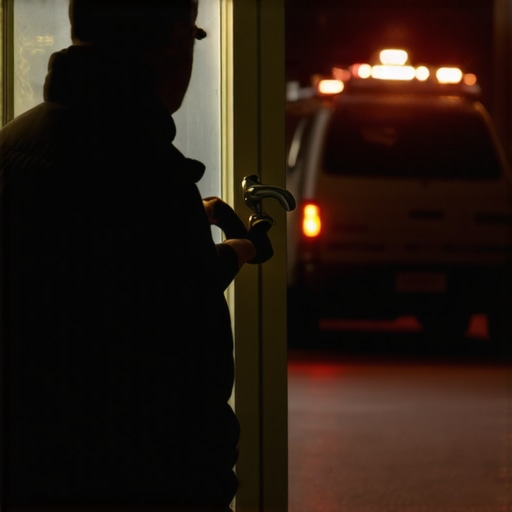
I once had a customer call me at 3 AM because she was standing in a freezing rainstorm, her groceries soaking through paper bags, and her key snapped off inside her Kwikset deadbolt. She had called three different ‘locksmiths’ from a search engine. The first one told her fifteen minutes but never showed up. The second one quoted her thirty dollars but then told her he would have to drill her lock for five hundred dollars when he saw it was a standard pin tumbler. By the time I arrived, she was shaking from the cold and the sheer frustration of being lied to by people who shouldn’t be allowed to carry a screwdriver, let alone a Lishi pick. This is the reality of the midnight lockout. It is not about a quick fix; it is about finding a professional who understands the physics of security and the ethics of service.
“Security is always a trade-off between convenience and protection.” – Industry Axiom
The Anatomy of a Broken Key Extraction
When you are standing on your porch staring at half a key, your first instinct is to grab a pair of pliers. Stop. As a locksmith with twenty-five years of bench time, I can tell you that you are about to turn a twenty minute job into a two hour headache. When a key snaps, it usually happens at the deepest cut, where the brass is thinnest. This piece is often wedged past the first three pin stacks. To understand how to extract a broken key from a lock safely, you have to understand the internal tolerances of the cylinder. Inside that brass housing, you have a series of springs, driver pins, and key pins. If you shove that broken fragment further in, you risk compressing the springs beyond their elastic limit or jamming a pin into the housing. I use a surgical grade stainless steel extractor with a micro-hook. I have to feel the biting of the key, slide the tool alongside the blade, and catch the shoulder without marring the plug. It is a game of millimeters and tactile feedback. A scammer will just reach for a cordless drill because they do not have the patience or the tools to respect the mechanism.
Why the Fifteen Minute Promise is Often a Lie
The geography of emergency service is governed by physics, not marketing. When a dispatcher tells you a technician will be there in fifteen minutes at midnight, they are usually lying. Why? Because a legitimate master locksmith has a brick and mortar shop to maintain and a van loaded with two thousand pounds of specialized equipment. We have to secure the shop, navigate night-time road construction, and verify the caller’s identity. A real professional gives you a realistic window. If someone claims they can be anywhere in the city faster than an ambulance, they are likely a ‘Trunk Slammer’ with a drill and a desire to overcharge you for a lock they are about to destroy. The reality of locksmith response times during a midnight lockout depends on the technician’s proximity and their current job status. I always tell my apprentices that if you rush the drive, you’ll rush the job, and a rushed job leads to compromised security.
The Evolution of Security: Budget Home Security Upgrades 2026
Looking ahead to budget home security upgrades 2026, we are seeing a shift away from the cheap zinc alloy hardware sold at big box stores. Real security is moving toward reinforced strike plates and high-security cylinders that utilize sidebars or telescopic pins. Most people do not realize that their deadbolt is held into the house by a piece of soft pine wood and two half-inch screws. I recommend upgrading to a strike plate that uses three-inch hardened steel screws that bite into the structural jack studs of the house. This is a low-cost upgrade that provides more physical protection than the most expensive smart lock on the market. We are also seeing a massive rise in smart locks with video integration. These units are great for convenience, but they must be installed correctly. I have seen too many DIY installs where the bolt is not aligned with the strike, causing the motor to burn out or, worse, leaving the door technically ‘locked’ but not actually secure.
Smart Lock Hacking Prevention Tips
As we integrate more technology into our doors, we open new attack vectors. Smart lock hacking prevention tips start with the basics: change your default codes and use two-factor authentication. However, from a locksmith’s perspective, the physical bypass is still the primary threat. A smart lock is still just a lock. If it uses a standard SC1 or KW1 keyway, it can be picked or bumped just like a traditional lock. I always suggest units that feature a motorized deadbolt with a clutch mechanism, which prevents ‘forced torque’ attacks where a burglar uses a large screwdriver to snap the internal plastic gears. If you are looking at residential keypad locks reviews, look for ones that have a physical shroud over the buttons to prevent ‘peeping’ or thermal imaging of your code.
Commercial Security and Panic Bar Code Compliance 2026
For my commercial clients, the landscape is changing rapidly. We are moving toward touchless entry systems for offices to reduce physical contact and improve audit trails. These systems use HID proxies or mobile credentials. But with high-tech entry comes the need for high-reliability exit. Panic bar code compliance 2026 requires that these electronic systems fail-safe or fail-secure depending on the fire marshal’s local mandates. A panic bar is a complex piece of engineering; it must allow egress with a single motion even if the door is under pressure from a crowd. I’ve spent hours adjusting the dogging mechanisms and vertical rods on these units to ensure they latch perfectly every time. If your commercial door ‘clunks’ or requires a shoulder to open, you are in violation of life safety codes.
“A lock is only as strong as its weakest component, and often that component is the human who installed it.” – Security Manual 101
Specialized Services: Safe Cracking and Vintage Keys
Emergency safe cracking services are where the true masters are separated from the amateurs. Whether it is a home safe lockout recovery or a commercial vault failure, I don’t just ‘drill it out.’ I use bore-scopes and dial manipulation. Safe locks are beautiful examples of mechanical logic. A standard Group 2 manual dial safe has three wheels with gates. When you spin the dial, you are aligning those gates to allow the fence to drop. If a safe is drilled improperly, the glass relockers will fire, permanently deadlocking the unit. The same level of care goes for a locksmith for vintage car keys. You can’t just plug a computer into a 1965 Mustang. You have to cut those keys by code or by impressioning the lock, which is a dying art. It involves inserting a blank, turning it with specific tension, and filing the brass where the wafers leave a microscopic mark.
Vetting Your Locksmith Before the Crisis
Do not wait until you are locked out at midnight to find a locksmith. Research a local shop now. Look for a physical address you can visit. Ask if they are members of the Associated Locksmiths of America (ALOA). A real pro will have a clean van, a uniform, and will ask for your ID before they touch your door. They will use tools like a Lishi pick to open your door non-destructively rather than reaching for a drill immediately. Remember, security is about trust. You are giving someone the literal key to your life. Make sure that person has the bench experience and the integrity to do the job right. Whether you need a simple rekey or a complex access control system, the quality of the hardware and the skill of the technician are the only things standing between you and a potential intruder. Stay safe, keep your hinges lubricated, and never trust a thirty-dollar quote.