
The Cost of Ignorance: A Shop Story
A lady came into my shop last week crying because a scammer drilled her lock and charged her six hundred dollars for a piece of zinc garbage that cost twelve bucks at a big box store. This was not just a residential door. It was the back exit of her small accounting firm. The trunk slammer had installed a standard deadbolt on a fire exit. In my twenty five years of bench experience, I have seen some dangerous hacks, but this takes the cake. A deadbolt on a fire exit is a death trap. If that building catches fire, you cannot be fumbling for a thumbturn or a key while smoke fills your lungs. This is why we have specific fire-rated panic hardware options. Security is a physics problem, and in commercial settings, the physics of egress must trump the physics of ingress every single time.
“The main purpose of panic hardware is to provide a fast and easy exit for people in an emergency.” – NFPA 101 Life Safety Code
The Physics of the Panic Bar: Mechanism Zooming
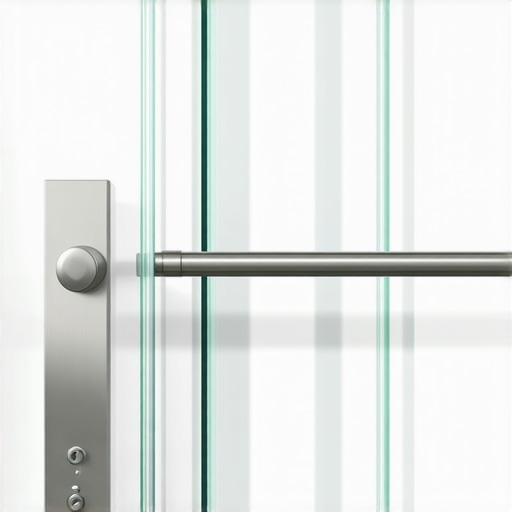
When you look at a Grade 1 rim exit device, you are looking at a complex assembly of cold rolled steel and precision springs. Inside the housing, there is a main sliding rail. When the push pad is depressed, it moves an internal carriage that retracts the starwheel latch or the pullman latch. The internal return springs are typically made of high tensile music wire or stainless steel. If these springs are too weak, the latch will not fully extend, leading to a door that pops open with a firm tug. If they are too stiff, a child or an elderly employee might not have the strength to activate the device. We measure this in pound force. For fire-rated doors, the device must also include a fusible link. This is a small component designed to melt at specific temperatures, ensuring the latch stays deadlocked during a fire to prevent the spread of flames and gases, even if the internal return springs fail. This is why selecting fire-rated panic hardware options is a matter of life and death, not just a line item on a budget.
The Psychology of the Exit
A burglar looks for the path of least resistance. They want a weak strike plate or a lock body made of zinc that they can snap with a pipe wrench. However, an office manager must think about the psychology of a panicked crowd. In a fire, people do not think. They push. If the door does not open under pressure, people pile up. This is why code requires the push bar to extend at least half the width of the door. When I perform garage door lock upgrades 2026 or office retrofits, I look at the strike plate physics. A standard strike is held by two tiny screws. A real commercial strike for a panic bar is through-bolted with 1/4-20 steel bolts. It becomes part of the door frame. You are not kicking that in without taking the wall with it.
“Security is always a trade-off between convenience and protection.” – Security Axiom
Push Button Locks and Access Control Risks
Many offices are moving toward push-button locks for offices to eliminate the hassle of physical keys. While convenient, you have to be careful with affordable biometric door hardware. The cheap stuff you find online often uses a solenoid that can be tripped with a strong magnet or a sharp blow to the door. Furthermore, app-controlled door locks security risks are real. If the software is not patched, a hacker can spoof the signal. In a commercial environment, we use fail-safe or fail-secure electrified strikes. Fail-safe means the door unlocks when power is lost (essential for fire exits). Fail-secure means it stays locked. Mixing these up is a common mistake made by unlicensed technicians. I always recommend neighborhood watch lock recommendations that focus on mechanical reliability first, supplemented by high-end electronics only if the budget allows for enterprise grade hardware.
Rekeying vs Replacing: The Technician’s Verdict
I often get asked about rekeying vs replacing locks which is better for a new office move. If the hardware is high quality, such as an ANSI Grade 1 device with an Interchangeable Core (IC), we simply swap the cores. It takes ten seconds. The internal physics of an IC core involve a control sleeve that, when turned by a specific control key, allows the entire plug and pin assembly to slide out. This is superior for key control. However, if the existing hardware is Grade 3 residential junk installed in a commercial hole, we replace it. There is no point in rekeying a lock that can be bypassed with a screwdriver. When we find a snapped key inside one of these units, we use broken key extraction tools 2026 reviews to determine if the cylinder is worth saving. A spiral extractor or a serrated hook can pull the fragment, but if the brass pins are mushroomed from forced entry, the cylinder is toast.
The Maintenance Routine
Do not use WD-40 in your locks. It is a solvent, not a long-term lubricant. It attracts dust and turns into a sticky paste that galls the pins. I tell my apprentices that a sticky lock is a cry for help from the metal. We use dry film lubricants like PTFE or specialized graphite. When I am out providing mobile locksmith services for lost car keys or lost key replacement for hybrids 2026, I see the same issues. People jam keys into ignitions and door locks until the wafers bend. The same happens with office panic bars. A monthly check of the latch alignment and a quick spray of dry lube can prevent a three thousand dollar emergency replacement. Ensure the door closer is adjusted so the door latches every single time without slamming. A door that slams will eventually shake the panic bar loose, leading to a mechanical failure of the carriage assembly.
Final Sensory Check
When the job is done, the hardware should have a flush fit. There should be no gaps between the device and the door. The sound of the latch engaging should be a crisp metallic click, not a dull thud. If you have to lift the door to get it to lock, it is installed wrong. True security is found in the precision of the installation and the quality of the metallurgy. Trust a pro with a shop, not a guy with a drill and a website that looks like it was made yesterday. Your life and your business depend on that piece of metal working when the smoke starts to rise. “,”image”:{“imagePrompt”:”A close-up, high-detail photograph of a Grade 1 commercial stainless steel rim exit device (panic bar) installed on a heavy-duty steel door. The image should show the precision of the starwheel latch and the solid mounting bolts, with a shallow depth of field focusing on the metallic texture of the hardware.”,”imageTitle”:”Professional Grade 1 Panic Bar Installation”,”imageAlt”:”Heavy duty commercial fire exit panic hardware on a steel door”},”categoryId”:0,”postTime”:””}