
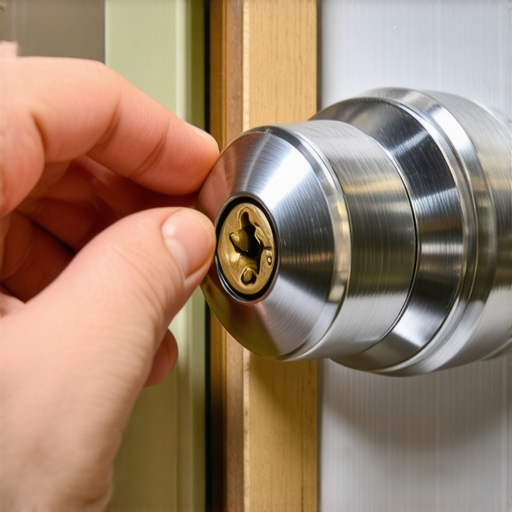
I teach my apprentices that if you have to force the key, you’ve already lost. When a new tech starts at my shop, they usually think locksmithing is about brute force or fancy gadgets. I sit them down with a brass cylinder and a magnifying glass. I show them the wear patterns on the pin stacks. If you see metal shavings inside the plug, the owner was a ‘key-wiggler.’ Security is a physics problem involving tight tolerances, and the moment you start forcing a mechanical interface, you are destroying the very protection you paid for. High-security locks are engineered marvels, but even a Grade 1 deadbolt can be defeated by neglect and a lack of basic maintenance.
The Forensic Autopsy of a Failing Cylinder
When a customer brings me a lock that ‘just stopped working,’ I perform what I call a forensic autopsy. Usually, the symptom is a crunching sound or a key that turns halfway and then hits a wall. This is often the result of material science failure. Most residential hardware uses zinc or low-grade brass. Over time, friction creates galling. In high-security systems like Medeco or Assa Abloy, the internal components are hardened steel or high-tensile brass, but they still require a thin film of protection. If you ignore the signs you need to change your door locks immediately, such as a dragging bolt or a cylinder that ‘ghosts’ (turns slightly without a key), you are asking for a lockout at the worst possible time.
“Security is always a trade-off between convenience and protection.” – Industry Axiom
The failure usually starts at the shear line. In a standard five-pin tumbler, the break between the plug and the shell must be perfectly clear for the lock to rotate. In high-security locks, you have additional sidebars or rotational elements. When dust and skin oils mix with the wrong lubricant, they create a sticky paste. This paste prevents the pins from reaching the proper height or angle, meaning the sidebar cannot drop into its groove. You aren’t being locked out by a thief; you’re being locked out by physics.
The Chemistry of Longevity: PTFE vs. Graphite
One of the biggest myths in the trade is that you should use graphite for everything. That might have been true in 1950, but in 2026, it is outdated advice. Graphite is a dry mineral that, when over-applied, clumps together. If you live in an area with high humidity, that graphite turns into a sludge that can seize a high-security cylinder completely. For modern maintenance, I only recommend PTFE-based dry film lubricants. These sprays go on wet to penetrate the deep recesses of the pin chambers and then dry into a slick, non-stick coating. This prevents the ‘crunch’ and ensures that the springs, which are often no thicker than a human hair, can push the pins back into the 0-bit position every single time the key is withdrawn.
The Deadbolt Installation: DIY vs Pro Realities
I see it every week: a homeowner buys a high-end lock but performs a deadbolt installation DIY style and messes up the alignment. If your deadbolt doesn’t slide into the strike plate with zero resistance, you are putting lateral pressure on the internal tailpiece. This pressure causes the metal to fatigue. A professional installation ensures the bolt is ‘floating’ in the strike. This is even more critical for high-security locks for rental properties where the usage frequency is much higher. If the door isn’t hung perfectly, the lock bears the weight of the door, leading to a snapped cam or a twisted spindle. This is why pros check the ‘flush fit’ of the cylinder against the door face. If there is even a millimeter of play, a pipe wrench can be used to snap the cylinder right out of the door.
Commercial Systems and High-Traffic Hardware
In the commercial sector, the stakes are higher. We deal with panic bar installation and repair for commercial buildings where life safety is the priority. These devices are complex mechanical linkages. Maintaining them involves checking the dogging action and the latch retraction. If the panic bar is dragging, it’s usually because the door has dropped on its hinges. A master locksmith doesn’t just fix the lock; we fix the door. For businesses, keyless entry systems pros and cons must be weighed. The ‘pro’ is easy audit trails; the ‘con’ is that you’re now maintaining electronics in addition to mechanics.
“A lock is only as strong as the frame it is mounted in.” – ANSI Security Standard Guide
For high-traffic areas, we often use Interchangeable Cores (IC). These allow us to rekey a building in seconds by swapping the core with a control key, but these cores have even tighter tolerances than standard cylinders and require monthly lubrication to prevent the ‘stack’ from binding.
The 2026 Security Landscape: Smart Tech and Response Times
Looking at locksmith response times 2026 averages, we see a divide. Real shops with brick-and-mortar locations usually average 30 to 45 minutes because we are properly licensed and dispatched. Scammers will tell you ’15 minutes’ just to get the job, then show up two hours later with a drill. If you are looking for the best smart locks compatible with Alexa 2026, you need to ensure the hardware is still ANSI Grade 1. Many smart locks focus on the software but use Grade 3 pot-metal for the actual bolt. 2026 smart lock trends for homes are moving toward biometric integration, but the mechanical override is still the most vulnerable point. Whether it’s a residential deadbolt or keyless ignition repair services for a modern vehicle, the mechanical components need to be clean. Even in automotive work, transponder chip key cloning 2026 technology has improved, but if the ignition cylinder is full of pocket lint, the finest chip in the world won’t start the car. Take ten minutes twice a year to spray your cylinders and check your strike plate alignment. It’s the difference between a lock that lasts thirty years and one that fails in three.