
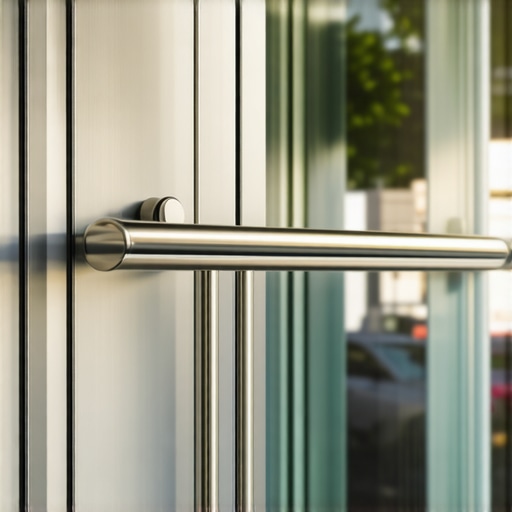
The High Stakes of Storefront Security: A Lesson from the Bench
I teach my apprentices that if you have to force the key, you have already lost, but when it comes to heavy glass storefront doors, if you overtighten a single mounting bolt, you are not just out of a job, you are standing in a pile of two thousand dollars worth of shattered tempered glass. I remember a kid I was training back in the late nineties who thought a cordless impact driver was the right tool for a panic bar installation on a Herculite-style door. The sound that glass made when it reached its threshold was a high-pitched ‘tink’ followed by a roar of crystalline rain. That is the reality of commercial locksmithing. It is about precision, physics, and knowing that your hardware is the only thing standing between a business owner’s livelihood and a smash-and-grab. In 2026, as we move toward mobile app locksmith booking 2026 and more integrated systems, the fundamentals of metal on glass remain unchanged.
“Security is always a trade-off between convenience and protection.” – Security Industry Axiom
The Anatomy of a Panic Bar: Mechanism Zooming
When we talk about the best panic bars for heavy glass, we are looking at exit devices that must manage massive weight without sacrificing the delicate nature of the substrate. A panic bar, or crash bar, is not just a handle; it is a complex assembly of springs, slides, and latch bolts. In a high-quality Grade 1 device, the chassis is often made of extruded aluminum or stainless steel, housing a heavy-duty compression spring. This spring provides the ‘return’ force. Cheap big-box hardware uses torsion springs that fatigue after ten thousand cycles. A real commercial unit is rated for over a million. The latch bolt itself is the heart of the system. On a glass storefront, you are often dealing with a ‘rim’ device where the latch engages a strike mounted on the frame. We look for a deadlatching feature. This is a secondary plunger that, when the door is closed, sits depressed against the strike. This mechanical lockout prevents ‘shimming’ or ‘loiding’ the latch with a credit card or a piece of plastic. If your current exit device lacks this, you are effectively leaving your door unlocked to anyone with a thin piece of celluloid.
ANSI Grades and Why They Matter for Your Business
I refuse to install anything less than ANSI/BHMA Grade 1 on a commercial storefront. Grade 3 hardware is for residential closets. Grade 2 is for light-duty offices. But a heavy glass door in a retail environment? That is a Grade 1 environment.
“Life safety codes require that a door be easily opened from the inside without the use of a key or special knowledge.” – NFPA 101 Life Safety Code
This requirement is why panic bars exist. For heavy glass, you need hardware that distributes the pressure of the ‘push’ across a wider surface area to avoid localized stress on the glass. This is where ‘rail’ style panic bars come into play. Instead of two mounting points, they run the full width of the door, providing structural integrity. When performing emergency lock changes after break-in, I often find that the previous hardware failed because the mounting holes became wallowed out, leading to vibration and eventually, mechanical failure. We often recommend a lock shield installation for doors in high-risk areas to prevent external tampering with the latch before it even reaches the panic bar mechanism.
The Best Brands for Heavy Glass: Von Duprin vs. Detex vs. Sargent
If you want the gold standard, you go with the Von Duprin 98/99 series. The internal mechanism uses a fluid dampener to reduce the noise of the bar returning, which sounds like a small detail until you realize that in a quiet boutique, a ‘clanging’ door sounds like a gunshot. The Detex Advantex is another beast entirely, built for environments where people are literally kicking the door open. These units utilize a stainless steel deadlocking pullman latch that is nearly impossible to bypass without a torch. For modern storefronts, we are seeing a shift toward a locksmith for smart home ecosystems and commercial equivalents. This means exit devices with motorized latch retraction (MLR). Instead of a loud solenoid ‘clack,’ a small motor pulls the latch back, allowing for integration with card readers or mobile app locksmith booking 2026 systems. This is particularly useful for businesses that need to schedule ‘dogging’ times. ‘Dogging’ is the process of locking the crash bar in the depressed position so the door becomes a simple push-pull. In 2026, we do this via encrypted apps rather than the old hex key.
Installation Nuances: The Physics of the Strike Plate
Installing a panic bar on glass is a forensic exercise. You have to account for the ‘door sag.’ A heavy glass door hangs on pivots, not hinges. Over time, those pivots wear down, and the door drops a fraction of an inch. If your panic bar strike is not perfectly aligned, the latch bolt will hit the strike plate ‘shoulder’ rather than the ‘throat.’ This causes door lock jamming fixes 2026 calls that could have been avoided with a proper installation. I always look for an adjustable strike. We also have to consider the ‘gap’ or the ‘clearance.’ If the gap is too wide, the deadlatching plunger won’t engage. If it is too tight, the door won’t latch when the closer brings it home. It is a game of millimeters. For those managing modern fleets, we even see these high-security needs extending to the parking lot with EV charging station lock security, ensuring that the same level of mechanical robustness protecting your front door is also protecting your infrastructure.
Maintenance and the Myth of Universal Lubrication
I see it every week: a business owner has a sticky panic bar and they spray half a can of WD-40 into the mechanism. Within three months, that oil has turned into a sticky ‘sludge’ that attracts dust and skin cells, eventually seizing the pins in the cylinder. If you have a keyed entry on your panic bar, use a dry PTFE-based lubricant or high-grade graphite. The internal slides of the bar itself should be greased with a synthetic white lithium grease that won’t run when the sun hits that glass door and turns it into an oven. If you are experiencing door lock jamming fixes 2026 issues, it is usually a sign that the return spring has snapped or the ‘dogging’ cam is stripped. Don’t wait for it to fail entirely. A failed panic bar on a glass door usually means the door stays open, leaving your inventory exposed, or stays locked, which is a massive fire code violation that could cost you thousands in fines.
Security Logic: Beyond the Bar
A panic bar is only as good as the glass it is mounted on. For high-security applications, we recommend security film or laminated glass. If a burglar can smash a hole next to the bar and just reach in to push it, the most expensive lock in the world won’t save you. This is why ‘narrow stile’ glass doors are a challenge; there is less metal to hide the mechanics. We often install ‘tall’ strikes or ‘security pulls’ that block access to the latch from the outside. As we look at the costs of modern security, from EV car key fob replacement costs 2026 to emergency safe cracking services, the investment in a high-quality storefront exit device is the most cost-effective way to prevent the need for automotive key programming near me or other emergency services after a total site breach. Whether you are looking for car remote programming tutorials or how to secure a jewelry store, the logic remains: spend the money on the hardware so you don’t have to spend it on the repair.