
The Hard Truth About Security Physics
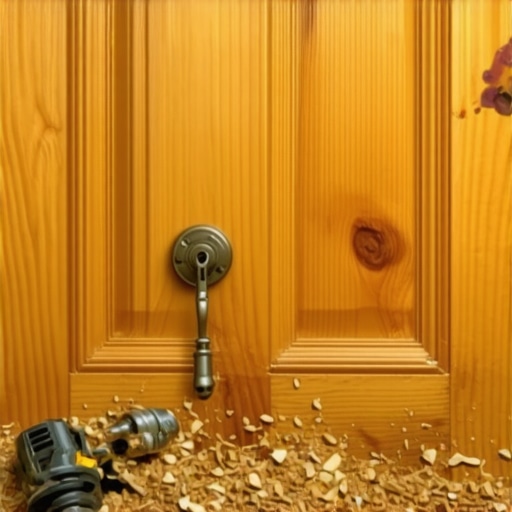
I teach my apprentices that if you have to force the key, you have already lost. It sounds simple, but in my 25 years behind a locksmith bench, I have seen more hardware destroyed by a heavy hand than by any criminal. People think a deadbolt is just a chunk of metal you throw into a hole in a door. They are wrong. A deadbolt is a precision instrument of physics, a balance of spring tension, shear lines, and structural integrity. When you buy a cheap blister-pack lock from a big box store and try to slap it on your door with a dull hole saw, you are not building a fortress. You are creating a liability that will likely fail at 10 PM on a rainy Tuesday. [IMAGE_PLACEHOLDER]
The Psychology of the Entry Point
Before we talk about the internal mechanics, you have to understand the mind of a burglar. They are not all master pickers. Most are looking for the path of least resistance: the kick-in. A DIYer often installs a deadbolt but ignores the strike plate. If you are using the half-inch screws that came in the box, you are anchoring your security into a thin piece of pine trim. One solid boot and that trim splinters, the bolt stays locked, but the door is wide open. A professional installation involves reinforcing the jack stud with three-inch hardened steel screws. This transfers the force of an impact into the framing of the house itself, not the decorative molding.
“Security is always a trade-off between convenience and protection.” – Industry Axiom
Mechanism Zooming: The Anatomy of a Deadbolt
Let us look at the physics of a standard pin-tumbler deadbolt. Inside the cylinder, you have a series of stacks: bottom pins, top pins (also called drivers), and springs. The tolerance between the plug and the shell is measured in thousandths of an inch. When a DIY installer misaligns the tailpiece or fails to center the cylinder in the cross-bore, they introduce lateral tension. This tension causes the pins to bind. Over time, the brass pins begin to shave off microscopic flakes of metal. Eventually, those flakes clog the chambers, and the lock becomes a paperweight. This is why you need to know how to fix a sticking door lock mechanism before it becomes a total lockout. If you feel a ‘crunch’ when you turn the key, that is the sound of your security failing.
Hardware Grades: Why Your Savings Are Imaginary
Most residential hardware is ANSI Grade 3. It is made of zinc or pot metal, which is brittle and has a low melting point. I only recommend ANSI Grade 1 for serious security. The difference is in the metallurgy. A Grade 1 bolt is made of hardened steel and contains a ceramic or hardened steel pin that spins when a saw blade hits it. This prevents a burglar from simply cutting through the bolt. If you are looking at best smart locks compatible with Alexa 2026, you still need to ensure the physical chassis meets these mechanical standards. A smart lock with a Grade 3 chassis is just an expensive paperweight that tells you when your door is being kicked in.
The Commercial Shift: Access Control and Co-working
In the world of commercial smart access control 2026 trends, we are seeing a massive move toward cloud-based management. This is especially true for access control for co-working spaces, where turnover is high and physical keys are a nightmare. Managing a hundred different tenants requires push-button locks for offices or smartphone-based credentials. When you DIY a commercial install, you often overlook the fire code. You cannot just put a deadbolt on a commercial door if it prevents egress. That is how people get trapped during a fire. Professional locksmiths understand the balance between security and life safety codes.
“The strength of a chain is only as great as its weakest link, and the same is true of a door assembly.” – BHMA Security Manual
The Digital Frontier: Smart Integration and Automotive Evolution
By 2026, smart home security integration 2026 will be the baseline. We are already seeing voice-activated locks setup tutorial videos everywhere, but many homeowners fail to secure their networks. A lock is only as secure as the Wi-Fi it sits on. On the automotive side, the complexity is even higher. If you lose your keys, lost key replacement for hybrids 2026 models requires specialized diagnostic equipment to handshake with the ECU. You cannot just cut a key at the hardware store anymore. Even a simple key fob battery replacement guide is becoming more complex as manufacturers move toward sealed, rechargeable units. These are the things a bench locksmith handles every day while a DIYer is still trying to find the right screwdriver.
The Installation Process: Sensory Checks
When I install a lock, I am listening. I listen for the ‘click’ of the bolt hitting the back of the strike box. I feel for the ‘flush fit’ of the cylinder against the door face. If the door has swelled due to humidity, the latch might not be hitting the center of the hole. This causes the motor in a smart lock to burn out prematurely. If you are struggling with a DIY install, stop before you strip the screws. A professional locksmith has the jigs and the experience to ensure the bore is true and the strike is dead-on. Security is not about how much you spent on the hardware; it is about how that hardware interacts with the door and the frame. Trust the physics, or call someone who does.