
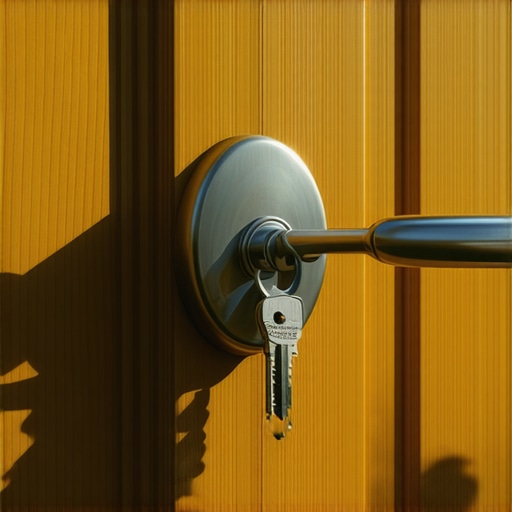
The Anatomy of a Crisis: Facing the Locked Door
I teach my apprentices that if you have to force the key, you have already lost. The minute you try to muscle a brass blade through a tight keyway, you are no longer acting as a technician; you are just waiting to snap metal inside the plug. Last week, one of my junior guys ignored this rule and sheared a key clean off at the face of a high-security cylinder. That mistake turned a simple entry into a delicate extraction process. A residential lock cylinder replacement is not just about unscrewing parts; it is about understanding how security components function under pressure. When you are standing on your porch staring at your own front door, the temptation is to panic and call the first phone number you find online. Do not do it. You must understand the physics of your lock and your legitimate options before making a decision that will cost you hundreds of dollars in unnecessary repairs.
“Security is always a trade-off between convenience and protection.” – Industry Axiom
In the physical security business, emergency residential lockout solutions are not about destructive entry. If a so-called technician arrives at your home with only a drill and a hammer, they are not a professional. They are a scammer looking to destroy your expensive hardware to sell you cheap replacements. True bypass and entry techniques rely on understanding the tight tolerances of modern lock cylinders. Let us break down the exact physical methods a master locksmith uses to resolve a lockout quickly, safely, and without destroying your entryway.
Method 1: Non-Destructive Cylinder Manipulation (Lock Picking and Decoding)
To understand how picking works, you have to look at the internal physics of a standard pin-tumbler lock. Inside the brass housing of a residential lock cylinder replacement sits a rotating plug. This plug is blocked from turning by a series of small pin chambers, each housing a spring, a driver pin, and a key pin. Each pin stack must be lifted to the exact height where the gap between the key pin and the driver pin aligns perfectly with the shear line, which is the boundary between the plug and the shell.
A professional locksmith uses tension wrenches and specialized picks to exploit tiny manufacturing imperfections. No lock is machined perfectly. By applying a microscopic amount of rotational force to the plug, we create a tiny shelf. When we lift each pin, we feel a minute click as the driver pin gets caught on this shelf above the shear line. For standard locks, we use single pin picking. For locks equipped with spool pins or serrated pins designed to foil basic picking, we must carefully sense the counter-rotation of the plug to set the pins without over-lifting them. This process keeps your lock fully functional with no damage to the finish or internal components.
Method 2: Smart Access Bypass and Digital Interventions
The modern residential entry landscape has shifted dramatically with the rise of smart deadbolts with fingerprint scanners and complex digital setups. If you have chosen to work with a locksmith for smart home ecosystems, resolving a lockout requires a different set of skills. In 2026 wireless lock protocols explained, we see that advanced encryption prevents simple signal intercept attacks, but physical lockouts on smart systems often stem from power failures or motorized actuator jams rather than software lockouts. This is why high-end smart deadbolts with fingerprint scanners still feature a physical mechanical override keyway hidden beneath a magnetic plate or cover.
When a smart lock fails, our first step is to check if the backup physical keyway is accessible. If you have an integrated home security lock bundles system, we can sometimes work through authorized master administrative channels to reset access credentials safely. If the issue is a complete mechanical failure of the internal clutch mechanism, we have to bypass the physical locking bolt directly by mapping the interior spatial dimensions of the deadbolt. Understanding the physical layout of the locking bolt lets us manipulate the latch without touching the cylinder at all.
Method 3: Physical Bypass Techniques (Slipping, Shimming, and Out-of-the-Box Entry)
When picking is not viable due to weathered keyways or high-security restricted keyways, we look to bypass the locking mechanism entirely. The latch bolt on your door has a curved face designed to retract when it hits the strike plate during closing. If your door has been improperly installed, or if the latch lacks a functioning deadlatch plunger, we can use a specialized shim to slip the latch. The deadlatch plunger is a small, semi-circular pin next to the main latch that is supposed to stay depressed when the door is closed, preventing anyone from shimming the door open.
If the deadlatch is working correctly, we look for other structural vulnerabilities. This includes inspecting the door frame alignment and checking the spacing between the door and the jamb. In some cases, we can bypass the lock by manipulating the interior thumbturn or handle through a specialized tool inserted under the door or through a letterbox. These techniques take training and deep spatial awareness, allowing us to gain entry without touching the cylinder itself. Our goal is to preserve your hardware and keep your home secure.
“High physical security requires meticulous alignment, robust materials, and precise mechanical execution.” – BHMA Certification Guide
If you find yourself locked out, avoid using excessive force. Forcing your key can damage the internal wafers or pins, and trying to kick the door in will only result in broken door frames and costly structural repairs. Real entry solutions focus on precision, mechanical logic, and preserving your existing security investments. By understanding how these locking mechanisms work, you can make informed decisions and avoid the destructive tactics of untrained operators.