The $29 Bait-and-Switch: A 2026 Warning
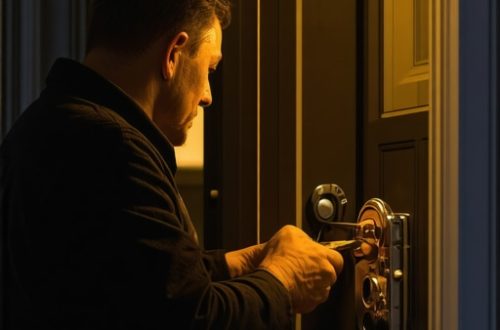
You are standing on your porch, the digital keypad on your door is dead, and the sun is setting. You search for a locksmith and see an ad promising a technician at your door in 15 minutes for only $29. As someone who has spent 25 years at the bench, let me tell you: that is a lie designed to exploit your desperation. This is the classic ‘Trunk Slammer’ bait-and-switch that has only become more sophisticated as we head into 2026. Real security isn’t a commodity you order like a pizza; it is a technical discipline that requires insurance, licensing, and a van full of precision machinery.
“Security is always a trade-off between convenience and protection.” – Industry Axiom
A lady came into my shop crying last week because she fell for one of these dispatch centers. She was locked out of her house, and the ‘technician’ who arrived didn’t even own a set of tension wrenches or a Lishi pick. He immediately pulled out a heavy-duty drill, destroyed her high-security residential lock cylinder, and then handed her a bill for $850 for a ‘special’ replacement that I could see was made of cheap zinc pot metal. This is what happens when you prioritize a short wait time over professional credentials. In 2026, wait times for a legitimate, licensed locksmith usually range from 45 to 90 minutes depending on your proximity to the shop. If someone promises 15 minutes, they are likely just the closest person with a drill, not a master of the craft.
Why Wait Times are Increasing for Automotive and Residential Services
The complexity of security hardware in 2026 has fundamentally changed the logistics of the mobile locksmith. When we talk about automotive locksmith vs dealership for car key replacement, the locksmith is often faster, but the work is more intensive. Modern vehicles use encrypted rolling codes and sophisticated transponders that require specialized diagnostic tools to bypass the ECU. We aren’t just cutting a piece of brass; we are performing a digital handshake with the car’s computer. Similarly, for those living in mobile locksmith for RVs and campers territory, the hardware has moved toward integrated multiplexing systems. You cannot just ‘slim jim’ a 2026 motorhome without risking a $4,000 repair bill for the door’s wiring harness.
Residential lock cylinder replacement has also evolved. We are seeing a massive shift toward sustainable eco-friendly locks for homes, which use recycled alloys that have different thermal expansion properties than traditional brass. When a lock cylinder binds in the summer heat, a real locksmith understands the physics of the shear line. We look at the pin-stack height and the spring tension. Inside a standard pin-tumbler lock, you have the plug, the shell, and the chambers holding the bottom pins, top pins, and springs. The shear line is that precise microscopic gap where the pins must align to allow the plug to rotate. A scammer doesn’t understand shear lines; they only understand destruction. If you are locked out of your car, what to do is stay calm and verify that the locksmith arriving is using non-destructive entry methods like air wedges and reach tools rather than attacking the window seals or the lock core directly.
The Rise of Solar-Powered Smart Locks and 2026 Hacking Prevention
Neighborhood watch lock recommendations in 2026 now almost exclusively include smart home security integration. We are seeing a surge in solar-powered smart locks 2026 models which eliminate the ‘dead battery’ lockout scenario, but they introduce new vulnerabilities. Smart lock hacking prevention tips start with the hardware itself. You want a lock that uses AES-256 encryption and has a physical override that isn’t a cheap wafer lock. Most smart locks sold at big-box retailers use a Grade 3 deadbolt with a bypassable keyway. I tell my customers to look for ANSI Grade 1 certification. This means the bolt can withstand ten strikes from a hammer without shearing. When we integrate these into a smart home, we are looking at the Z-Wave or Zigbee protocol security. If your locksmith doesn’t ask about your network encryption, they aren’t a security professional; they are a handyman with a screwdriver.
“The strength of a chain is limited by its weakest link, and the strength of a door is limited by its strike plate.” – Security Manual 101
If you are looking at residential lock cylinder replacement, consider the physics of the door frame. I often see people spend $500 on a high-end smart lock but leave it mounted in a pine frame with 1/2-inch screws. One solid kick and the ‘smart’ lock is irrelevant because the wood splintered. We recommend 3-inch hardened steel screws that anchor the strike plate directly into the wall studs. This is the difference between a ‘product’ and a ‘system.’ A real locksmith evaluates the whole opening, not just the hole in the door.
Navigating 2026 Locksmith Insurance Claims
Another reason wait times might feel longer is the administrative burden of the 2026 locksmith insurance claims guide. Legitimate shops now have to document every opening with high-resolution photos and GPS timestamps to prevent fraud. When you call us, we are checking your ID against property records before we even tension a pin. This protects you and it protects us. If a locksmith arrives and doesn’t ask for your identification, send them away. They are a liability. When you are filing a claim for a lockout or a break-in repair, your insurance company will require a detailed invoice that specifies the ANSI grade of the hardware installed and the method of entry used. Scammers provide handwritten receipts with no business license number, which will be rejected by any reputable insurer.
The Forensic Reality of Lock Failure
Why do locks fail at the worst times? Usually, it is a matter of material fatigue. Inside the cylinder, the springs are under constant tension. Over thousands of cycles, the brass pins develop ‘flats’ or ridges. When these ridges catch on the shear line, the key feels ‘sticky.’ Most people’s instinct is to spray WD-40 into the keyway. Stop doing that. WD-40 is a solvent, not a long-term lubricant; it attracts dust and turns into a gummy paste that traps the pins. We use dry PTFE or high-grade graphite that allows the pins to dance freely. If your key is spinning or won’t turn, the problem is likely a sheared tailpiece or a collapsed spring. These are precision instruments with tolerances of less than .003 inches. In my shop, we see the results of ‘force’ every day. If you have to wiggle the key, the lock is telling you it is about to die. Don’t wait for the 3 AM lockout; call a professional when the first signs of friction appear. Security is about proactive maintenance, not reactive panic.


![5 High-Security Locks for Rental Properties [2026 Testing]](https://prolocksmithco.com/wp-content/uploads/2026/01/5-High-Security-Locks-for-Rental-Properties-2026-Testing-75x75.jpeg)