The Physics of Life Safety: Why Most Office Hardware Fails
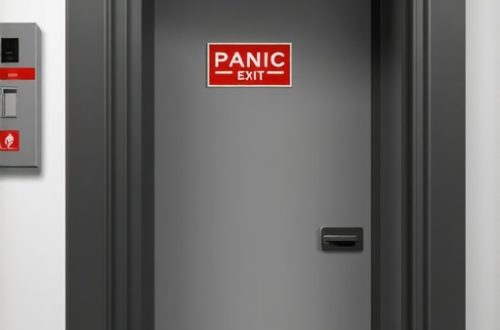
I teach my apprentices that if you have to force the key, you’ve already lost the battle against the physics of the cylinder. It’s a lesson that applies doubly to commercial exit devices. I’ve spent twenty-five years on the bench, and I’ve seen every shortcut a builder can take. Most people look at a panic bar and see a piece of metal they push to get out. I see a complex assembly of chassis, springs, and actuators that must function with 100% reliability under the weight of a crowd. In 2026, the rules for panic hardware for office buildings 2026 have shifted from mere mechanical function to a strict integration with digital life-safety systems. If your office still relies on a Grade 3 residential-style latch for a high-traffic exit, you aren’t just out of code; you’re operating a liability trap.
“Safety-to-life requirements shall take precedence over any other requirements in this Code.” – NFPA 101 Life Safety Code
The Anatomy of a Panic Bar: A Mechanism Zooming Perspective
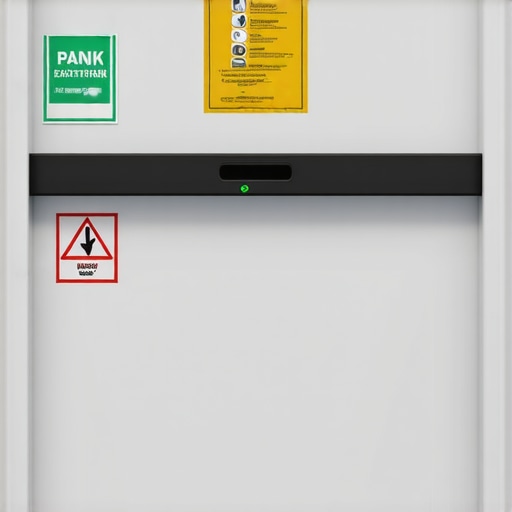
To understand why code compliance matters, you have to look at the internal physics of a Rim Exit Device. When you press the touch bar, you aren’t just pushing metal. You are engaging a main slide assembly. This slide retracts the latch bolt via a series of pivots and pins. In a high-quality ANSI Grade 1 device, these pins are made of hardened steel, not the pot metal or zinc die-cast garbage you find in budget smart lock starter kits. The spring tension must be calibrated so that the device releases with no more than 15 pounds of force, yet remains deadlocked against an external attack. When we talk about commercial smart access control 2026 trends, we are seeing the introduction of motor-driven latch retraction (MLR). Instead of a solenoid that ‘clunks’ and burns out under high voltage, 2026 systems use quiet, high-torque motors that pull the latch back, allowing for integrated smart lock hubs 2026 to manage entry and exit schedules without wearing down the mechanical strike.
The Weak Point: Door Reinforcement for Security
The best panic bar in the world is useless if it’s screwed into a hollow-core door with sheet metal screws. Door reinforcement for security is the foundation of any office safety plan. I’ve seen ‘trunk slammer’ locksmiths install high-end hardware using the wrong fasteners, leading to the device ripping off the door during a fire drill. You need sex bolts (also known as sleeve nuts and bolts) that pass through the door and clamp the hardware from both sides. This creates a structural sandwich that resists the physical force of someone trying to kick the door from the outside. In my shop, we don’t just sell the hardware; we sell the installation physics. This includes ensuring the strike plate is shimmed correctly so the deadlocking plunger—that small secondary bolt—actually engages. If that plunger falls into the strike hole, the lock can be ‘shredded’ or ‘loided’ with a simple piece of plastic. That’s a failure of the installer, not the lock.
“Standard for Exit Devices: This standard establishes requirements for exit devices and includes performance tests for functions, security, and finish.” – ANSI/BHMA A156.3
Commercial Smart Access Control 2026 Trends
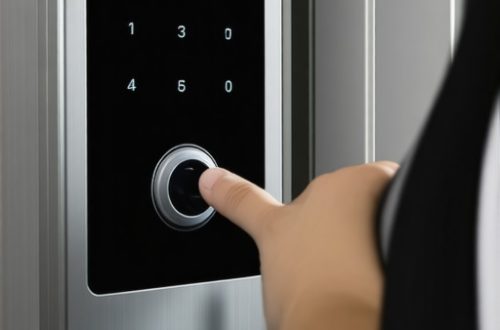
The office landscape in 2026 is moving toward integrated ecosystems. We are no longer just looking at a standalone door; we are looking at how that door talks to the fire alarm and the security server. Modern panic hardware for office buildings 2026 now often includes Request-to-Exit (REX) switches built into the internal chassis. This switch tells the security system that someone is leaving from the inside, so it doesn’t trigger a forced-door alarm. We are also seeing a rise in locksmith for smart home ecosystems technology bleeding into the commercial sector, where smaller offices use budget smart lock starter kits for interior offices while maintaining heavy-duty hardware on the perimeter. However, a word of caution: never use a residential-grade smart lock on a fire-rated door. It will melt in a fire, and the insurance company will use that as a reason to deny your claim. For hybrids, especially in mixed-use buildings, the cost of lost key replacement for hybrids 2026 is driving businesses toward mobile credentials (NFC) that integrate directly into the exit device trim.
The Repair Process: Rekeying vs. Replacing
When a client calls me about a ‘sticky’ panic bar, I perform a forensic autopsy of the device. Often, the issue is ‘dogging’—the mechanism that keeps the bar depressed during business hours. People use the wrong hex key or force the cam, snapping the internal tailpiece. If the chassis is intact, we can often replace the internal springs and lubricate the slide with a high-quality PTFE-based lubricant. Never use WD-40 or graphite in a commercial exit device; it gums up the high-tolerance pins and attracts the dust found in HVAC-heavy office environments. If the device has suffered ‘metal fatigue’ from years of being slammed, replacement is the only option. When upgrading, we look at car key duplication costs 2026 as a metric for how much mechanical security is becoming a premium service. Replacing an entire office suite with restricted keyways (like Medeco or Assa Abloy) ensures that employees can’t run to a kiosk and copy a master key. This is key control 101.
How to Upgrade Your Home Security on a Budget vs. Office Reality
I often get asked how to upgrade your home security on a budget while I’m out on a commercial job. The principles are the same, even if the hardware scale is different. At home, you focus on longer strike plate screws and better deadbolts. In the office, you focus on code compliance and ‘fail-secure’ vs. ‘fail-safe’ configurations. A fail-safe lock unlocks when power is lost (required for many fire exits), while a fail-secure lock stays locked. Getting this wrong is a life-safety violation that can lead to massive fines. In 2026, the transition to integrated smart lock hubs 2026 allows office managers to toggle these states remotely, but the physical installation must still be done by a professional who understands the ‘flush fit’ requirement. If the bar isn’t perfectly level, the latch will bind against the strike, leading to the ‘crunch’ sound that signals an imminent failure. Trust a locksmith who has a shop and a reputation, not someone who operates out of a sedan with a drill and a bag of cheap zinc locks. Security is a physics problem, and the solution is always quality metal and precise geometry.