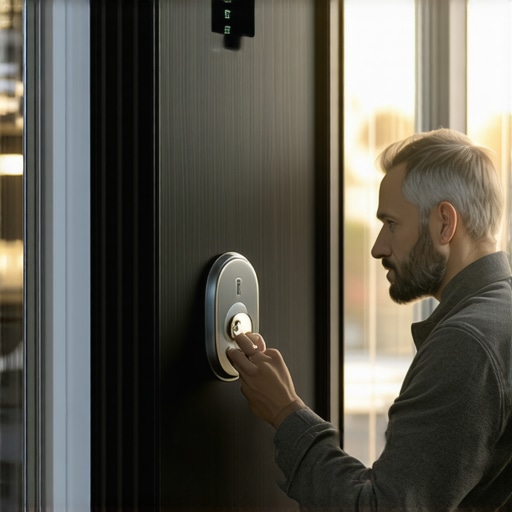
The Economics of Security: Why I’m Tired of Seeing Drilled Cylinders
Last week, a lady walked into my shop with a look I’ve seen a thousand times in my twenty-five years behind this bench. She was crying, holding a mangled piece of zinc that used to be her front door deadbolt. A ‘Trunk Slammer’—one of those unlicensed scammers who ranks top on search results with a fake $29 service call—had told her the lock was ‘unpickable’ and proceeded to drill a hole right through the shear line. He charged her four hundred dollars for a twenty-dollar piece of big-box hardware that you could kick in with a pair of soft sneakers. This is the reality of the industry in 2026, and it’s why I’m writing this. Security isn’t about buying a shiny new box from a retail giant; it’s about the physics of the cylinder and the integrity of the professional behind the tool. Most homeowners don’t need a new lock; they need their existing high-quality hardware serviced by someone who knows a spool pin from a master wafer.
“Security is always a trade-off between convenience and protection.” – Industry Axiom
The Anatomy of the Rekey: A Mechanism Zoom-In
When we talk about rekeying smart locks after moving in, we aren’t just swapping out metal. We are performing a surgical adjustment to the lock’s internal logic. Inside your standard brass cylinder, you have a series of vertical chambers. Each chamber contains a spring, a driver pin, and a key pin. When the wrong key is inserted, those pins bridge the ‘shear line’—the physical gap between the plug and the housing—at different heights, preventing the plug from rotating. When I rekey a lock, I am physically removing the old pins and replacing them with a new set of hardened brass pins of varying lengths that correspond to a new bitting code. In 2026, even with the rise of solar-powered smart locks 2026 models, the mechanical override remains the primary point of failure or success. If your smart lock uses a standard SC1 or KW1 keyway, the physics remain the same. Replacing the whole unit just because you want a new key is like buying a new car because your tires are bald. It’s a waste of the structural integrity of the housing.
The Psychology of the Burglar vs. Hardware Reality
Most people assume a burglar is going to sit on their porch with a set of tension wrenches and picks. In reality, 95% of forced entries are exactly that: forced. They are kick-ins. This is where door reinforcement for security becomes the actual hero of the story. You can have the most expensive electronic locks for Airbnb properties on the market, but if they are mounted into a soft pine frame with half-inch screws, that lock is staying on the door while the door flies off the hinges. I always tell my customers that the strike plate—the piece of metal on the door frame—is more important than the finish on the handle. We use three-inch hardened steel screws that bite past the trim and into the structural 2×4 studs of the house. That is the difference between a ‘smart’ home and a ‘secure’ home.
The 2026 Shift: Hybrids, Solar, and Electronic Management
We are seeing a massive shift in how we handle lost key replacement for hybrids 2026 and newer vehicles. The same logic applies to residential properties. For my commercial clients, business key management software has moved from a luxury to a necessity. If you’re running a warehouse, you don’t want to replace forty commercial panic exit devices 2026 every time a manager quits; you want an Interchangeable Core (IC) system where you can swap the ‘heart’ of the lock in three seconds. In the residential sector, homeowners are moving toward solar-powered smart locks 2026 to avoid the constant battery anxiety of older Bluetooth models. These units are fantastic, but they require a locksmith who understands both the digital handshake and the mechanical tolerances. If the door isn’t aligned to within a sixteenth of an inch, the motor will burn out trying to throw the bolt against a misaligned strike plate.
“The strength of a chain is limited by its weakest link, and the strength of a door is limited by its strike plate.” – Locksmith Security Manual
When Replacing is the Only Option
There are times when rekeying is a fool’s errand. If I see a lock made of ‘pot metal’—that cheap, porous zinc alloy that shatters under a hammer—I won’t rekey it. I’ll tell you to throw it in the scrap bin. If you have a vintage vehicle, finding a locksmith for vintage car keys who understands the wear patterns on old wafers is vital. Sometimes the internal tolerances are so worn that a new key won’t help; the plug itself is vibrating within the housing, creating a ‘slop’ that makes the lock bypassable with a simple jiggle key. In those cases, we upgrade to ANSI Grade 1 hardware. Grade 1 is the gold standard, tested to withstand half a million cycles and heavy hammer blows. Most big-box stores sell Grade 3, which is basically a visual deterrent and nothing more. If you’re dealing with an auto lockout, the tools we use—like the Lishi pick—allow us to decode the lock without a single scratch, whereas a scammer will try to wedge your door frame open with a crowbar, ruining your weather stripping and potentially bending the window regulator.
The Maintenance Routine: Graphite is Not Your Friend
I’ll leave you with a piece of bench wisdom. Stop putting graphite in your locks. It turns into a thick, abrasive paste when mixed with moisture and dust. Use a synthetic PTFE-based lubricant. If your key is sticking, it’s the lock’s way of screaming for help. Don’t wait until you’re standing in the rain at midnight calling for an emergency auto lockout service. A well-maintained mechanical lock should last fifty years. A smart lock should be vetted for its mechanical override first and its app features second. Trust the physics, not the marketing. “, “image”: {“imagePrompt”: “A professional locksmith’s workbench with a disassembled brass lock cylinder, colorful pinning kit, and specialized locksmith tools under a magnifying lamp, cinematic lighting, 8k resolution.”, “imageTitle”: “Professional Locksmith Rekeying Process”, “imageAlt”: “A close up of a brass lock cylinder being rekeyed with new pins on a locksmith workbench.”}, “categoryId”: 1, “postTime”: “2024-05-20T10:00:00Z”}


![Is Someone Picking Your Lock? 4 Hidden Tampering Signs [2026]](https://prolocksmithco.com/wp-content/uploads/2026/02/Is-Someone-Picking-Your-Lock-4-Hidden-Tampering-Signs-2026-75x75.jpeg)
![Key Fob Battery Replacement: 3 Easy Steps to Fix Your Remote [2026]](https://prolocksmithco.com/wp-content/uploads/2026/04/Key-Fob-Battery-Replacement-3-Easy-Steps-to-Fix-Your-Remote-2026-500x330.jpeg)


This article really highlights the importance of proper rekeying and maintenance. I’ve seen firsthand how a well-maintained lock can last for decades, saving owners from premature replacements. The point about door reinforcement being more critical than fancy electronics is often overlooked, but it makes complete sense—hardware needs to be strong enough to withstand forced entry, not just look good online. The mention of using three-inch screws for strike plates really stood out; small upgrades like that can make a huge difference in actual security. I’m curious, has anyone here transitioned to smart locks but kept their mechanical locks as backup? How do you balance convenience with durability, especially in high-traffic areas? It seems like the best strategy is to combine smart technology with traditional hardware, ensuring both digital and physical security are addressed. Would love to hear others’ experiences or tips on this hybrid approach! Overall, a very insightful read that emphasizes the value of understanding the physics behind lock security.
Reading through this post really underscores the importance of understanding the mechanics behind secure locks, especially in an age where digital systems sometimes overshadow physical hardware. I’ve personally upgraded my front door with a Grade 1 deadbolt and reinforced the strike plate with three-inch screws—simple steps that significantly deter forced entry. It’s fascinating how many homeowners overlook these small yet critical details. The part about rekeying smart locks is particularly relevant; I appreciate that the article emphasizes preserving the structural integrity of the hardware rather than blindly replacing entire units. I wonder how often people consider regular maintenance like lubricating the lock mechanisms or checking alignment to prevent more costly replacements down the line. Has anyone found effective ways to routinely inspect and maintain their locks without calling a locksmith every few years? It seems like a proactive approach not only saves money but also extends the lifespan of the hardware. Overall, this reminds us that a solid understanding of lock physics can be a game-changer in home security.