The Crunch of Failure: Why Your Lock is Fighting You
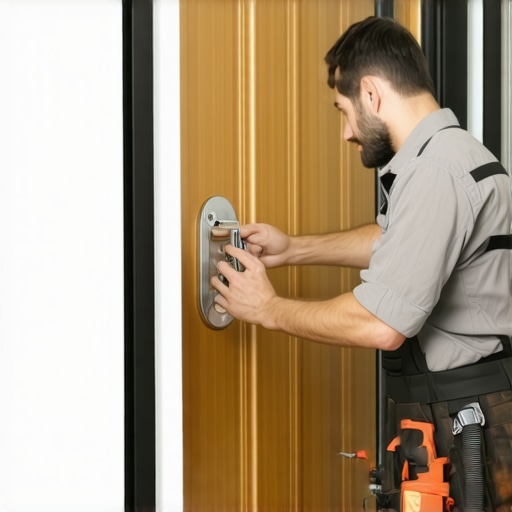
I teach my apprentices that if you have to force the key, you’ve already lost the battle against physics. In my twenty-five years behind the bench, I’ve seen thousands of cylinders mangled because a homeowner thought more torque was the solution to a sticking mechanism. It isn’t. When a lock starts to bind, it’s a physical cry for help from the pins and springs inside that brass housing. In 2026, we are seeing a flood of cheap, zinc-cast hardware hitting the market, and these ‘big box’ specials are failing at record rates. If your key feels like it’s grinding through sand, or if you have to lift the door just to get the bolt to throw, you’re staring down a $150 service call from a guy like me—or worse, a $500 ‘drill and fill’ scam from a trunk-slammer. But before you pick up the phone, you need to understand the forensic autopsy of a failing lock.
“Security is always a trade-off between convenience and protection.” – Industry Axiom
The Forensic Autopsy: Anatomy of a Binding Cylinder
When you insert a key, you are interacting with a series of spring-loaded stacks. In a standard five-pin tumbler lock, you have five bottom pins (the ones the key touches) and five driver pins (the ones that block the shear line). These components are machined to tolerances often measured in thousandths of an inch. When your lock ‘sticks,’ it’s usually because the shear line—the point where the plug meets the housing—is being obstructed. This could be due to ‘mushroom’ or ‘spool’ pins used in anti-pick locks for front doors 2026 models, which are designed to catch on the shear line to prevent picking, but can also bind if the cylinder is misaligned. If your key turns partway then hits a hard stop, you aren’t just fighting a ‘stuck’ lock; you are witnessing the mechanical failure of the driver pins failing to clear the plug. This is often exacerbated by lock maintenance tips for winter 2026, as the drop in temperature causes the disparate metals—brass pins versus a pot-metal housing—to contract at different rates, tightening those already slim tolerances.
Fix 1: The Chemical Cleanse (Avoiding the WD-40 Trap)
The first thing most people reach for is WD-40. Don’t. As a master locksmith, I can tell you that WD-40 is a solvent, not a long-term lubricant for high-tolerance machinery. It will work for three days, then it will attract every piece of grit and pocket lint inside that cylinder, creating a gummy paste that will eventually seize the springs entirely. Instead, use a dry PTFE (Teflon) spray or a high-grade de-icer if you’re dealing with lock maintenance tips for winter 2026. Spray it directly into the keyway, then run your key in and out—not turning it, just sliding—at least twenty times. This ‘rakes’ the lubricant across the pin stacks and into the spring chambers. You are trying to flush out the oxidation and metallic dust that accumulates from years of key friction. If the lock suddenly turns smoothly, you just saved yourself a hundred bucks by understanding material science over marketing.
Fix 2: The Strike Plate Realignment Physics
Often, the lock isn’t ‘broken’—the house has simply moved. In 2026, with shifting soil patterns and rapid-build construction, door frames are sagging faster than ever. If the deadbolt doesn’t line up perfectly with the hole in the strike plate, the bolt rubs against the metal, creating friction that feels like a seized cylinder. Check this: look at the ‘throat’ of the strike plate for shiny wear marks. If you see them, your door has sagged. The fix isn’t a new lock; it’s a 3-inch hardened steel screw. Remove the top screw from the top hinge of the door frame and replace it with a 3-inch screw that penetrates the actual 2×4 stud behind the jamb. This pulls the entire door back into alignment, lifting the bolt and clearing the friction. It’s a 50-cent fix for a problem that looks like a total hardware failure.
Fix 3: The Key Deburring and Decoding
Your key is a surgical tool that you treat like a bottle opener. Every time you drop your keys on the pavement, you create ‘burrs’—tiny curls of metal on the peaks of the key cuts. These burrs catch on the pin chambers, preventing the pins from reaching the shear line. In 2026, we are seeing more transponder chip key cloning 2026 issues where the physical blade is cut poorly by an automated kiosk, leading to ‘sticky’ ignition locks. If your spare key works but your main key doesn’t, the problem is the key, not the lock. Take a piece of 400-grit sandpaper and lightly buff the edges of your key. You aren’t trying to change the depths of the cuts, just smoothing the ‘shoulders’ of the peaks. This allows the pins to ‘skate’ over the key rather than jumping over hurdles.
“Life safety and security must be balanced to ensure that no lock becomes a trap during an emergency.” – NFPA 101 Life Safety Code Reference
Fix 4: Checking the Tailpiece and Cam Linkage
If the key turns but the bolt doesn’t move, or if it feels ‘spongy,’ the issue is the mechanical linkage known as the tailpiece. Remove the two long screws on the interior side of the deadbolt. Pull the thumbturn off and look at the flat bar of metal connecting the cylinder to the bolt. If this bar is twisted or bowed, it creates ‘lateral load’ on the cylinder, making it feel like it’s sticking. Straighten the tailpiece with pliers or ensure it is seated flush. In the world of budget home security upgrades 2026, many people install these themselves but over-tighten the mounting screws, which bows the door and binds the internal cam. Back those screws off an eighth of a turn. A lock needs to ‘breathe’ to function.
Beyond the Basics: 2026 Security Trends
If these fixes don’t work, you might be looking at a structural failure. In 2026, 2026 trends in automotive security and residential hardware are leaning heavily toward electronics. While fingerprint lock reliability tests have improved, the mechanical override—the physical keyway—remains the weakest point for most. If you’ve suffered an emergency lock changes after break-in scenario, don’t just replace like-for-like. Look for hardware with anti-pick locks for front doors 2026 certifications (ANSI Grade 1). If you’re dealing with a garage door lock upgrades 2026 project, remember that the most expensive lock is useless if the frame is made of pine. Real security is about the entire opening, not just the shiny piece of brass in the middle. Whether you’re preventing bike lockouts with smart tech or calling for 24/7 emergency locksmith services explained by a pro, always ask about the ‘shear line’ and ‘pin metallurgy.’ If they don’t know what you’re talking about, they aren’t a locksmith; they’re just a guy with a drill and a van. Real security involves trust, not just metal. Stay safe out there, and stop using WD-40 on your front door.


![How to Fix a Sticking Door Lock Mechanism Without a Pro [2026]](https://prolocksmithco.com/wp-content/uploads/2026/03/How-to-Fix-a-Sticking-Door-Lock-Mechanism-Without-a-Pro-2026-500x330.jpeg)

This article highlights some really practical tips that homeowners often overlook, especially the warning against using WD-40. I’ve had my fair share of sticking locks, and I found that frequent maintenance and understanding the lock’s anatomy can save a lot of money and frustration. I especially appreciate the focus on realignment and checking the tailpiece, as these are common issues that don’t require replacing the entire lock. One challenge I faced was winter weather contraction causing misalignment, which almost had me calling a locksmith before I realized a simple screw adjustment fixed the problem. Have other readers experienced temperature-related lock issues? And do you think the trend towards electronic locks will reduce these mechanical failures long-term, or just shift the problem to different failure points? It’s interesting to consider how security is evolving alongside traditional mechanical solutions.