The 2026 Standard for Biometric Access
I’ve seen a lot of junk pass through my shop in twenty-five years. A lady came into my shop crying last week because a ‘trunk slammer’ scammer drilled her front door lock, charged her $600 for a $20 zinc-alloy deadbolt, and left her house less secure than a screen door. That’s the reality of the ‘cheap’ locksmith market. Now that we’re moving into 2026, the market is flooded with fingerprint locks that look like they belong on a spaceship but have the internal structural integrity of a soda can. If you’re looking for a reliable locksmith near me, you’re looking for someone who understands that security is a physics problem. Most people buy for convenience; I buy for resistance. As the industry moves toward mobile app locksmith booking 2026 trends, the hardware itself is being sacrificed for software flashy-ness. We need to stop that cycle.
“Security is always a trade-off between convenience and protection.” – Industry Axiom
Test 1: The Capacitive Moisture and Debris Threshold
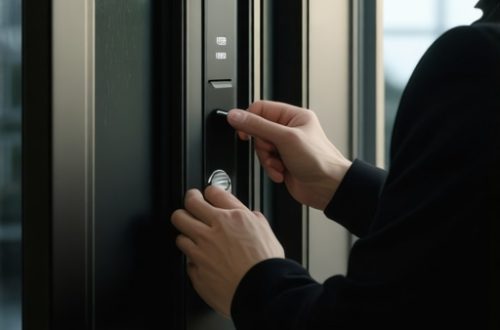
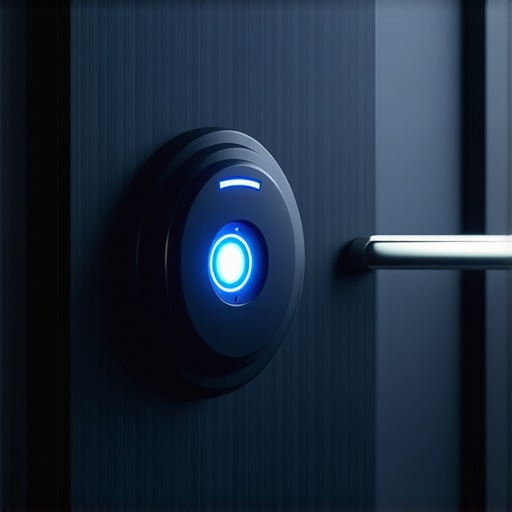
Most fingerprint sensors fail because they use cheap optical scanners that can’t tell the difference between a thumb and a photograph. In 2026, you should only be looking at 3D capacitive sensors. These sensors measure the minute electrical charges between the ridges of your skin. My first reliability test involves the ‘Workman’s Hand’ simulation. I take a mixture of graphite powder, motor oil, and local humidity—the kind that makes wood doors swell in the summer—and apply it to the sensor. A reliable lock must maintain a False Rejection Rate (FRR) of less than 1%. If the sensor can’t read through a thin layer of sweat or dust, it will leave you stranded during an auto lockout or a home entry situation. We zoom into the sensor’s pixel density; a high-end 2026 biometric must have at least 500 DPI to accurately map the valleys of the print. If it’s lower, it’s just a toy.
Test 2: The Motor Torque and Latch-Bolt Stall
The biggest point of failure in smart locks isn’t the electronics; it’s the motor. Most smart locks use tiny, high-RPM motors with plastic gears. When your door misaligns because of a change in temperature, the latch bolt hits the strike plate and the motor stalls. This is where emergency lock changes after break-in often fail because the new hardware is too weak. I test the stall torque by placing a 5-pound lateral load on the bolt. A professional-grade lock, built to ANSI Grade 1 standards, should have a motor powerful enough to overcome minor friction without stripping its gears. We’re looking for hardened steel gears, not nylon. If you hear a high-pitched whine when the lock engages, you’re looking at a gear set that will fail within 18 months.
Test 3: The Electro-Static Discharge (ESD) and Hacking Prevention
We need to talk about smart lock hacking prevention tips. In 2026, ‘Black Box’ attacks are common. This is where a thief uses a high-voltage spark to fry the circuit board, forcing the solenoid to retract. I subject my test units to a 15kV ESD pulse. A lock that doesn’t have a shielded internal housing is a liability. The internal wiring must be isolated from the exterior chassis. Furthermore, 2026 trends in automotive security are leaking into residential tech, meaning we need AES-128 bit encryption between the fingerprint reader and the internal motor controller. If the wires can be jumped by removing the outer plate, the lock is useless. I teach my apprentices that a lock is only as good as its weakest electrical trace.
“ANSI/BHMA A156.36-2020 establishes the requirements for auxiliary locks, including cycle tests and impact resistance.” – ANSI/BHMA Standard
Test 4: The Physical Side-Load and Shimming Resistance
A burglar doesn’t care about your 3D fingerprint mapping; they care about a crowbar. This is the ‘Forensic Autopsy’ of the lock’s chassis. We look at the push-button locks for offices often used in 2026. If the housing is made of zinc-alloy (pot metal), it can be shattered with a single hammer blow. I test for shimming by attempting to bypass the latch using a thin piece of spring steel. A reliable lock must have a ‘deadlatched’ function, where the plunger prevents the bolt from being depressed when the door is closed. We also check the depth of the screw holes in the strike plate. If they aren’t reaching the structural 2×4 framing with at least 3-inch screws, the fingerprint sensor is just a fancy ornament on a door that can be kicked in.
Test 5: The Residual Print Analysis and Liveness Detection
Old-school sensors could be fooled by a ‘lifted’ print. In 2026, transponder chip key cloning 2026 tech has made thieves smarter. The final test is ‘Liveness Detection.’ The sensor must measure pulse, heat, or sub-dermal blood flow. I test this using a silicone mold of a registered print. If the lock opens for the mold, it fails. We also look at the ‘coating’ on the glass. Cheap sensors retain oil from your finger, making it easy for a thief to see your ‘code’ or reconstruct your print. High-quality 2026 models use oleophobic coatings that repel oils. This is critical for voice-activated locks setup tutorial integration, where the physical backup must be as secure as the digital one. When you’re wondering how to choose a reliable locksmith near me, ask them if they test for sub-dermal imaging. If they look at you funny, find a real pro.
The Verdict on 2026 Biometrics
Don’t be fooled by the ‘smart’ label. A lock is a piece of hardware that utilizes physics to keep people out. Whether you’re dealing with what to do when locked out of your car or upgrading your office, the metallurgy matters more than the app. If the strike plate is flimsy, the bolt is short, or the housing is brittle, the fingerprint sensor is irrelevant. Always insist on solid brass or stainless steel internal components. Lubricate your locks with a dry PTFE spray, never WD-40, which attracts the very grit that destroys these high-tolerance 2026 sensors. Real security isn’t bought at a big-box store; it’s engineered.


![How to Extract a Broken Key Safely and Avoid a $200 Repair [2026]](https://prolocksmithco.com/wp-content/uploads/2026/02/How-to-Extract-a-Broken-Key-Safely-and-Avoid-a-200-Repair-2026-75x75.jpeg)