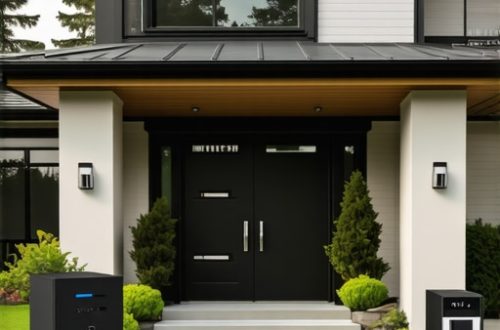
![5 Toughest Front Door Locks for 2026 Home Security [Tested]](https://prolocksmithco.com/wp-content/uploads/2026/03/5-Toughest-Front-Door-Locks-for-2026-Home-Security-Tested.jpeg)
The Brutal Reality of Your Front Door
Stop looking at the finish. That satin nickel or oil-rubbed bronze faceplate means absolutely nothing when a 220-pound intruder puts his shoulder into your door frame. Most people buy locks based on how they look with their paint color; I buy them based on how long they make a burglar sweat. I have been sitting at a locksmith bench for over 25 years, and I can tell you that 90% of the hardware sold at big-box retailers is what we call ‘pot metal’—zinc alloys that shatter under a localized impact. If you want real security for 2026, you have to stop thinking about ‘locking the door’ and start thinking about ‘securing the opening.’ A lock is just one piece of a physics equation that involves the door, the frame, the strike plate, and the fasteners. If any of those fail, the whole system fails.
A lady came into my shop last Tuesday crying because a ‘trunk slammer’—one of those unlicensed scammers who pops up on Google Maps with a fake address—drilled her high-end deadbolt because she was locked out. He told her it was ‘unpickable.’ Then he charged her $600 for a $20 replacement lock he bought at a hardware store on the way over. It broke my heart because that original lock could have been opened in three minutes with a proper pick set or a bypass tool by a real professional. Instead, her door was mangled and her security was downgraded. This is why I am writing this. You need to know what actually stops a threat and what is just theater.
“Security is always a trade-off between convenience and protection.” – Security Axiom
1. The Medeco 4 (M4) BiLevel: The King of Torsional Resistance
The Medeco 4 is the latest evolution in a legacy of high-security engineering. When we talk about ‘Mechanism Zooming,’ the M4 is a masterclass. It uses a triple-locking principle. You have your standard pin tumbler lift, but then you have pin rotation. Each pin has a specific chisel point that must be rotated to a precise angle to allow a sidebar to drop. If that sidebar doesn’t drop, the plug won’t turn. The 2026 model has improved the slider mechanism, making it virtually immune to ‘bumping’—a technique where a kinetic shock forces the pins to the shear line. We tested this with a manual pick set and an electric pick gun; the false gates in the M4 cylinder are so tight that you spend more time fighting the sidebar than you do the actual pins. For residential use, this is the gold standard for preventing unauthorized key duplication, as the keys are patented and can only be cut by authorized dealers with a specific key cutting machine.
2. Abloy Protec2: The Disc Detainer Powerhouse
If you live in a climate where your locks freeze or get gummed up with salt air, the Abloy Protec2 is your only real choice. It doesn’t use springs. Most locks rely on tiny coil springs to push pins back into place. In the locksmith world, springs are a point of failure. The Protec2 uses rotating discs, similar to a high-end safe. When you insert the key and turn it, the discs rotate to create a groove that allows a locking bar to settle. There is no ‘shear line’ to exploit, which makes traditional picking impossible. Even better, the 2026 updates include a reinforced front disc made of case-hardened steel to defeat high-speed drill bits. If you are worried about smart lock hacking prevention tips, adding a mechanical Protec2 as your primary deadbolt is the ultimate fail-safe because no software glitch can bypass a disc-detainer system.
3. Mul-T-Lock MT5+: The Telescopic Pin Giant
The MT5+ uses a ‘pin-within-a-pin’ system. Imagine a pin tumbler, but inside every pin is another smaller pin that must also reach its own shear line. This doubles the complexity for any picker. But the real genius of the MT5+ is the Alpha Spring at the tip of the key. It is a mobile element that interacts with a specific pin in the back of the cylinder. Without that mobile element, the lock will not engage. This effectively kills 3D-printed key clones. When we performed a forensic autopsy on a failed MT5+ (failed because the owner lost their keys, not because of a break-in), we found the tolerances to be within 0.001 inches. That level of precision means that even the slightest wear on a counterfeit key will prevent the lock from opening. This is a heavy-duty option perfect for multi-family building lock rekeying projects where key control is a nightmare.
4. Schlage ND Series (Grade 1 Cylindrical)
Sometimes you don’t need a fancy keyway; you need a massive piece of steel. The Schlage ND Series is an ANSI Grade 1 lock. To get that rating, it has to survive 1 million cycles and multiple 250-foot-pound strikes. Most residential locks are Grade 3, which is basically a toy. The ND series features a ‘vandal-resistant’ clutching mechanism. If a burglar tries to use a pipe wrench to force the lever handle, the handle just spins freely instead of snapping the internal spindle. This is a crucial garage door lock upgrade for 2026 if your garage connects directly to your home. Most people forget the garage entry door, yet it’s the most common point of entry for burglars who have managed to bypass an old garage door opener.
“Standardization of hardware grades ensures a baseline of physical resistance against forced entry.” – ANSI/BHMA A156.2
5. Assa Abloy CLIQ: The Hybrid Future
The CLIQ system is what I recommend for small businesses or high-end homes that want the convenience of electronic access control without the vulnerability of a Wi-Fi-connected motor. The power for the lock comes from the battery inside the key, not the cylinder. This means the lock itself needs no wiring and has no ‘hackable’ external signal. You can program the key to only work between 9 AM and 5 PM. If an employee leaves, you don’t need to perform a multi-family building lock rekeying; you just delete their key from the software. It combines the physical discs of an Abloy with an encrypted chip. It is the best electronic access control system for small businesses that don’t want to deal with the headache of traditional wiring.
The Anatomy of a Failure: Why Good Locks Die
I see it every day: a $300 deadbolt installed with half-inch screws. If you don’t use 3-inch hardened steel screws that reach all the way into the wall stud behind the door frame, you don’t have a security system; you have a door-shaped suggestion. When a door is kicked, it’s rarely the lock that breaks—it’s the wood of the door jamb. You must install a heavy-duty strike plate. I also tell my customers to be wary of key extraction for deadbolts that have been neglected. If you feel a ‘crunch’ when you turn your key, that is the sound of brass shavings and grit eating your shear line. Never use WD-40; it attracts dust and turns into a sticky paste. Use a dry PTFE or silicone-based lubricant to keep the pins moving freely.
Emergency Situations and Professional Vetting
If you find yourself locked out, do not search for ‘cheap locksmith’ on your phone. You will get a call center in another state that dispatches a guy with a drill. Ask the locksmith if they can use a Lishi pick or if they offer 24/7 emergency locksmith services that prioritize non-destructive entry. A real pro carries specialized tools for key extraction for deadbolts and can handle mobile locksmith services for lost car keys without destroying your vehicle’s ECU. Whether you are dealing with a key fob battery replacement guide or a complex rekeying of a push-button lock for offices, the technician should be able to explain the physics of what they are doing. If their first instinct is to reach for a drill, tell them to leave your property. Security involves trust, and a master locksmith will always try to save your hardware before they replace it.

![5 Urgent Signs You Need to Change Your Door Locks Immediately [2026]](https://prolocksmithco.com/wp-content/uploads/2026/03/5-Urgent-Signs-You-Need-to-Change-Your-Door-Locks-Immediately-2026-75x75.jpeg)