The Psychology of the Breach: Why Your Current Office Locks Are Failing
Most business owners think a lock is a lock. They see a heavy piece of brass on the door and assume they are protected. They are wrong. A burglar or a disgruntled ex-employee doesn’t see a lock; they see a series of physical tolerances and logistical loopholes. If you are using standard cylinders from a big-box retailer, you aren’t providing security; you are providing a polite suggestion to stay out. High-tech lock bumping prevention has become a necessity because the tools to bypass standard locks are now available to anyone with an internet connection. In my 25 years at the bench, I have seen the evolution of entry techniques from crude prying to sophisticated kinetic attacks. To secure an office in 2026, you must stop thinking about the lock as a static object and start viewing it as a managed security ecosystem.
“Security is always a trade-off between convenience and protection.” – Industry Axiom
A lady came into my shop crying because a scammer drilled her lock and charged her six hundred dollars for a ten-dollar deadbolt that he didn’t even install correctly. She had been locked out of her small accounting firm, and instead of using a Lishi tool or an air wedge to non-destructively bypass the door, this “trunk slammer” took a drill bit to the shear line, destroyed the housing, and left her door completely vulnerable. This is the reality of the “$29 service call” you see on search engines. When you search for how to choose a reliable locksmith near me, you aren’t just looking for someone to open a door; you are looking for a technician who understands the metallurgy of the pins and the forensic traces of a forced entry. Real security starts with restricted keyways.
The Heart of the Cylinder: Physics of Restriction
A restricted keyway is not just a fancy name. It refers to a specific design of the key blank and the internal cylinder that is patent-protected. In a standard SC1 or KW1 keyway, the milling on the side of the blank is common. Anyone can buy a blank and any kiosk can cut it. In a restricted system, the manufacturer controls the distribution of the blanks. This means that even if a dishonest employee takes your office key to a hardware store, they will be turned away because the machine cannot physically clamp the unique milling of the restricted blade. Mechanism Zooming: Consider the internal physics of a high-security restricted cylinder like a Medeco or Schlage Primus. These systems often utilize a ‘sidebar’ mechanism. While a standard lock relies solely on top pins and bottom pins meeting at a shear line, a restricted cylinder requires the key to not only lift the pins to the correct height but also rotate them to a specific angle to allow a secondary sidebar to drop into place. If the axial rotation is off by even a few degrees, the plug will not turn. This is the foundation of high-tech lock bumping prevention.
Benefit 1: Absolute Key Control and Patent Protection
The primary benefit of a restricted keyway in 2026 is the legal and physical control over key duplication. When we install a restricted system, we provide the business owner with a signature card or a digital authorization token. No keys can be cut without the person on that card appearing in person or authorizing the request through secure business key management software. This eliminates the ‘ghost key’ problem where former employees or contractors keep copies of office keys. Even with the rise of 3D printing, the complex paracentric keyways and the specific alloys used in restricted blanks—often a high-nickel silver rather than cheap yellow brass—make home-brewed duplication nearly impossible. When you integrate this with mobile app locksmith booking 2026, you can track every key ever issued to your staff from your smartphone.
Benefit 2: Physical Attack Resistance and Durability
Most office locks fail because they are made of pot metal or zinc alloys that crumble under pressure. A restricted keyway system is almost always housed in a solid brass or steel cylinder. Mechanism Zooming: Within these cylinders, we use hardened steel anti-drill pins located at the front of the plug and the housing. These pins are designed to shatter or deflect drill bits that attempt to bypass the shear line. Furthermore, the tolerances in a restricted cylinder are much tighter—often measured in thousandths of an inch. This precision makes the lock significantly harder to pick. While a standard lock might have a wide, open keyway that allows for easy manipulation with a torsion wrench and a pick, a restricted keyway is often ‘zig-zagged’ or paracentric, meaning you cannot even get a straight shot at the pins with a picking tool. This is why these systems are the gold standard for budget home security upgrades 2026 when moving from residential-grade to commercial-grade hardware.
“The strength of a system is determined by its weakest link, which is often the lack of physical key control.” – Security Manual Grade 1 Standards
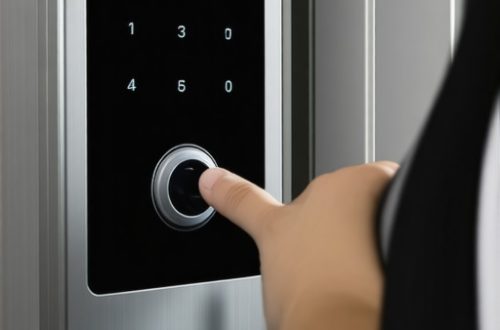
If you are experiencing a sticking door lock mechanism, don’t reach for the WD-40. That stuff is a magnet for dust and will eventually turn into a gummy sludge that traps the springs in the chambers. Instead, use a dry PTFE-based lubricant. If the sticking persists, it’s often a sign that the internal springs have lost their tension or the pins have developed ‘flats’ from years of use. This is the perfect time to consider a residential lock cylinder replacement or an office upgrade to a restricted system. Push-button locks for offices are a great secondary layer, but the primary perimeter should always be a high-quality mechanical restricted cylinder.
Benefit 3: Integration with Modern Access Control
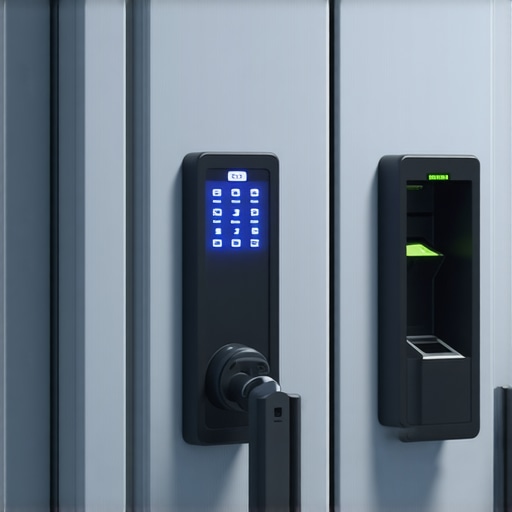
In 2026, the line between mechanical and electronic security is blurring. Restricted keyways now often come with ‘intelligent’ keys that contain a small encrypted chip. This allows for smart locks with geofencing features to work in tandem with mechanical overrides. You get the reliability of a physical piece of metal with the data tracking of an electronic system. You can program a key to only work between 9 AM and 5 PM, and if that key is lost, you don’t have to rekey the entire building; you simply delete that key’s digital ID from the business key management software. For those looking for convenience, voice-activated locks setup tutorial options are available for interior offices, but the external restricted keyway remains the ‘anchor’ of your security. When you think about the total cost of ownership, restricted systems save money by preventing the need for emergency rekeying every time a staff member leaves.
The Verdict: Trust Metal, Not Just Software
Security involves trust, not just metal. While it is tempting to go fully digital, a master locksmith knows that electronics can fail, batteries die, and signals can be jammed. A restricted mechanical keyway is a fail-safe that has worked for a century and has been perfected for the modern age. It provides a physical barrier that is both a psychological deterrent and a mechanical fortress. Don’t wait until you are the victim of a bypass or a duplication scam. Invest in restricted hardware today and ensure your office remains your own.