The Forensic Autopsy of a Dead Transponder: Why Your 2026 Car Won’t Start
That sickening silence follows the turn of the blade or the push of the button. You see the dashboard light up, but the engine refuses to crank. Instead, a small, blinking padlock icon or a security alert stares back at you. This isn’t a dead battery or a failed starter. This is a failure in the cryptographic handshake between your key and the vehicle. As a locksmith with over twenty-five years at the bench, I have seen the evolution of vehicle security from simple double-sided wafers to the complex 128-bit encrypted systems found in 2026 models. I teach my apprentices that if you have to force the key, you’ve already lost, but in the modern era, if the electronics don’t speak the same language, you are just a person holding an expensive piece of plastic and copper. Identifying why these systems fail requires a deep understanding of the physics of radio frequencies and the material science of circuit boards.
“Security is always a trade-off between convenience and protection.” – Industry Axiom
1. Rolling Code Desynchronization and Cryptographic Drift
The primary reason a 2026 transponder key stops working is the loss of synchronization within the rolling code algorithm. Modern vehicles do not use a static password. Every time you start the car, the Immobilizer Control Unit (ICU) and the transponder chip perform a mutual authentication. They use a pseudo-random number generator to agree on the next ‘code’ in a sequence that spans billions of possibilities. If the key is pressed repeatedly out of range of the vehicle, or if a battery failure occurs at the exact millisecond of a write-cycle, the key and the car can lose their place in that sequence. This ‘drift’ means the car expects code 5,005, but the key is sending code 5,010. The ECU immediately flags this as a theft attempt and enters a lockout state. Unlike older systems, 2026 AI-powered locksmith services often involve re-syncing these sequences through specialized OBDII diagnostic tools that can reset the rolling code window without needing a complete system flash.
2. Induction Coil Fatigue and Antenna Fractures
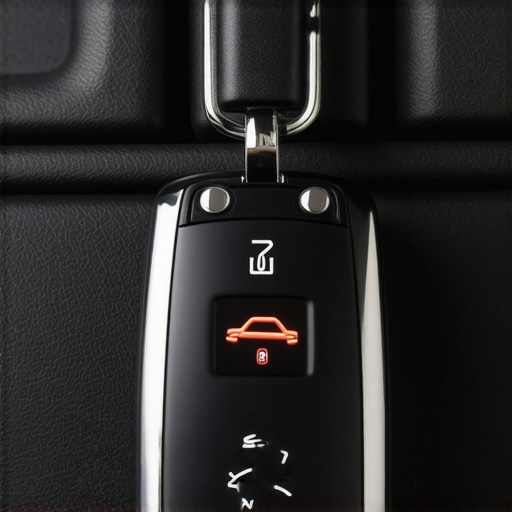
Inside your key fob sits a tiny copper coil. This is the antenna. When you insert the key or bring a proximity fob near the steering column, the car sends out a 134.2 kHz electromagnetic field. This field actually powers the chip inside the key; the key doesn’t always need its own battery to start the engine, only to operate the buttons. I have seen countless keys where a single drop onto a hard surface caused a micro-fracture in the solder joints of this induction coil. These joints are often no more than 0.005 inches thick. When the coil breaks, the chip cannot receive power from the car’s exciter ring. This is why you should know how to choose a reliable locksmith near me who possesses a frequency tester. A professional can instantly tell if the key is broadcasting a signal or if the internal antenna has become a paperweight. We often see this in high-security locks for rental properties where keys are handled roughly by multiple users.
3. The ‘Zinc-Alloy’ Trap: Physical Wear Affecting Electronic Proximity
While we focus on the electronics, the mechanical housing matters. Many 2026 keys utilize cheaper zinc-alloy or pot metal for the internal frame to save weight. Over time, the structural integrity of the fob degrades. If the transponder chip shifts even two millimeters out of its designated pocket inside the plastic casing, the signal may become too weak for the car’s receiver to pick up. This is a physics problem. The Inverse Square Law states that the intensity of the signal drops off rapidly with distance. A slightly misaligned chip results in an intermittent ‘Key Not Detected’ error. This is a common issue when people seek car lockout services for Tesla models or other high-end 2026 vehicles where the ‘Phone-as-a-Key’ backup fails and the physical RFID card or fob is poorly maintained.
“True security lies in the inability of an unauthorized user to reproduce the authentication signal.” – BHMA Security Standard Reference
4. Environmental Stress and Electrolyte Crystallization
Lock maintenance tips for winter 2026 often focus on the mechanical keyway, but the electronics are equally vulnerable. In extreme cold, the electrolyte in the CR2032 or lithium-polymer battery inside your fob can crystallize, causing a massive voltage drop. While the transponder is technically ‘passive,’ many 2026 systems use an ‘active-boost’ transponder to allow for push-to-start convenience from a pocket or purse. When the voltage hits a certain threshold, the signal-to-noise ratio becomes too high, and the car’s computer rejects the signal as ‘garbage data.’ Furthermore, humidity can lead to dendritic growth on the circuit board, tiny metallic ‘whiskers’ that short out the transponder’s memory chip. This is why automotive locksmith vs dealership for car key replacement is a vital debate; a locksmith can often repair the board or move the chip to a new housing, whereas a dealership will simply charge you $600 for a total replacement.
The Solution: Professional Diagnostics over Dealership Prices
When your 2026 transponder fails, do not let a ‘trunk slamer’ or an uncertified tech drill into your dash or force your ignition. A Master Locksmith uses tools like Lishi decoders to verify the mechanical cut and advanced transponder programmers to read the EEPROM data directly from your car’s computer. We can see the access logs for smart locks and vehicle systems to determine exactly why the handshake failed. Whether it is a biometric locks installation guide 2026 issue or a simple car key replacement, the logic remains the same: understand the mechanism before you apply the force. If you are managing a fleet, utilizing business key management software can help track these electronic failures before they leave a driver stranded. Keep your keys dry, avoid dropping them, and always have a spare programmed by a professional who knows the difference between a rolling code and a static ID.


![5 Access Control Fixes for Busy Co-working Spaces [2026]](https://prolocksmithco.com/wp-content/uploads/2026/04/5-Access-Control-Fixes-for-Busy-Co-working-Spaces-2026-75x75.jpeg)