
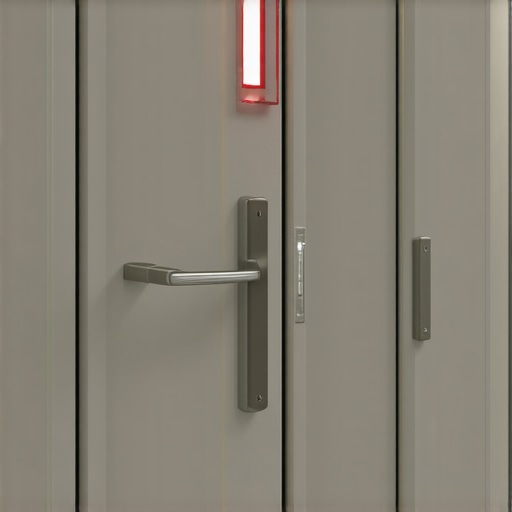
The Anatomy of Life Safety Hardware
I teach my apprentices that if you have to force the key, you’ve already lost. But when it comes to life safety, if a person has to think about how to open a door during a crisis, the hardware has already failed its primary mission. I have spent over twenty-five years at the bench, looking at the guts of commercial door systems, and the one thing that never changes is the absolute necessity of reliable exit devices. In my shop, we do not call them ‘push bars’; we call them panic hardware because that is exactly the scenario they are engineered to survive. Most people see a metal bar and think it is just a handle. I see the physics of a dogging mechanism, the tension of the return springs, and the precision of the latch bolt engagement. If you are running an office without high-quality commercial panic exit devices 2026 standards, you are not just risking a code violation; you are gambling with the safety of every soul in that building.
“Safety is not a gadget but a state of mind.” – Security Professional Axiom
The psychology of a panicked exit is chaotic. People do not look for levers or knobs; they push. This is why ANSI Grade 1 hardware is the only acceptable standard for high-traffic commercial environments. When we talk about door reinforcement for security, we are usually looking at how to keep people out, but panic hardware is about the physics of letting people out while simultaneously maintaining a perimeter. A cheap, big-box store exit device is often made of pot metal and thin aluminum extrusions. In a real emergency, those internal components can shear under pressure. A professional grade device uses solid brass, stainless steel, or architectural bronze. When a staff member hits that bar, the force is transferred through a series of mechanical linkages to the chassis, retracting the latch perfectly every single time.
The Internal Physics of the Panic Bar
Let us look at the mechanism zooming into the chassis. Inside a high-security exit device, there is a deadlatching feature. This is a small pin located next to the main latch bolt. When the door is closed, this pin stays depressed against the strike plate, which mechanically locks the main latch in place so it cannot be shimmed or ‘loided’ with a credit card or a screwdriver. This is the first line of defense against intruders. However, the moment the touch bar is depressed, the timing of the internal springs must be perfect. If the spring tension is too high, a smaller person might struggle to activate the exit. If it is too low, the bar might sag, causing the latch to drag and creating a sticking door lock mechanism that eventually fails. Knowing how to fix a sticking door lock mechanism often starts with understanding that the door itself has likely dropped, or the vertical rods are out of alignment. We do not just ‘fix’ these; we recalibrate the entire opening.
High-Tech Integration and 2026 Trends
As we move into commercial smart access control 2026 trends, we are seeing the marriage of heavy-duty mechanical hardware with digital oversight. Modern panic hardware now includes request-to-exit (REX) switches. These tiny microswitches inside the bar tell the security system that the door was opened from the inside, preventing a false alarm. We are also integrating high-tech lock bumping prevention into the exterior trim. While the exit bar handles the egress, the outside entry usually involves a high-security euro cylinder locks system or a mortar cylinder with a restricted keyway. These cylinders are designed with hardened steel pins and sidebar mechanisms that make picking or bumping virtually impossible for a common thief. This is a far cry from the basic hardware suggested in some neighborhood watch lock recommendations, which often focus on residential needs rather than the heavy-duty requirements of a multi-family building lock rekeying project or a corporate headquarters.
“Security is always a trade-off between convenience and protection.” – Industry Axiom
I often see facility managers trying to save a buck by hiring unlicensed handymen who do not understand the fire codes. A ‘trunk slammer’ might install a device that looks fine but fails to meet the NFPA 101 Life Safety Code. If the door is a fire door, the exit device must be fire-rated, meaning it lacks the ‘dogging’ feature that allows you to keep the bar depressed for free passage. In a fire, the latch must remain engaged to keep the door shut and contain the heat, but it must always allow for immediate exit. This is why professional installation is non-negotiable. We ensure a flush fit where the strike is shimmed perfectly so there is no rattle. A rattling door is a door that is wearing out its own hardware through vibration and friction.
Maintenance and the Longevity of Security
One of the biggest myths I fight daily is the use of the wrong lubricants. People see a squeaky bar and spray it with a generic penetrating oil. That is a death sentence for commercial hardware. Those oils attract dust and grime, eventually turning into a thick paste that jams the fine springs of the master wafers and pins. We use dry PTFE or specialized graphite only after a thorough cleaning of the chassis. If you are experiencing a sticking door lock, the issue is often structural. In our region, the changing seasons can cause a steel door frame to shift or grout to settle. This misaligns the latch and the strike. A master locksmith doesn’t just look at the lock; they look at the hinges, the closer, and the frame. If the door closer is leaking oil, the door will slam, eventually shaking the internal components of your expensive panic hardware loose. It is a symbiotic system. Your staff deserves a door that operates with a smooth, authoritative ‘click’ that signals the integrity of the workspace. Whether you are dealing with mobile locksmith services for lost car keys or upgrading a whole floor to 2026 smart lock trends for homes adapted for light commercial use, the hardware must be suited for the duty cycle. High-security isn’t about a fancy brand name; it is about the grade of the metal and the precision of the tolerances. Spend the money once on Grade 1 hardware, and you won’t be calling me at 3 AM to replace a shattered latch while your office sits wide open to the street.