
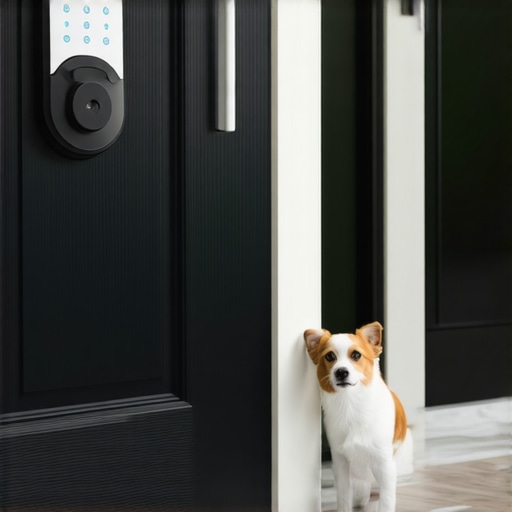
The 3 AM Wake-Up Call: A Locksmith’s Perspective
I once had a customer call me at 3 AM because she heard her pet door flapping wildly, followed by the sound of her mudroom door being kicked in. She thought her ‘smart’ pet door would keep the world out. It didn’t. When I arrived, I saw the problem immediately: a cheap plastic latch held back by a low-torque solenoid that a stiff breeze could have defeated. As a locksmith with 25 years at the bench, I see this every day. Homeowners spend thousands on integrated smart lock hubs 2026 but then cut a massive hole in their front door and cover it with a piece of flimsy acrylic. We need to talk about the physics of these devices because, frankly, most of them are security theater. Any time you compromise the structural integrity of a solid-core door, you are creating a vulnerability that no amount of software can fully patch.
The Internal Physics of the Pet Door Lock
To understand why these units often fail, you have to look at the ‘Mechanism Zooming’ perspective. A standard deadbolt uses a hardened steel bolt that extends at least an inch into a reinforced strike plate. In contrast, most smart pet doors rely on a tiny motorized pin. This pin is often made of zinc or glass-filled nylon. When we talk about benefits of installing smart locks for home security, we usually refer to Grade 1 or Grade 2 hardware. Most pet doors wouldn’t even pass a Grade 3 residential test. The solenoid, the part that actually moves the lock, is the heart of the system. In 2026, we see smart home security integration 2026 moving toward more robust actuators, but the physics remains the same: if the housing is plastic, a crowbar will win every time.
‘Security is always a trade-off between convenience and protection.’ – Industry Axiom
Why Most Smart Pet Doors are Gimmicks
The marketing tells you about RFID tags and best smart locks compatible with Alexa 2026, but they don’t tell you about the ‘leveraged bypass.’ If a burglar can reach their arm through the pet opening, they can often reach the interior thumbturn of your main door lock. This is why I always recommend installing a double-sided deadbolt if you have a pet door, provided local fire codes allow it. Even the most advanced integrated smart lock hubs 2026 can’t stop a physical reach-through. Furthermore, the electronic components are often poorly shielded. We see this in the automotive world too; the EV car key fob replacement costs 2026 are high because of the encryption, yet pet door fobs often use basic 125kHz or 13.56MHz signals that are easily cloned with a $20 device from the internet. It’s the same logic that leads people to call for emergency safe cracking services when their high-tech digital safes fail due to a cheap solenoid bounce.
The Anatomy of a Secure Installation
If you must have a pet door, you need to treat it like a commercial entry point. This means looking for units that utilize multi-point locking bars rather than a single top-down pin. The frame should be through-bolted with carriage bolts, not just screwed into the wood or metal skin of the door. When I perform emergency residential lockout solutions, I often see doors that have split because a pet door was installed without proper internal bracing. The weight of a heavy dog hitting that flap at a run puts constant stress on the door’s stiles and rails.
‘A lock is only as strong as the material it is mounted in.’ – The Master Locksmith Manual
In my shop, I tell people that if the hardware feels like a toy, it will perform like a toy. When you look at the cost of hiring a professional locksmith in 2026, a large portion of that fee is for the expertise in reinforcing these weak points that manufacturers ignore.
The Digital Vulnerability: Alexa and Integrated Hubs
The push for smart home security integration 2026 means your dog’s door is now on your Wi-Fi. This creates a digital ‘shear line’ that can be picked just like a mechanical cylinder. If your pet door is part of your best smart locks compatible with Alexa 2026 ecosystem, a voice command yelled through a window could potentially open your house. This isn’t science fiction; it’s a common configuration error. I’ve seen automotive laser-cut keys costs skyrocket because of the security layers needed to prevent similar hacks. Your home deserves that same level of scrutiny. Always ensure your pet door hub is on a separate VLAN and that ‘unlock’ voice commands require a secondary PIN.
The Verdict: Fortress or Folly?
Is it a gimmick? Mostly, yes. Unless you are buying a unit with a heavy-duty aluminum frame and a motor-driven steel dead-bar, you are just buying a fancy flap. For those in high-crime areas or regions with extreme weather, the plastic will warp, and the electronic strike will eventually jam, leading to emergency residential lockout solutions that could have been avoided. If you want real security, stick to high-security cylinders and reinforced strike plates. If you want convenience, get the pet door, but don’t pretend it’s a security feature. Security involves trust in the metal, not just the app on your phone.
Comments are closed.