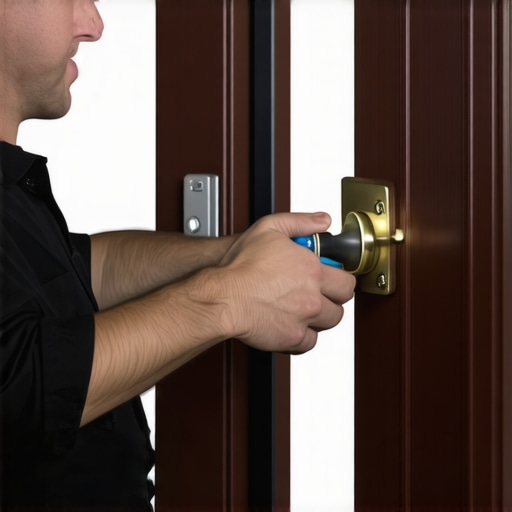
My First Auto Lockout Experience: A Wake-Up Call
I’ll never forget the day I faced my first auto lockout. It was a busy morning, and I accidentally left my keys inside my car. Frustration grew as I realized how crucial quick solutions are for locksmiths. That moment sparked my obsession with mastering auto lockout and deadbolt techniques to serve clients efficiently and build trust in my profession.
The Art of Quick Deadbolt Repairs: Lessons from the Field
Over the years, I’ve learned that installing and repairing deadbolts isn’t just about security; it’s about speed and precision. I always emphasize the importance of understanding different deadbolt systems and their unique mechanisms. When a client is locked out, every second counts, and knowing the right tools makes all the difference.
How to Choose the Right Lock Systems for Rapid Response
One thing I’ve discovered is that not all lock systems are created equal. For fast locksmith success, I prefer to work with reliable commercial lock systems that facilitate quick auto lockout resolution. For example, high-security deadbolts with smart features can streamline the process, especially in commercial settings where security and speed are paramount. You can explore top recommendations for commercial deadbolt solutions to enhance your service offerings.
What Are the Hidden Challenges in Auto Lockout Situations?
Have I truly seen all the obstacles locksmiths face during lockouts?
Absolutely. Each lockout scenario presents unique hurdles—whether it’s a jammed lock, a lost key, or a malfunctioning deadbolt. My experience shows that staying adaptable and continuously learning new lockout techniques is essential. External sources like deadbolt lockout solutions have helped me stay ahead in this game.
If you’re passionate about locksmithing, I encourage you to share your experiences or ask questions below. We can all learn from each other’s stories!
Is Your Lock System Ready for the Unexpected? Exploring Next-Level Deadbolt Technologies
In the realm of locksmithing, staying ahead means embracing emerging technologies that redefine security protocols. Modern deadbolt systems now incorporate smart features like biometric access, remote control, and integration with security networks. These innovations not only facilitate rapid response during lockouts but also elevate overall security standards for commercial properties. For instance, smart deadbolts with app controls allow locksmiths to troubleshoot and reprogram locks remotely, significantly reducing downtime for clients. To explore top-tier options, visit top commercial deadbolt solutions that are shaping the future of business security.
Understanding the Practical Challenges of Advanced Lockouts
While cutting-edge deadbolt systems offer promising benefits, they also introduce new challenges. Lockouts involving smart locks require specialized tools and knowledge beyond traditional methods. For example, dealing with encrypted digital keys or network connectivity issues demands continuous learning and adaptation from locksmiths. Additionally, security features like biometric scans can complicate quick access if not handled properly. Therefore, mastering these complex systems is crucial for providing reliable, fast service. External resources, such as deadbolt auto lockout solutions, serve as valuable guides for navigating these complexities effectively.
How Can Continuous Training Transform Lockout Response Efficiency?
Ongoing education is the backbone of professional locksmithing. Attending workshops, engaging with industry updates, and practicing with the latest tools ensure that technicians can handle diverse lockout scenarios swiftly. For instance, learning to operate new biometric deadbolt systems or integrating IoT-enabled security devices can drastically reduce service times. This commitment to knowledge not only boosts confidence but also reinforces your reputation as a trusted expert. To deepen your understanding, consider exploring auto lockout deadbolt solutions designed for rapid deployment and security enhancement.
Could Integrating AI and IoT Transform Your Lockout Strategies?
Imagine a future where artificial intelligence (AI) and the Internet of Things (IoT) seamlessly collaborate to prevent lockouts before they happen. Sensors could monitor lock status and alert technicians proactively, or AI algorithms might diagnose lock malfunctions remotely, guiding immediate repairs. Such innovations could revolutionize the locksmith industry, offering unparalleled speed and precision. As these technologies mature, locksmiths must stay informed about their development and practical applications to remain competitive. For more insights on integrating new tech, visit top commercial lock systems with IoT capabilities. Sharing your thoughts or experiences with innovative lockout solutions can inspire others and foster community growth—so don’t hesitate to comment or suggest related topics for future articles.
Embracing the Complexity: How Advanced Deadbolt Systems Challenge and Elevate Locksmith Expertise
Deep within my journey as a locksmith, I’ve encountered the fascinating challenge posed by cutting-edge deadbolt systems, especially those integrated with smart technology. These systems are not just security upgrades; they are a paradigm shift that demands a reevaluation of traditional techniques. For instance, smart deadbolts equipped with encrypted digital keys or remote access capabilities often require specialized tools and an understanding of digital security protocols, which I initially underestimated. This complexity pushes us to continuously learn and adapt, transforming our craft from simple mechanical manipulation to a sophisticated blend of cybersecurity and mechanical expertise.
Personal Reflection: The Balance Between Innovation and Practicality
Every new technology introduces a duality—on one side, the promise of enhanced security and rapid response; on the other, the potential for unforeseen technical glitches or vulnerabilities. I recall a particular instance when a client’s smart deadbolt malfunctioned due to a network issue, leaving them temporarily vulnerable. It was a stark reminder that embracing innovation must go hand-in-hand with thorough training and contingency planning. This experience reinforced my belief that staying ahead involves not only understanding the latest systems but also developing reliable backup strategies, such as traditional lockout techniques, to ensure uninterrupted service.
How Do You Stay Updated with Rapid Technological Changes in Deadbolt Security?
In my professional practice, I have found that continuous education is the armor against obsolescence. Attending industry workshops, participating in online forums, and subscribing to authoritative resources like deadbolt auto lockout solutions are essential. For example, I recently completed a certification on IoT-enabled security devices, which significantly expanded my toolkit. These efforts not only improve response times but also build confidence that I can handle the most sophisticated lockouts efficiently.
Future-Proofing Lockout Strategies: The Role of AI and IoT
Looking ahead, I am genuinely excited about the potential of AI and IoT to revolutionize our response strategies. Imagine sensors that monitor lock status in real-time, alerting us proactively before a lockout occurs, or AI diagnostics that identify malfunctions remotely, guiding us step-by-step through repairs. This proactive approach could drastically reduce downtime and increase client trust. However, integrating these technologies requires a nuanced understanding of both cybersecurity and mechanical troubleshooting, emphasizing that our evolution as locksmiths is ongoing and multi-dimensional. For those interested in pioneering these innovations, exploring top deadbolt solutions with IoT capabilities is a good starting point.
Harnessing Cybersecurity Expertise for Next-Generation Lockout Solutions
The evolution of deadbolt systems into smart, interconnected devices has transformed the locksmith landscape. Modern deadbolts often incorporate encrypted digital keys, biometric authentication, and remote access features, demanding a hybrid skill set that marries cybersecurity with traditional locksmithing. As I delved into this domain, I recognized that understanding digital security protocols, such as end-to-end encryption and vulnerability mitigation, became crucial. External sources like top commercial deadbolt solutions provide insights into integrating cybersecurity best practices into physical security systems, enabling us to preempt lockouts caused by cyberattacks or malfunctions.
What Are the Key Technical Challenges When Servicing Smart Deadbolt Lockouts?
Smart deadbolt lockouts often involve encrypted digital keys, network connectivity issues, and firmware malfunctions. These challenges can complicate rapid access, especially when dealing with proprietary protocols or outdated firmware. For instance, a client’s smart lock might be rendered inaccessible due to a firmware glitch or a cybersecurity breach, requiring specialized diagnostics and firmware reprogramming. My approach has been to stay continually updated through certifications, industry forums, and vendor partnerships, ensuring I can troubleshoot these sophisticated systems effectively. According to a recent study by industry experts, proactive maintenance and remote diagnostics significantly reduce service times and enhance reliability.
If you’re eager to deepen your understanding of these complex systems, I encourage you to share your experiences or ask questions. Our collective insights push the industry forward and help us adapt to these technological shifts.
Integrating AI and IoT: A Paradigm Shift in Lockout Prevention
Artificial intelligence (AI) and the Internet of Things (IoT) are poised to revolutionize lockout management. Sensors embedded in lock systems can monitor status in real-time, alerting technicians to potential failures before they escalate into lockouts. AI algorithms can analyze patterns of usage and predict malfunctions, enabling preemptive interventions. For example, a smart lock with IoT capabilities might notify me of a mechanical drift or connectivity loss, allowing me to guide the client through a remote troubleshooting process. This proactive approach minimizes downtime and enhances customer trust. As I explored these innovations, I found that understanding cybersecurity implications, such as data privacy and network security, is vital. Resources like top IoT-enabled lock solutions serve as valuable benchmarks for integrating these technologies effectively.
How Can Locksmiths Prepare for the Ethical and Technical Challenges of AI-Driven Lockouts?
The deployment of AI in lock systems raises ethical considerations about privacy and data security, alongside technical challenges like false positives or system failures. Locksmiths must develop protocols that balance technological benefits with client privacy, ensuring transparent communication about data usage. Technically, rigorous testing, regular updates, and contingency plans are essential. For instance, maintaining traditional backup methods ensures service continuity if AI-driven diagnostics fail. My ongoing education, including certifications in IoT security and AI applications, has been instrumental in navigating this complex landscape. Embracing these advancements, while respecting ethical boundaries, positions us as responsible professionals capable of delivering rapid, secure solutions.
If you’re passionate about pioneering these innovations, I invite you to share your insights or inquire about specific strategies. Together, we can shape the future of locksmithing in a digital age.
Things I Wish I Knew Earlier (or You Might Find Surprising)
The Hidden Depths of Deadbolt Mechanics
Initially, I thought all deadbolts were pretty much the same, but discovering the intricacies of different systems taught me that understanding unique mechanisms can save valuable time during lockouts and repairs.
Smart Locks Are Both a Blessing and a Challenge
Embracing smart deadbolt technology opened new doors in security, yet it also introduced complexities like firmware issues and cybersecurity concerns that I hadn’t fully anticipated at first.
The Power of Continuous Learning
Staying updated with industry trends through workshops and online resources has been crucial. It’s a relentless journey, but one that keeps me confident in handling even the most advanced lockout scenarios.
Backup Strategies Are Essential
Relying solely on high-tech solutions can be risky. Traditional lockout techniques remain invaluable, and having a backup plan ensures I can serve clients effectively regardless of technological hiccups.
The Future Is Interconnected
With IoT and AI making strides, I foresee a future where proactive lockout prevention becomes the norm, reshaping how locksmiths operate and serve their communities.
Resources I’ve Come to Trust Over Time
- Pro Locksmith Blog: An invaluable source for the latest in lock systems and lockout solutions, always updated with practical insights.
- Industry Certification Programs: Courses like IoT security and advanced locksmith techniques have expanded my technical skills significantly.
- Online Forums and Communities: Connecting with fellow professionals has provided real-world tips and moral support in tackling complex lockouts.
- Vendor Partnerships: Collaborating with trusted lock manufacturers ensures access to reliable tools and up-to-date product knowledge.
Parting Thoughts from My Perspective
Reflecting on my journey, I realize that mastering deadbolt security is a blend of technical expertise, adaptability, and continuous education. As technology evolves, so must we, embracing innovation while maintaining core skills like traditional lockouts. If this resonates with your experience or sparks new questions, I’d love to hear your thoughts. Sharing our stories helps us all grow and stay prepared for the unexpected in this dynamic field.



![How to Cut 2026 EV Key Fob Replacement Costs by 50% [Data]](https://prolocksmithco.com/wp-content/uploads/2026/04/How-to-Cut-2026-EV-Key-Fob-Replacement-Costs-by-50-Data-500x330.jpeg)