
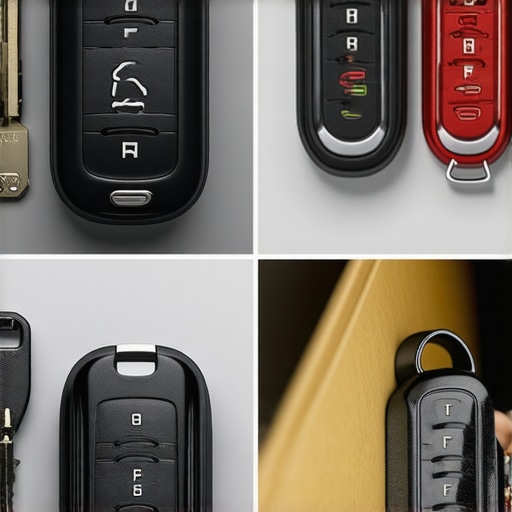
I once had a customer call me at 3 AM because he was stranded in a freezing rainstorm outside a closed shopping mall with a key fob that had simply died. His 2024 hybrid refused to recognize the transponder, leaving him locked out of his own mobility. He had called the dealership first, only to be told he needed a two hundred dollar tow followed by a three day wait for a service appointment where they would charge him six hundred dollars for a new proximity remote. I arrived with my mobile lab, decoded his door lock using a Lishi tool in under four minutes, and programmed an OEM-spec key on the spot for less than half the dealership price. This is the reality of the automotive security industry. Dealers treat keys as high-margin retail products, whereas a master locksmith treats them as a physics and data problem.
“Security is always a trade-off between convenience and protection.” – Industry Axiom
Understanding the internal physics of modern vehicle security is essential. When we discuss automotive transponder keys 2026 updates, we are looking at the evolution of Radio Frequency Identification (RFID) and Ultra-Wideband (UWB) technology. Your car key is not just a piece of metal; it is a sophisticated communication device that performs a digital handshake with the Engine Control Unit (ECU). When you attempt to start the car, the Immobilizer Control Unit (ICU) sends a burst of energy to the transponder chip in your key. This chip then broadcasts a unique, encrypted rolling code. If the code does not match the value expected by the car computer, the fuel pump remains disabled. Dealerships often claim they are the only ones with the proprietary software to access these systems, but a legitimate locksmith invests tens of thousands in diagnostic hardware like the Autel IM608 or Smart Pro to perform EEPROM flashing and OBD-II programming.
“A lock is only as good as the technician’s understanding of its bypass.” – Security Manual Guideline
The 2026 wireless lock protocols explained by engineers show a shift toward time-of-flight measurements, which prevent relay attacks by ensuring the key is physically near the car. This level of complexity is why lost key replacement for hybrids 2026 models requires specialized equipment that can maintain steady voltage to the vehicle during the handshake process. Beyond cars, we see similar technical shifts in residential and commercial sectors. High-tech lock bumping prevention now involves telescopic pins and sidebars that make traditional kinetic attacks impossible. For those interested in sustainable eco-friendly locks for homes, the best choice is not a disposable smart lock but a high-grade mechanical cylinder made of solid brass and nickel-silver components that can be rekeyed for fifty years rather than replaced. We are also seeing a massive increase in EV charging station lock security needs as vandals target copper cables and charging interfaces. Business key management software is becoming the standard for commercial properties to prevent the chaos of unauthorized key duplication. If you want to prevent future house lockouts, skip the cheap hardware store locks that use pot-metal zinc and plastic internal wafers. Those locks fail because the springs lose tension or the tailpiece snaps under the slightest pressure. A master locksmith understands that real security lies in the tolerances of the pins and the thickness of the strike plate. Whether you are dealing with fingerprint lock reliability tests or electronic gate lock systems, the physics remain the same: if the materials are cheap, the security is an illusion. Don’t let a dealership or a trunk-slammer scammer convince you that a drill is the only solution. A professional knows how to manipulate the mechanism without destroying the housing.