
The Apprentice’s First Lesson: Why Force is a Failure
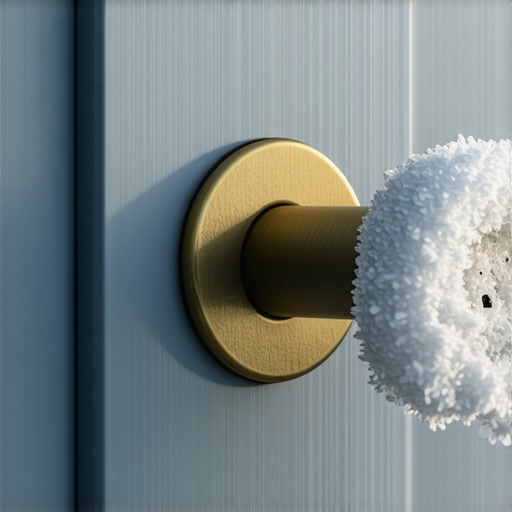
I teach my apprentices that if you have to force the key, you’ve already lost. I remember a young guy, barely twenty, trying to muscle a frozen deadbolt on a cold January morning in 2026. He thought a little extra torque would do the trick. Instead, the brass head of the key sheared clean off, leaving the blade stuck deep in the plug. That is the physics of a winter lockout. Metal contracts, tolerances vanish, and the brittle nature of cheap alloys becomes a liability. In my shop, we don’t look at a lock as just a piece of hardware; we see a precision instrument that demands respect, especially when the temperature drops below zero and the humidity turns into a mechanical adhesive.
The Forensic Autopsy of a Snapped Key
When a key snaps in the winter of 2026, it is rarely the fault of the metal alone. It is a systemic failure of the locking mechanism. Mechanism Zooming reveals that inside a standard residential deadbolt, there are five or six pin chambers. Each contains a bottom pin, a top pin (often a spool or serrated pin for security), and a tiny spring. These components are machined to tolerances of about .002 inches. When the 2026 winter freeze hits, the moisture inside the keyway crystallizes. These micro-crystals wedge between the pins and the cylinder wall, preventing the pins from reaching the shear line. If you apply rotational force while those pins are trapped, you are putting all that pressure on the thinnest part of the key blade, usually right at the first or second cut.
“Physical security is a trade-off between convenience and the physics of material science; ignoring the latter leads to total system failure.” – Locksmithing Standards Manual
The Material Science: Brass vs. Zinc
Most big-box store hardware is made of zinc die-cast or low-grade pot metal. These materials are notorious for their high thermal expansion and contraction rates. In 2026, we are seeing more residential keypad locks reviews that highlight failures not in the electronics, but in the structural integrity of the bolt itself. A high-quality lock uses 360-series brass or stainless steel. When we look at high-security euro cylinder locks, the internal components are designed to withstand extreme temperature shifts without binding. If you are using a cheap lock, the cylinder plug might contract more than the housing, causing a permanent bind that no amount of jiggling will fix.
Smart Locks for Smart Home Ecosystems in Extreme Cold
As a locksmith for smart home ecosystems, I see a lot of people installing best smart locks compatible with Alexa 2026 without considering the weather. Smart locks with video integration are fantastic for security, but their internal motors are calibrated for smooth operation. When the grease inside a gearbox thickens due to the cold, the motor has to work three times as hard. This leads to the ‘jammed’ notification on your phone. Furthermore, fingerprint lock reliability tests show a significant drop in success rates during winter because dry, cracked skin or frost on the scanner plate prevents an accurate read. If you are managing electronic locks for Airbnb properties, you must ensure your guests have a physical override key, or you will be calling me for an emergency service at 2 AM.
“Security is not a product you buy, but a process you maintain.” – Security Axiom
Door Lock Jamming Fixes 2026: The Correct Protocol
If you encounter a stubborn lock this winter, do not reach for the WD-40. That is a solvent, not a long-term lubricant. It will eventually attract dust and turn into a sticky paste that ruins the pin stacks. Instead, use a PTFE-based dry lubricant or a high-grade graphite, though PTFE is superior for high-security euro cylinder locks because it doesn’t conduct electricity or clump. For commercial panic exit devices 2026, the maintenance involves checking the vertical rods and the starwheel latches. These large mechanical assemblies can warp if the building settles during a deep freeze, leading to a situation where the door won’t latch or, worse, won’t open in an emergency.
Emergency Lock Changes After Break-In
Winter is also a peak season for residential burglaries because the nights are longer. If you require emergency lock changes after break-in, do not let a ‘trunk slammer’ drill your locks. A legitimate locksmith can often pick or bypass the lock without damage, or if the lock must be replaced, they will install something that actually offers protection, like an ANSI Grade 1 deadbolt with a reinforced strike plate. This is the difference between a $29 scammer who ruins your door and a professional who secures your home. When we perform these changes, we focus on the shear line and the hardening of the cylinder to prevent future attacks.
The Forensic Maintenance Checklist
To prevent your key from snapping this season, follow this technical protocol. First, inspect the strike plate. If the door has shifted, the bolt might be rubbing against the plate, creating friction that you feel at the key. Second, check the key for ‘stress whitening’ or small cracks along the spine. If you see them, discard the key immediately. Third, test the fingerprint lock reliability by cleaning the sensor with a microfiber cloth and checking battery levels; cold weather saps lithium-ion and alkaline batteries significantly faster than room temperature environments. Security is about the details, the microns, and the mechanical integrity of the metal in your hand. Keep it lubricated, keep it aligned, and never force the turn.