
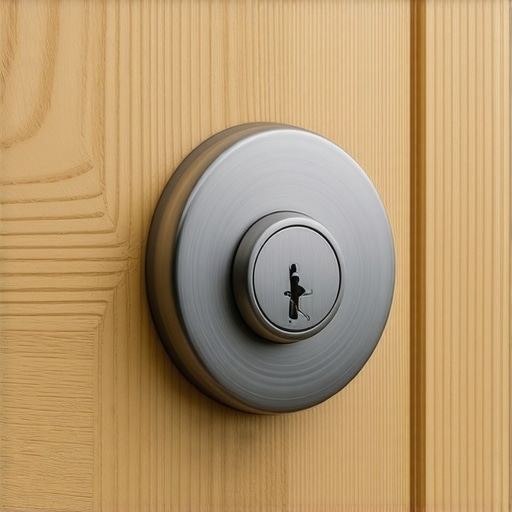
Most homeowners view their front door as a solid barrier between their family and the outside world, but as someone who has spent over 25 years behind a locksmith bench, I see things differently. To a professional or a motivated intruder, a door is simply a series of physics problems waiting to be solved. If you are relying on a twenty-dollar deadbolt from a big-box retail store, you are not protected; you are merely participating in the illusion of security. Most of those shiny boxes contain hardware made of zinc alloy, often referred to in the trade as pot metal, which has a structural integrity slightly better than a soda can when faced with a sledgehammer or a pipe wrench.
The Reality of Modern Security Scams
A lady came into my shop crying last Tuesday because a scammer drilled her lock and charged her six hundred dollars for a fifteen-minute job. She had been locked out of her house in a rainstorm and called the first number she saw on a search engine, a company claiming a twenty-nine dollar service call. That is the classic bait and switch. These trunk slammers arrive with a drill and no skills. A real locksmith uses a Lishi pick or a bypass tool to non-destructively enter your home. This poor woman ended up with a ruined door and a replacement lock that was actually lower quality than the one the scammer destroyed. It is my mission to ensure you do not become that next victim by understanding the metallurgy and mechanics of Grade 1 hardware.
“Security is always a trade-off between convenience and protection.” – Industry Axiom
The Physics of ANSI Grade 1 Hardware
When we talk about Grade 1 deadbolts, we are referring to the standards set by the American National Standards Institute (ANSI) and the Builders Hardware Manufacturers Association (BHMA). These are not just marketing terms; they represent grueling tests. A Grade 1 deadbolt must withstand ten strikes of 75 foot-pounds of force. In contrast, Grade 3 hardware, which is what most developers throw onto new builds to save a buck, only has to survive two strikes of 60 foot-pounds. If you have a Grade 3 lock, a solid kick from an average adult will likely shear the bolt or shatter the housing immediately.
The internal mechanism of a Grade 1 lock is a masterclass in material science. Inside the cylinder, you will find a series of pins and springs. In a high-security setup, we do not just use standard brass driver pins. We use spool pins, mushroom pins, and serrated pins. These are designed to catch on the shear line if someone attempts to pick or rake the lock. When a tension wrench is applied, these security pins create a false set, making the intruder think they have aligned the mechanism when they are actually further from opening it. Furthermore, a true Grade 1 deadbolt features a hardened steel bolt that extends at least one full inch into the door frame. Inside that bolt is often a free-spinning hardened steel roller. If a criminal tries to saw through the bolt with a hacksaw, the roller simply spins with the blade, preventing the teeth from biting into the metal.
The Weakest Link: The Strike Plate
You can buy the most expensive lock in the world, but if you install it with the half-inch screws that come in the box, your security is a joke. The strike plate is the metal piece on the door jamb where the bolt rests. In most residential settings, this plate is held in by tiny screws that only grab onto the thin decorative trim. One well-placed shoulder hit will rip the wood trim right off the wall. To achieve maximum front door protection, you must use a heavy-duty strike plate secured with three-inch hardened steel screws that anchor deep into the structural 2×4 studs of the house frame. This transfers the energy of a kick-in attempt from the flimsy door frame to the entire structure of the building.
“The strength of a lock is only as good as the material it is anchored to.” – Security Manual 101
Rekeying vs Replacing Locks Which is Better
Many customers ask me about rekeying vs replacing locks which is better for their specific situation. If your current lock is a high-quality Grade 1 or Grade 2 chassis that is structurally sound but you are worried about who has a copy of the key, rekeying is the smart choice. We take the cylinder apart, swap out the bottom pins to match a new key depth, and your old keys are instantly useless. It is cost-effective and keeps heavy-duty hardware out of the landfill. However, if your hardware is a Grade 3 zinc-based unit, do not bother rekeying it. That is like putting new tires on a car with a cracked engine block. In that case, replacing the unit entirely with a Grade 1 deadbolt is the only way to actually improve your security posture.
2026 Trends in Security and Smart Integration
As we move toward the hardware landscapes of 2026, we are seeing a massive shift in how we handle entry points. While I am a fan of traditional mechanical locks, the benefits of installing smart locks for home security are becoming hard to ignore, provided they are built on a Grade 1 chassis. We are now seeing door lock jamming fixes 2026 models that use motorized tension sensors to let you know if the door is not fully aligned, preventing the bolt from getting stuck due to house settling or humidity swelling the wood. We are also seeing specialized smart locks for pet doors that use RFID technology to ensure only your animal enters, integrated directly into your home security mesh.
Automotive security is also bleeding into the residential world. With the rise of EV keyless entry troubleshooting and the high automotive laser-cut keys costs, homeowners are demanding the same level of encryption for their front doors. In 2026 trends in automotive security, we see rolling codes and dual-factor authentication becoming standard. If you are looking at garage door lock upgrades 2026, expect to see locks that sync with your vehicle so that the garage only unlocks when your specific car is in the driveway. Even car lockout services for Tesla models are moving toward cloud-based credentials, and your home is next. But remember, no matter how smart the computer is, if the bolt is made of cheap metal, the physics of a crowbar will always win.
The Sensory Check of a Master Locksmith
When I install a lock, I do not just look at it; I listen to it. A Grade 1 deadbolt should have a crisp, metallic thud when the bolt throws. There should be no dragging or friction. If you have to pull or push on your door to get the key to turn, your alignment is off. This friction puts lateral pressure on the pins, causing them to wear down prematurely. Over time, this leads to the key sticking or the cylinder failing entirely. I always recommend a dry PTFE-based lubricant. Never use WD-40 in a lock cylinder; it is a solvent, not a true lubricant, and it will eventually attract gunk and turn those delicate springs into a sticky mess. If you want your security to last decades, treat it like the precision instrument it is.