
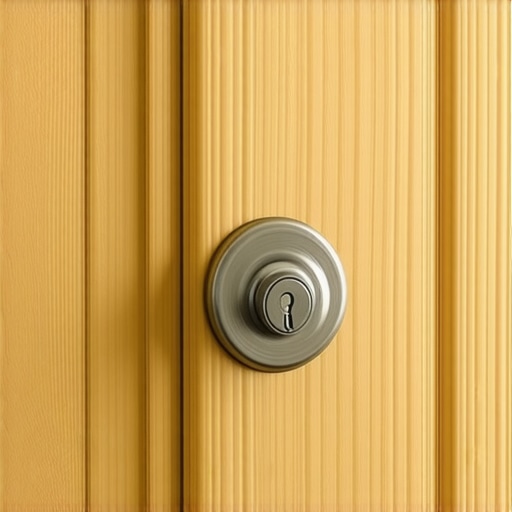
Burglars do not play by the rules, and most homeowners are fighting a war they already lost because they bought a lock based on the color of the box at a big-box retailer. I have spent 25 years at the bench, looking at the guts of thousands of locks, and I can tell you that physics does not care about your aesthetic. If you are relying on a zinc-alloy deadbolt to protect your family, you might as well use a screen door. A lady came into my shop crying because a scammer drilled her lock and charged her six hundred dollars for a fifteen-dollar replacement. She was locked out, vulnerable, and a ‘trunk slammer’ took advantage of her desperation by destroying a perfectly good cylinder that could have been picked or shimmed in seconds by a pro. That is why I do what I do. I want you to understand the difference between a lock that looks shiny and one that actually stops a kick-in.
The Psychology of the Entry: Kick-ins vs. Manipulation
Most people think burglars are like those guys in the movies, meticulously picking a lock with a set of tools. In the real world, especially in residential settings, the primary method of entry is brute force. A standard door frame is nothing more than a few pieces of soft pine. If your deadbolt only extends half an inch into that pine, one solid kick from a boot will splinter the wood and the door will fly open.
“Security is always a trade-off between convenience and protection.” – Industry Axiom
When we talk about selecting the best residential door locks for safety and durability, we are talking about Grade 1 hardware. The American National Standards Institute (ANSI) grades locks from 1 to 3. Grade 3 is what you find on the discount shelf; it is meant for internal doors where security is a secondary concern. Grade 1 is the gold standard, tested to withstand 10 strikes of 75 foot-pounds of force.
Mechanism Zooming: The Physics of the Shear Line
To understand why a lock fails, you have to look at the pins. Inside a standard pin-tumbler lock, you have a series of stacks. Each stack contains a spring, a driver pin, and a key pin. When the correct key is inserted, the gap between the key pin and the driver pin aligns perfectly with the shear line, allowing the plug to rotate. Cheap locks use standard cylindrical pins that are easy to ‘rake’ or ‘bump.’ Higher-end security locks use security pins, such as spool pins or serrated pins. A spool pin is shaped like an hourglass. When a picker tries to lift it, the ‘waist’ of the pin catches on the shear line, creating a ‘false set.’ It makes the picker think they have succeeded when they have actually trapped the mechanism. If you are worried about app-controlled door locks security risks, remember that while a hacker might try to bypass your encryption, a local thief is still going to look at the physical vulnerability of your cylinder. Electronic gate lock systems often fail here too; they have fancy keypads but the actual deadlocking bolt is made of soft pot metal that shears under pressure.
The Critical Failure: Why Your Deadbolt is Only Half the Story
I tell my customers that a deadbolt is a system, not a component. You can buy a two-hundred-dollar high-security cylinder, but if you install it with the half-inch screws that come in the box, you are wasting your money. The strike plate is the piece of metal on the door frame that the bolt slides into.
“A lock is only as strong as the door frame it’s attached to.” – Security Manual Axiom
You need three-inch hardened steel screws that pass through the strike plate, through the shim, and deep into the 2×4 wall studs behind the frame. This transfers the energy of a kick from the flimsy trim to the actual structure of the house. This is the difference between a door that pops open and one that holds firm until the police arrive.
Signs You Need to Change Your Door Locks Immediately
If you are noticing a ‘crunch’ sound when you turn the key, or if the plug feels ‘mushy,’ you are looking at internal fatigue. This is one of the clearest signs you need to change your door locks immediately. Inside the cylinder, the brass pins wear down over thousands of cycles. Eventually, the pins will not reach the shear line even with the correct key. This leads to a door lock jamming fix that usually requires a locksmith to drill the core because the mechanical failure is internal. Also, look for ‘shaving’ or metal dust around the keyway. This indicates that the plug is misaligned and is grinding against the housing. If you are in an apartment and your key feels loose, you should be asking about 24/7 mobile locksmith for apartments services to get a rekey or replacement before you are stranded at midnight.
Addressing the 2026 Tech Landscape: Digital vs. Mechanical
As we move toward more integrated homes, I see more door lock jamming fixes 2026 related to solenoid failures in smart locks. While app-controlled door locks offer convenience, they introduce a mechanical weak point: the motor. If the motor lacks the torque to throw the bolt fully because the door is slightly warped, the lock stays ‘partially engaged,’ which is a massive security risk. For businesses, the commercial master key system advantages for businesses remain superior. A master key system allows for ‘key control’ using restricted keyways like Schlage Primus or Medeco, where keys cannot be copied at a hardware store kiosk. Speaking of copies, car key duplication costs 2026 are skyrocketing, and EV car key fob replacement costs 2026 can hit five hundred dollars due to the rolling code encryption. It is the same logic as your home: you pay for the complexity of the internal logic to prevent easy duplication.
The Forensic Repair: How to Fix a Sticking Door Lock Mechanism
Before you call me out for a service charge, check your lubrication. I see people spray WD-40 into their locks all the time. Stop it. WD-40 is a solvent, not a long-term lubricant; it attracts gunk and eventually turns into a sticky paste that freezes the pins. Use a dry PTFE or graphite-based lubricant. If the lock is still sticking, check the hinges. If the door has sagged, the bolt will hit the strike plate rather than sliding into the hole. You can often fix this by tightening the top hinge or using a ‘hinge tweaker’ to realign the door. A properly installed deadbolt should throw with a ‘thunk’ and zero resistance. If you have to pull or push on the door to get the key to turn, you’ve already lost the battle against physics. “