
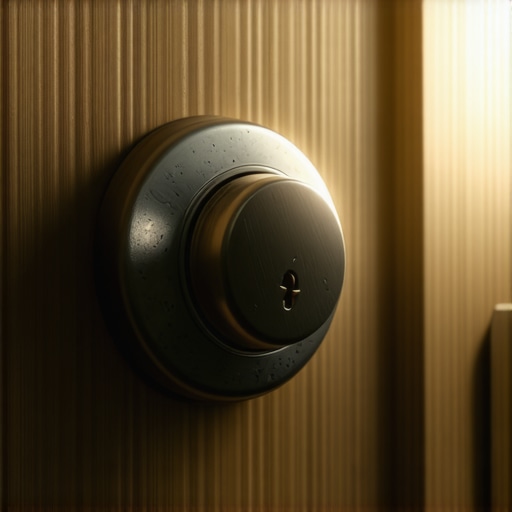
The Hard Truth About Your Front Door
A lady came into my shop crying because a scammer drilled her lock and charged her six hundred dollars for a ten dollar zinc deadbolt. It is a story I hear far too often in my twenty-five years at the bench. She had a lockout situation, found a random number online, and instead of a professional with a pick set, she got a trunk slammer with a cordless drill and a predatory invoice. This is the reality of the modern security landscape where marketing often trumps actual physics. When we talk about home protection, most people point to their deadbolt as the primary line of defense. However, if that bolt came from a big-box retail shelf, it is likely the weakest link in your entire perimeter. Security is a physics problem, not just a brand name. Most retail hardware is manufactured from pot metal, a low-grade zinc alloy that has the structural integrity of a soda can when under duress. A professional understands that a lock is a system of tolerances, metallurgy, and mechanical resistance.
“Security is always a trade-off between convenience and protection.” – Industry Axiom
Mechanism Zooming: The Physics of Failure
To understand why your deadbolt might fail, we have to look at the internal physics of the cylinder. Inside a standard pin-tumbler lock, you have a series of stacks consisting of a spring, a driver pin, and a key pin. In high-quality hardware, these pins are machined from nickel-silver or hardened steel to tolerances within three-thousandths of an inch. In the cheap hardware found at local hardware stores, those pins are often made of soft brass or even plastic-filled composites. When a burglar applies a tension wrench and a rake, the soft metal of the plug deforms, creating a ledge that makes it easier to set the pins. This is why 24/7 emergency locksmith services explained to customers often focus on the quality of the internal components rather than the finish on the outside. If the shear line—the boundary between the plug and the shell—is not perfectly crisp, the lock is vulnerable to bumping and picking. Furthermore, the springs in cheap locks lose their tension over time, leading to a mushy feel. When you turn your key and feel a crunch, that is the sound of metal fatigue and poor machining. It means your security is already compromised.
The Illusion of the Grade 3 Rating
The American National Standards Institute (ANSI) and the Builders Hardware Manufacturers Association (BHMA) grade locks from one to three. Grade 1 is the highest, intended for commercial use, while Grade 3 is the bare minimum for residential. Most neighborhood watch lock recommendations focus on having a deadbolt, but they rarely specify the grade. A Grade 3 deadbolt only has to withstand two blows from a hammer and 150 foot-pounds of torque. That is nothing. A determined intruder can kick through a Grade 3 assembly in seconds, not because the lock itself breaks, but because the strike plate is held in by half-inch screws that only grip the decorative wood trim of the door frame. When we perform emergency lock changes after break-in, we almost always find the wooden jamb splintered because the strike plate was the failure point. We replace those with heavy-duty steel plates secured by three-inch hardened steel screws that bite directly into the structural wall studs. This moves the physics of the impact from the brittle wood to the frame of the house itself.
Modern Evolution: From Brass to Biometrics
The industry is shifting toward more complex systems, but the physical principles remains the same. Smart locks with video integration are becoming popular, and while they offer excellent convenience, they must be paired with high-quality physical hardware. I always tell my apprentices that a smart lock is just a computer strapped to a mechanical bolt; if the bolt is weak, the computer is useless. For those looking for better control, access logs for smart locks allow you to see exactly who entered and when, which is a massive upgrade over traditional keys that can be duplicated at any kiosk. In the commercial sector, we are seeing a massive push for touchless entry systems for offices. These systems use RFID or mobile credentials to retract the latch, reducing wear and tear on mechanical components. Similarly, electronic gate lock systems provide a robust barrier for perimeter security, often utilizing electromagnetic shears that can withstand thousands of pounds of force. Even in the automotive world, the technology is advancing. We now provide keyless ignition repair services for vehicles that rely on rolling code transponders. While biometric keyless entry for cars is on the horizon for more consumer models, the current focus is on the encryption of the ECU communication to prevent relay attacks.
“The most important part of any lock is the part that connects it to the structure.” – Modern Security Manual
Commercial Grade Security for the Home
If you truly want to secure your home, you should look at what we install in hospitals and schools. Panic bar installation and repair for commercial buildings is a staple of our business because these devices are designed for millions of cycles and high-stress environments. While you might not put a panic bar on your front door, you can use the same philosophy by installing a high-security cylinder with spool pins or serrated pins. These are anti-pick components that catch on the shear line when tension is applied, tricking the intruder into thinking the pin is set when it is not. This technical wizardry is what separates a master locksmith from a handyman. We look at the metallurgy of the bolt itself—it should have a hardened steel core that spins freely when a hacksaw attempts to cut through it. This prevents the blade from gaining purchase, a simple but effective physics-based defense. Whether it is a residential deadbolt or a complex commercial system, the goal is to increase the time and noise required to bypass the opening. Most burglars will move on to the next house if they see a high-security keyway and a reinforced frame. Your security is not just about the lock; it is about the message you send to anyone looking for an easy target. Invest in quality hardware, ensure it is installed with structural fasteners, and never trust a technician who reaches for a drill before they reach for a pick. Real security is earned through precision and solid metal, not through a cheap price tag or a fancy box.