
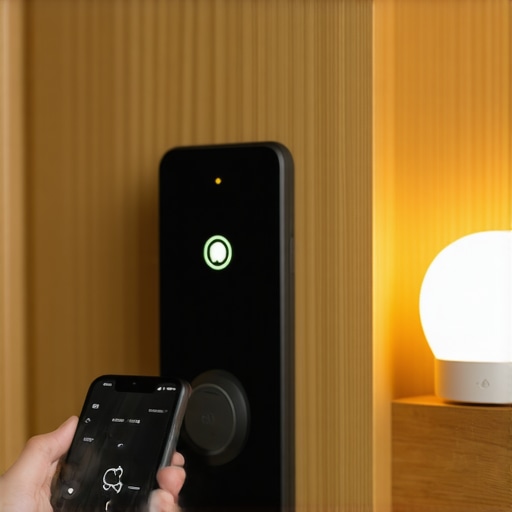
The Illusion of Digital Safety vs. Physical Reality
I see it every single day in my shop. A customer walks in clutching a shiny box they bought at a big-box retailer, convinced that a $150 piece of plastic and circuitry is going to turn their home into Fort Knox. Burglars do not care about your app. They care about physics. They care about how much force it takes to bypass the strike plate or whether the cylinder can be defeated with a simple bump key. When we talk about how to connect your deadbolt to a smart home ecosystem, we are not just talking about Wi-Fi signals and Bluetooth pairing. We are talking about the mechanical interface between a motor and a hardened steel bolt.
A lady came into my shop crying because a scammer drilled her lock and charged her six hundred dollars for a fifteen-dollar replacement that did not even meet Grade 3 standards. She wanted a smart lock because she thought the tech would protect her from people like that. I had to explain to her that if the hardware underneath the tech is garbage, the tech is just a notification that your house is currently being robbed. Establishing a smart home ecosystem starts with the foundation of the best residential door locks for safety and durability. If you are starting with a pot-metal deadbolt from a discount bin, you are already behind the curve.
“Security is always a trade-off between convenience and protection.” – Industry Axiom
Analyzing the Mechanical Interface
Before you even touch a mobile app locksmith booking 2026 interface, you need to understand the tailpiece. The tailpiece is the metal bar that extends from the back of the cylinder into the deadbolt’s turning mechanism. In a traditional setup, your thumbturn moves this. In a smart ecosystem, a motor moves it. The torque requirements for these motors are precise. If your door is misaligned, even by a sixteenth of an inch, the motor will strain. This leads to gear stripping and battery drain. In urban areas where high-rise buildings settle or in regions where humidity swells wood frames, this alignment is the difference between a secure home and a jammed motor.
When selecting hardware, look for ANSI Grade 1 certification. Most consumer-grade smart locks are Grade 2 or Grade 3. Grade 1 means the lock has been tested to withstand 250,000 cycles and ten strikes of 75 foot-pounds. If you are connecting a deadbolt to a hub, the hardware must be robust enough to handle the automated cycles without the manual feedback a human gets when they feel a key sticking. You must ensure a flush fit. If you have to pull or push the door to get the deadbolt to throw, your smart lock will fail within six months.
Choosing Your Protocol: Zigbee, Z-Wave, or Matter
The bridge between the physical brass and your smartphone is the communication protocol. We are moving away from proprietary closed systems into the era of Matter and Thread. However, for a locksmith who values reliability, Z-Wave remains the gold standard for residential security. It operates on a different frequency than your 2.4 GHz Wi-Fi, meaning it will not compete with your Netflix stream for bandwidth. This is crucial for weatherproof outdoor locks reviews because signal penetration through brick and mortar is a physics limitation, not just a software one.
If you are looking for affordable biometric door hardware, you need to verify the False Acceptance Rate (FAR). Cheap biometric scanners can be fooled by high-resolution photos or even residual skin oils. High-quality systems use capacitive sensing to detect the electrical charge of your skin. When you integrate this into a smart home ecosystem, the hub acts as the brain, but the lock is the muscle. You want a system that locally processes the biometric data rather than sending it to a cloud server where it can be intercepted.
“A lock is only as strong as its weakest point, which is usually the door frame.” – Master Locksmith Credo
The Forensic Anatomy of the Installation
The installation is where most homeowners and trunk-slammers fail. You start with the strike plate. A standard strike plate comes with half-inch screws that barely bite into the door casing. I tell my apprentices that those screws are just there for decoration. To truly secure a deadbolt, you need three-inch hardened steel screws that anchor into the wall stud behind the casing. This prevents the door from being kicked in, which is still the primary method of entry for burglars, regardless of how many cameras you have.
Next, consider the cylinder. If you are worried about automotive transponder keys 2026 updates, you already know about encrypted signals. Your house should be no different. If your smart lock uses a standard SC1 or KW1 keyway, it can be picked or bumped in seconds by someone with a five-dollar tool. Use a high-security cylinder like a Medeco or Assa Abloy with your smart lock if the hardware allows. This combines the physical resistance of sidebars and angled cuts with the digital convenience of remote access.
2026 Industry Trends and Costs
Looking at locksmith costs in urban areas 2026, we see a rise in service fees due to the complexity of these systems. It is no longer just about a file and a blank key. We carry thousands of dollars in diagnostic equipment. For those managing larger properties, master key systems for hotels 2026 are integrating with mobile credentials, allowing guests to bypass the front desk. This same tech is trickling down to residential users. You can now issue a temporary digital token to a dog walker that expires in two hours. However, this convenience introduces a new vector: the 2026 locksmith insurance claims guide now specifically addresses digital breaches and software failures. If your lock stays open because of a firmware bug, your insurance company might fight your claim if there is no sign of forced entry.
Environmental Factors and Maintenance
Weather is the enemy of all things mechanical. In coastal cities, salt air will corrode zinc internals in weeks. In the Midwest, the freeze-thaw cycle can crack cheap plastic housings. When reading weatherproof outdoor locks reviews, look for an IP (Ingress Protection) rating of at least IP65. This ensures the electronics are sealed against dust and low-pressure water jets. But don’t forget the lubricant. Never use WD-40. It is a solvent, not a long-term lubricant. It will gum up the pins and attract dirt. Use a high-quality PTFE-based spray or dry graphite. If the key feels gritty, that is one of the signs you need to change your door locks immediately or at least have a professional perform a teardown and ultrasonic cleaning.
The EV Charging Station Connection
An emerging niche is EV charging station lock security. As more people install high-voltage chargers in their driveways, these become targets for copper thieves and vandals. Connecting these locks to your home ecosystem allows for a unified security posture. You can set a rule that the driveway gate only unlocks when your specific vehicle’s transponder is within ten feet and the charger is disengaged. This is the true power of an ecosystem: making different security layers talk to each other to create a proactive defense rather than a reactive alarm.
Final Operational Verdict
Connecting your deadbolt to a smart home is a project that requires mechanical precision before digital configuration. Start with a solid, Grade 1 deadbolt. Reinforce the frame with long screws and a heavy-duty strike plate. Choose a communication protocol like Z-Wave or Matter that offers local control. Avoid the trap of the cheapest option, as the locksmith costs in urban areas 2026 to fix a botched DIY job will far exceed the price of doing it right the first time. Security is about layers. The digital layer is just the top coat. If the metal beneath it is soft and the installation is sloppy, you aren’t living in a fortress: you are living in a box with a very expensive doorbell. Trust the physics, verify the hardware, and keep your firmware updated. That is how you secure a home in the modern era.