
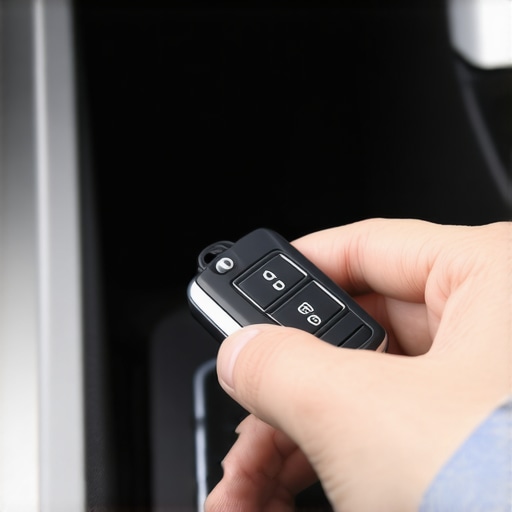
The 3 AM Reality Check: When DIY Becomes a Disaster
I once had a customer call me at 3 AM because he was stranded at a gas station in the middle of a sleet storm. He had bought a transponder key off a discount website and followed a ‘simple’ online guide to program it himself. Halfway through the sequence, his car’s ECU (Electronic Control Unit) decided he was trying to steal the vehicle. The immobilizer kicked in, locked the starter, and flashed the security light like a disco ball. By the time I arrived with my professional diagnostic tablet, he was shivering and looking at a massive towing bill on top of my emergency service fee. This is why 24/7 emergency locksmith services explained in manuals don’t always mention the risk of bricking your car’s brain. Modern security isn’t just about a physical blade; it is a complex digital handshake.
“Security is always a trade-off between convenience and protection.” – Industry Axiom
The Physics of the Transponder Handshake
To understand car key programming, you have to look past the plastic head. Inside that shell sits a tiny transponder chip—usually a glass or ceramic capsule. When you insert the key into the ignition or bring a proximity fob near the start button, an induction coil (an antenna) wrapped around the ignition cylinder energizes. This coil emits a low-frequency electromagnetic field, typically at 125 kHz or 134 kHz. This pulse powers the chip just long enough for it to broadcast a unique alphanumeric code back to the car. If the code matches what is stored in the EEPROM (Electrically Erasable Programmable Read-Only Memory) of the immobilizer module, the fuel pump is allowed to prime and the spark plugs to fire. Without this, you are just turning a piece of metal in a cylinder. The technical precision required is why automotive laser-cut keys costs are higher than traditional edge-cut keys; the physical tolerances must be perfect for the lock to rotate, but the digital tolerances for the rolling code are even tighter.
The Truth About DIY Programming
Can you program a key yourself? The honest answer is: sometimes. Many vehicles from the early 2000s used ‘On-Board Programming’ (OBP). If you had two working master keys, you could perform a specific sequence—turn key A to ‘on’ for five seconds, then key B, then the new key—to introduce a third chip to the system. However, manufacturers realized this was a security hole. Today, most modern vehicles require an active connection to the OBD-II port. We use specialized computers like the Autel IM608 or the Smart Pro, which bypass the car’s security firewall to write data directly into the module. For those looking at car key duplication costs 2026, expect the price to rise as encryption moves from 40-bit and 80-bit up to 128-bit AES encryption. This isn’t a scam to keep you coming to the shop; it is a necessity to stop high-tech thieves using signal boosters.
“High-security systems must be designed to withstand not just physical force, but logical bypass.” – ANSI/BHMA Security Standard A156.115
Anatomy of the Laser-Cut Key
You might hear them called ‘sidewinder keys.’ Unlike a traditional key with teeth on the top and bottom, these have a serpentine groove milled into the face of the blade. These are cut with a high-speed carbide end mill that spins at 10,000 RPM. The reason we use these is pick-resistance. A standard lock uses five or six pin tumblers. A high-security automotive lock uses split-wafers that must be moved to specific heights simultaneously. If you use a cheap zinc-alloy blank from a big-box store, the metal is too soft. It will flex under the torque of the ignition spring, eventually snapping inside the cylinder. A master locksmith only uses nickel-silver or high-grade brass. When considering the cost of hiring a professional locksmith in 2026, you are paying for that material science and the $10,000 machine required to mill it to a 0.001-inch tolerance.
Detecting Tampering and Ensuring Reliability
If your key is suddenly sticking or the transponder fails intermittently, look for signs of tampered locks detection. Scammers or thieves may use ‘jiggler keys’ or ‘Lishi’ style tools that can mar the internal wafers. If the internal mechanism is scarred, even a perfectly programmed key won’t work. We also see this in fingerprint lock reliability tests for home units—electronic failure is often a symptom of mechanical stress. For vacation home owners, locksmith services for vacation homes often recommend smart locks with video integration, but for your car, the best ‘smart’ upgrade is a properly cut, high-quality backup key stored in a safe place. To prevent future house lockouts or car lockouts, avoid the ‘all keys lost’ scenario. Programming a second key when you have a working one is cheap. Programming a key when the system is locked down and you have zero working keys involves pulling the ECU and desoldering chips. That is the difference between a $150 job and a $1,000 nightmare.
The Bottom Line on Automotive Security
Forget the WD-40. If your ignition is sticky, use a dedicated synthetic lock lubricant with PTFE. Graphite is old-school and eventually turns into a gunk-filled paste that kills transponder read-rates. Security is about maintaining the tightest tolerances possible between the metal, the magnetics, and the code. Whether you are looking at smart deadbolts with fingerprint scanners for your front door or a new fob for your truck, stop looking for the cheapest option. Look for the most reliable one. A lock is a physics problem, and the wrong answer leaves you in the rain at 3 AM.