
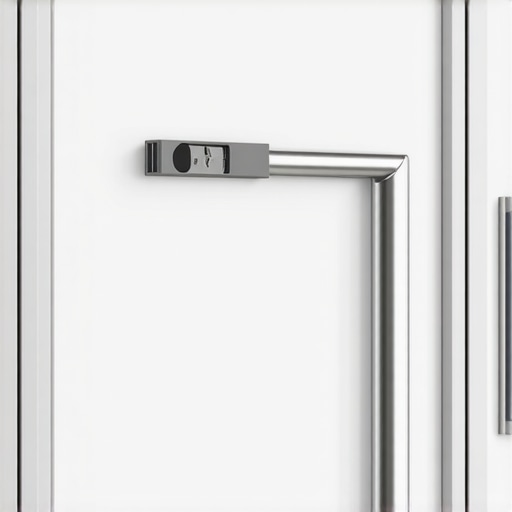
The Apprentice Lesson: Why a Click Means Life or Death
I teach my apprentices that if you have to force the key, you’ve already lost. But when it comes to commercial exit doors, if you have to throw your shoulder into the bar to get it to open, someone might actually die. I remember a kid I was training back in ’98. He thought a panic bar was just a glorified handle. I had to sit him down and explain that a Rim Exit Device is a precision-engineered life-safety tool. We were looking at a failed unit in a local warehouse. The pot-metal internal cam had snapped because the door was misaligned by just a sixteenth of an inch. That tiny fraction meant the latch was binding, and the user was putting fifty pounds of pressure on a part designed for five. In this business, the mechanics are the truth; the marketing on the box is just noise. If your business hardware isn’t singing a clean, mechanical ‘click’ every time it’s pressed, you aren’t just looking at a repair bill; you’re looking at a massive liability.
“Security is always a trade-off between convenience and protection.” – Industry Axiom
The Anatomy of an Exit: Mechanism Zooming
When we talk about whether your business exit door is legal, we have to look at the internal physics of the Panic Hardware. Most people see a metal bar. I see a chassis, a touch bar, a return spring, and a latch-bolt assembly. In a high-quality Grade 1 device, like a Von Duprin or a Sargent, the internal slide is usually stainless steel or high-density brass. Cheap big-box alternatives use zinc die-cast parts that fatigue after a few thousand cycles. High security locks vs standard locks comparison usually focuses on pick resistance, but in commercial exits, security is about reliability. The latch bolt must have a deadlocking feature. This is a small pin or secondary bolt that, when the door is closed, prevents a criminal from ‘shimming’ the latch with a credit card or a shove-knife. If you can see a gap and push that latch back with a screwdriver, your hardware is either broken or garbage. The spring tension inside the rail must be calibrated to allow for a maximum of 15 pounds of force to release the latch, per NFPA 101 Life Safety Code. If your door has swelled due to the humidity or the building has settled, that tension could be tripled, making the exit illegal and dangerous.
ANSI Grades and Material Science
I don’t install Grade 3 hardware on a commercial building. Period. If a customer asks for it, they can call a ‘Trunk Slammer’ who doesn’t care about their fire marshal inspection. ANSI Grade 1 hardware is tested to one million cycles. Grade 3 is lucky to hit two hundred thousand. When you consider the benefits of installing smart locks for home security, you’re looking at convenience, but in a business, you need business key management software integrated with hardware that can withstand a stampede. The strike plate is another forensic failure point. I often see ‘pro’ locksmiths use the 1-inch screws that come in the box. I throw those in the scrap bin. We use 3-inch hardened steel fasteners that bite into the structural studs behind the frame. This prevents ‘kick-ins’ and ensures the door frame doesn’t bow when the door is slammed by heavy foot traffic.
“All exits shall be maintained free of all obstructions or impediments to full instant use in the case of fire or other emergency.” – NFPA 101 Life Safety Code
The Evolution of Access: From Rim Devices to EV Integration
We are moving into an era where locksmith services for electric vehicles 2026 and high-tech facility management are merging. Business owners are now asking for smart locks with video integration on their rear exits. While this is great for loss prevention, it creates a legal minefield. You cannot simply put a residential smart deadbolt with fingerprint scanner on a fire exit. It’s illegal. You need electrified exit devices (delayed egress or controlled egress) that are tied directly into the building’s fire alarm system. If the smoke detector trips, the magnet or the solenoid must drop power, allowing the door to open instantly. I’ve seen ‘handymen’ install smart locks for pet doors on commercial side-entries for ‘convenience.’ That is a quick way to get your business shuttered by the fire marshal. If you’re seeing signs you need to change your door locks immediately, such as a sagging bar, a dragging latch, or a cylinder that spins without engaging, you need to act before the inspector arrives.
High-Tech Bumping Prevention and Key Control
The core of any panic bar is the rim cylinder. This is where high-tech lock bumping prevention comes into play. A standard 5-pin C-keyway is a joke for a professional thief. I recommend Restricted Keyways. This means the keys cannot be duplicated at a hardware store kiosk. You, the business owner, are the only one who can authorize a duplicate. This ties back into your business key management software. If you don’t know who has a key to your back door, you don’t have security; you have a suggestion of a door. We use cylinders with spool pins and serrated drivers. These create ‘false sets’ when someone tries to pick or bump the lock. The physics of the spool pin is simple: the narrow waist of the pin catches on the shear line, mimicking a set pin and trapping the plug. It’s a mechanical trap that frustrates even skilled intruders.
Vertical Rods vs. Rim Devices: The Structural Reality
In many double-door configurations, you’ll see Vertical Rods. These are the bars that latch into the top of the frame and the floor. They are a nightmare to maintain but necessary for certain fire ratings. If the bottom strike hole in the floor gets filled with dirt or salt (especially in the winter), the rod won’t drop, and the top latch won’t engage. Now your ‘secure’ exit is just flapping in the wind. We are seeing a shift toward ‘concealed vertical rods,’ but I tell my clients to stick with ‘surface mounted’ if they want to save on repair costs. You can see the problem with a surface rod; a concealed one requires me to take the whole door off its hinges just to adjust a turnbuckle. For those looking at garage door lock upgrades 2026 or specialized commercial warehouse entries, the same logic applies: keep the moving parts accessible for lubrication. And for the love of all things mechanical, stop using WD-40. It’s a solvent, not a lubricant. It attracts dust and turns into a sticky gum that ruins the tolerances of your pins. Use a dry PTFE or graphite spray.
The Verdict: Is Your Business Safe?
Security isn’t something you buy once and forget. It’s a state of mechanical readiness. Whether you are looking at smart deadbolts with fingerprint scanners for your home office or heavy-duty crash bars for a retail storefront, the principles remain the same: material quality, proper alignment, and legal compliance. If your exit door is dragging, if the ‘dogging’ feature (the part that holds the bar down during business hours) is jammed, or if you’re using a padlock on a marked exit, you are in trouble. Get it checked by someone who knows the difference between a shear line and a fishing line.