
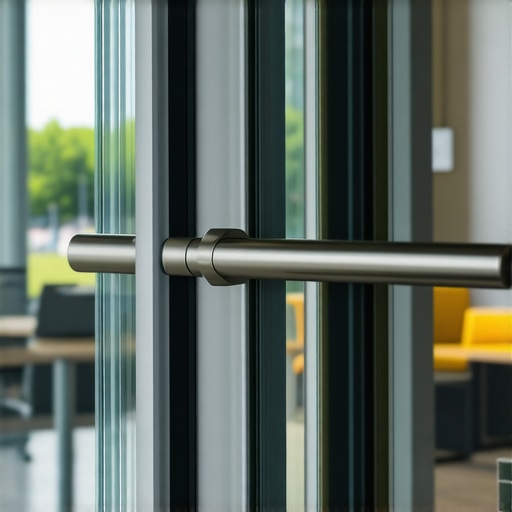
I teach my apprentices that if you have to force the key, you’ve already lost. This fundamental wisdom applies to every cylinder, every cam, and every latch that leaves my shop. When you’re dealing with commercial security, the stakes shift from simple property protection to the literal preservation of life. Panic hardware for office buildings 2026 standards are not just suggestions from a bureaucrat; they are the result of over a century of fire safety evolution. I have seen far too many ‘trunk slammers’ install residential grade deadbolts on emergency exits, not realizing they are creating a death trap. A real master locksmith understands that security is a physics problem, and in a high-occupancy office building, the physics of a crowd pushing against a door requires a specific mechanical response.
“The means of egress shall be continuously maintained free of all obstructions or impediments to full instant use in the case of fire or other emergency.” – NFPA 101 Life Safety Code
The Anatomy of an Exit Device: Mechanism Zooming
When we discuss panic bar installation and repair for commercial buildings, we have to look at the internal chassis. A Grade 1 rim exit device is a marvel of mechanical engineering. Inside the housing, you have a heavy-duty return spring that maintains tension on the latch bolt. When the push pad is depressed, it rotates a main cam which in turn pulls the retractor rod. This rod is often made of stainless steel or high-density brass to prevent the ‘bowing’ effect seen in cheap zinc alternatives. The latch bolt itself must have a ‘deadlatching’ feature. This is a secondary pin that, when depressed against the strike plate, prevents a thief from using a ‘loid’ or a shim to retract the main latch. If you hear a grinding noise when you push your office door, it usually means the timing of the cam is off, or the return spring has suffered from metal fatigue. This is a critical failure point that requires immediate professional attention.
Why Material Science Matters: Brass vs. Zinc
Most big-box hardware stores sell Grade 3 hardware that looks shiny but is structurally hollow. These ‘pot metal’ components are usually zinc alloys that can’t handle the 500,000 to 1,000,000 cycles required by ANSI Grade 1 standards. In a commercial setting, a door might be opened three hundred times a day. If you use cheap hardware, the internal pivot pins will wallow out the soft zinc housing within six months. This leads to the ‘sagging pad’ syndrome where the bar doesn’t fully retract the latch, causing the door to stick. My shop only stocks architectural-grade hardware because I refuse to be the guy you call when your exit door won’t open during a fire drill. We also focus on lock shield installation for doors to ensure that even the highest quality panic hardware is protected from external tampering or prying.
“A latch shall be so designed that it will remain in the engaged position until the cross bar or push pad is operated.” – ANSI/BHMA A156.3
The 2026 Tech Integration: Solar and Geofencing
Looking toward the future, solar-powered smart locks 2026 models are beginning to integrate with commercial exit devices. These units use a small photovoltaic strip on the exterior trim to maintain a charge on the internal capacitor, which powers the electric latch retraction (ELR). We are also seeing smart locks with geofencing features being used for back-of-house office access. This allows a manager’s phone to ‘signal’ the door to dog down (stay open) as they approach, then re-engage the latch as they move away. However, I always run fingerprint lock reliability tests before recommending these to my clients. Mechanical reliability is the baseline; electronic convenience is the luxury. If the biometric reader fails during a power surge, you need a mechanical override that is built into the core physics of the lock.
Specialized Mobile and Residential Services
While I spend my days auditing office buildings for code compliance, my shop also handles unique mobile locksmith for RVs and campers calls. These locks are notoriously flimsy, often using a ‘wafer’ system that can be picked by a novice with a paperclip. I recommend upgrading these to higher-security cylinders whenever possible. We also handle auto lockout situations for commercial fleets and offer multi-family building lock rekeying for property managers who need to ensure key control after a tenant turnover. For those who have lost access to their valuables, our home safe lockout recovery service uses non-destructive entry methods like scope-drilling or manipulation whenever the container’s integrity allows.
The Installation Process: Sensory Checks
A proper installation isn’t finished until I perform the ‘two-finger test.’ A Grade 1 panic bar should retract with minimal pressure. I check the flush fit of the strike plate against the frame. If the door has warped due to local humidity or building settling, I have to shim the strike or adjust the vertical rods. If it is a Surface Vertical Rod (SVR) system, the top and bottom latches must fire in perfect synchronization. If the bottom bolt drags on the floor, it puts lateral pressure on the top latch, which will eventually snap the actuator. I also ensure that the ‘dogging’ hex key turns smoothly; if there is resistance, the internal dogging cam is misaligned. Security involves trust in the metal and the person who shaped it to the door frame.