
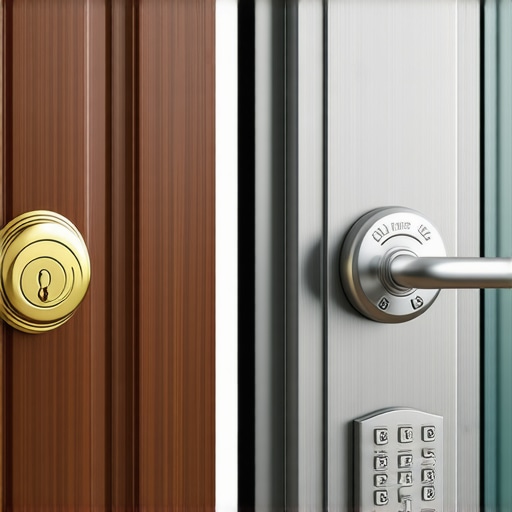
A burglar looks at your front door and sees a target, but I look at it and see a physics equation that is usually missing a few variables. Most homeowners believe their front door is a fortress because they bought a shiny deadbolt from a big-box retailer, but they are often mistaken. I have spent 25 years at the bench, filing down pins and tensioning cylinders, and the difference between what protects a home and what protects a skyscraper is a matter of metallurgical integrity and engineering precision. Before we analyze the internal mechanics of these systems, you need to understand the reality of the field. A lady came into my shop crying because a scammer drilled her lock and charged her $600 for a $20 pot-metal replacement. She was locked out, called a number from a sticker on a lamppost, and instead of picking the lock, this trunk-slammer took a drill bit to her cylinder and ruined the entire assembly. This is why understanding the hardware you own is the first step toward actual security.
“Security is always a trade-off between convenience and protection.” – Industry Axiom
The Psychology of the Entry Point and Hardware Grades
Burglars generally use two methods: the kick-in or the bypass. Residential hardware is frequently built to withstand the casual intruder but rarely the determined professional. This is where the American National Standards Institute (ANSI) and the Builders Hardware Manufacturers Association (BHMA) come in. They grade locks from 1 to 3. Grade 3 is your basic residential junk, often made of zinc or thin brass. Grade 2 is for higher-end residential or light commercial use. Grade 1 is the heavy-duty standard for hospitals, schools, and offices. When you are looking at locksmith costs in urban areas 2026, the price reflects the grade of hardware being serviced. High security locks vs standard locks comparison shows that a Grade 1 deadbolt can withstand ten times the force of a Grade 3. The residential lock usually has a strike plate held in by half-inch screws that barely touch the pine wood frame. A commercial setup uses a steel frame and a strike plate secured by three-inch screws that anchor directly into the wall stud. If your lock is flush fit and the strike plate is reinforced, you are already ahead of 90 percent of the population. Understanding how to prevent future house lockouts starts with choosing hardware that does not bind or seize due to thermal expansion in the wood doors of humid urban environments.
Mechanism Zooming: The Physics of the Cylinder
Let us look at the pin stack. Inside a standard residential cylinder, you have five or six chambers. Each chamber contains a spring, a driver pin, and a key pin. When the correct key is inserted, the pins align at the shear line, allowing the plug to rotate. In cheap residential locks, these pins are made of soft brass that wears down, leading to the crunching sound you hear before a total failure. High-security commercial systems use nickel silver keys and hardened steel pins. They also incorporate spool pins or mushroom pins. These are security pins designed to catch on the shear line when someone tries to pick the lock, creating a false set that fools the intruder into thinking they have succeeded. Commercial systems often utilize Interchangeable Cores (IC). An IC core allows a manager to pull the entire cylinder out with a control key and replace it in seconds. This is critical for multi-family building lock rekeying where tenant turnover is high. Instead of taking the whole lock off the door, you just swap the core. The internal physics of an IC core are complex because they have two shear lines: one for the operating key and one for the control key. This requires extremely tight tolerances, usually within .003 of an inch, to prevent the pins from jamming.
“The lock is only as strong as the door frame it is mounted in.” – Security Engineering Principle
Commercial Master Key System Advantages for Businesses
For a business, key control is everything. A commercial master key system advantages for businesses include the ability to have a single grand master key that opens every door, while sub-masters open specific departments, and individual keys only open one office. This is achieved by adding master wafers between the key pin and the driver pin. Each wafer creates an additional shear line. However, be warned: every time you add a master wafer, you create a potential security hole known as a ghost key. A professional locksmith must calculate the Maximum Adjacent Cut Specification (MACS) to ensure the key does not become so jagged that it snaps inside the cylinder. We also look at paracentric keyways, which are those twisty, complex shapes that prevent a straight pick from reaching the pins. In offices, we often install push-button locks for offices, specifically mechanical ones like the Simplex series. These use a chamber of gears and levers rather than pins, allowing for code-based entry without the vulnerability of a digital hacking surface.
Emergency Services and Specialized Technical Repair
When it comes to emergency safe cracking services, we move from pin-tumbler logic to wheel-pack logic. A mechanical safe dial operates on a series of wheels with notches called gates. To crack a safe without a drill, I use a technique called manipulation, where I feel the contact points on the drive cam to determine the position of the gates. It is a slow, methodical process that relies on the physics of friction. If you have a digital safe, we have to deal with solenoids and logic boards. Similarly, keyless ignition repair services for modern vehicles involve more than just metal. We have to interface with the Engine Control Unit (ECU) and sync the transponder frequency, usually 315MHz or 433MHz. If your car key stops working, it is often a rolling code failure where the car and the key are no longer in the same sequence. In the commercial sector, panic bar installation and repair for commercial buildings is a matter of life safety. These bars must comply with UL 305 standards, ensuring that even if a building is in a state of emergency, a single push on the bar will retract the latch and allow exit. The physics of a panic bar involves a long horizontal rod and a series of springs and dogging mechanisms that must stay perfectly aligned despite thousands of cycles of use.
Digital Security and Smart Lock Hacking Prevention Tips
Smart locks are becoming common, but many are just Grade 3 deadbolts with a cheap motor attached. Smart lock hacking prevention tips start with choosing a lock that uses 128-bit AES encryption and avoids the use of default manufacturer codes. Many cheap smart locks have a physical bypass that can be triggered by a strong magnet or a simple paperclip because the manufacturers forgot to shield the solenoid. As a master locksmith, I prefer a hybrid approach: a high-security mechanical cylinder for the physical barrier, with an electronic overlay for convenience. This ensures that even if the battery dies or the software is glitched, the physical integrity of the shear line remains intact. Regarding locksmith costs in urban areas 2026, expect to pay more for technicians who understand both the metallurgy of the lock and the data encryption of the software. It is no longer just about a file and a hammer; it is about diagnostic tablets and EEPROM programming.
The Verdict on Maintenance and Long-Term Security
I will leave you with a lesson on maintenance because most of the broken locks I see were killed by their owners. Never use WD-40 in a lock. It is a solvent, not a lubricant. It stays wet, attracts dust, and creates a thick sludge that jams the pins. Use a dry film lubricant like graphite or a specialized locksmith spray like Houdini. If the key feels tight, the door might be sagging. In urban environments, wood doors swell in the summer and shrink in the winter, causing the deadbolt to rub against the strike plate. This friction wears down the bolt and the internal linkage. A simple adjustment of the strike plate can save you hundreds in repair costs. Security is a continuous process of inspection and high-quality hardware selection. Stick to Grade 1 for anything you truly care about, avoid the $29 service call scams, and remember that metal and physics do not lie even when people do.”,”image”:{“imagePrompt”:”A macro, high-resolution, technical photograph of an exploded view of a commercial Grade 1 mortise lock next to a standard residential tubular deadbolt. The commercial lock should show complex internal brass gears, a heavy steel casing, and a master-keyed cylinder with multiple wafers. The background should be a locksmith’s wooden workbench with professional tools like a Lishi pick and a plug follower. Soft, cinematic workshop lighting to emphasize the metallic textures.”,”imageTitle”:”Commercial vs Residential Lock Internals”,”imageAlt”:”A detailed comparison showing the complex internal mechanisms of a commercial mortise lock versus a residential deadbolt.”},”categoryId”:1,”postTime”:””}