
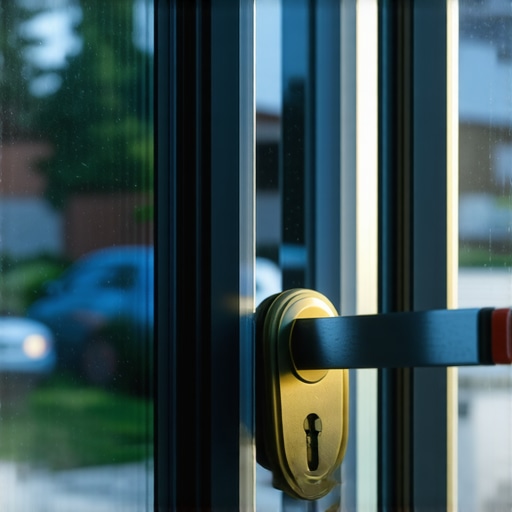
The Scam Artist and the Sliding Door Trap
A lady came into my shop crying because a scammer drilled her sliding door lock and charged her five hundred dollars for a fifteen dollar piece of junk. She lived in a neighborhood where property crime was ticking up, and she thought she was doing the right thing by calling an emergency service. The guy showed up in an unmarked car, took a cordless drill to her patio door handle, and told her the lock was a high-security model that was impossible to pick. That is the first lie they tell you. No standard sliding door latch is unpickable, and if a locksmith reaches for a drill before a Lishi pick or a bypass tool, you are being robbed twice. I spent thirty minutes cleaning up the metal shavings and explaining to her that her new lock was made of zinc alloy, basically pot metal that you can snap with a heavy screwdriver. This is the reality of the industry today, where trunk slammers take advantage of a crisis to install hardware that offers nothing but a false sense of security.
The Physics of Failure: Why Your Latch is a Joke
When you look at a sliding door, you see a massive slab of glass and a metal frame. You assume it is solid. As a locksmith with twenty-five years at the bench, I see a physics problem waiting to happen. Most sliding doors use a simple hook-and-peg mechanism. The hook is usually controlled by a thumb turn that moves a small actuator. Here is the problem: the tolerances in these locks are abysmal. We are talking about gaps of nearly an eighth of an inch. A burglar does not even need to touch the lock. They use a technique called the lift and tilt. By inserting a crowbar or even a heavy-duty flathead screwdriver into the bottom track, they can lift the entire door panel upward. Because the hook latch is only held in place by gravity and a shallow strike plate, the moment the door rises two inches, the lock clears the frame. The door slides open, and they are in your kitchen in less than ten seconds.
“The security of a door is only as strong as its weakest component, which is often the strike plate or the latch material.” – ANSI/BHMA A156.2 Security Standards
Material science is another area where big box hardware fails you. High-security locks for rental properties and homes should be made of forged brass or hardened steel. Instead, most residential sliders use die-cast zinc. Zinc is brittle. If I hit it with a hammer, it shatters. If a burglar applies lateral pressure with a pry bar, the hook snaps off at the pivot point. This is why we are seeing a shift toward integrated home security lock bundles that include secondary locking points. If you are relying on that single latch in the middle of the door, you are basically leaving the door unlocked. [IMAGE_PLACEHOLDER]
2026 Trends and the Future of Physical Security
As we move into 2026, the gap between automotive security and residential security is widening. When we talk about 2026 trends in automotive security, we are seeing Ultra-Wideband (UWB) chips and biometric keyless entry for cars that make relay attacks almost impossible. Automotive transponder keys 2026 updates are focusing on rolling codes that change every millisecond. Meanwhile, your back door is still using technology from 1974. Why the discrepancy? Cost. People will spend eighty thousand dollars on a truck with biometric sensors but won’t spend two hundred dollars on a high-security cylinder for their home. However, the market is shifting. We are seeing more demand for budget home security upgrades 2026 that bring some of that tech home. This includes smart locks with reinforced deadbolts that can be integrated into your existing sliding door track, providing an electronic alert if the door is lifted even a fraction of an inch.
How to Fix a Sticking Door Lock Mechanism Properly
I get calls every day from people asking how to fix a sticking door lock mechanism. Their first instinct is to grab a can of WD-40. If I see you spraying that oily mess into a lock cylinder, I am going to have a talk with you. WD-40 is a solvent, not a long-term lubricant. It attracts dust and pet hair, turning the internal pins and springs into a sticky sludge. For sliding doors, the sticking is usually not the lock itself but the rollers or the track alignment. If the door is not level, the latch will not sit correctly in the strike plate, causing it to bind. Use a dry PTFE spray or graphite on the lock cylinder, and clean the tracks with a stiff brush. If you have to force the key or the thumb turn, stop. You are likely bending the actuator, and once that pot metal snaps, you are looking at a much more expensive repair than a simple cleaning.
“Most residential locksets fail not because of pick resistance, but because of physical force applied to the structural weaknesses of the door frame.” – Physical Security Manual 2024
The Fortress Upgrade: Securing the Sliding Door
If you want real security, you need to think like a commercial installer. When I do a panic bar installation and repair for commercial buildings, we do not just screw things into the surface. We through-bolt them. For your home, you can achieve a similar level of protection with a few specific upgrades. First, replace the factory strike plate screws. Most manufacturers give you half-inch screws that only grab the thin aluminum of the door frame. Swap those for three-inch hardened steel screws that bite into the structural wooden stud of the house. Second, install a secondary pin lock. These are simple devices that bolt to the top of the door and slide a steel pin into the frame. This prevents the door from being lifted off the track. Third, consider garage door lock upgrades 2026. Many people forget that the door from the garage to the house is often the weakest link. A high-security deadbolt here is non-negotiable. Finally, for those who have lost their way, remember that mobile locksmith services for lost car keys can often help with residential lockouts too, but always verify their credentials before they touch your hardware.
The 2026 Security Checklist
- Check for zinc alloy components and replace with hardened steel where possible.
- Install anti-lift blocks in the upper track of sliding doors.
- Upgrade to 3-inch screws on all strike plates.
- Integrated home security lock bundles should include glass break sensors for patio doors.
- Use dry lubricants only to maintain internal pin movement.
Security is not about making your home a bunker that no one can ever enter. It is about making your home the most difficult target on the block. A burglar is looking for the path of least resistance. If they see a sliding door with a secondary pin lock and a reinforced frame, they are moving on to the neighbor who still has the factory latch. Do not wait until you are the one calling me at 3 AM because a scammer drilled your locks. Take the time to understand the physics of your hardware now, and invest in metal that actually fights back.