
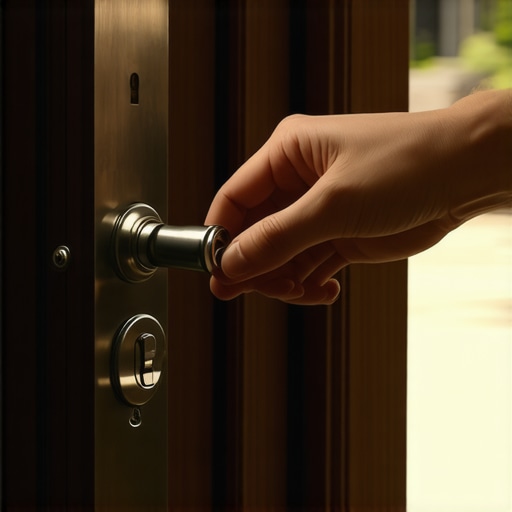
You hear that gritty, metallic crunch when you turn the key? That is not just age; that is the sound of pins hanging up on a burr in the cylinder or a spring that has lost its tension. Most homeowners panic and assume they need a whole new three hundred dollar handleset from the local big box store. That is a massive mistake that plays right into the hands of manufacturers who want you to throw away perfectly good brass. I see it every week in my shop. A lady came into my shop crying because a scammer drilled her lock and charged her five hundred bucks for a twenty dollar piece of zinc hardware. He told her the whole unit was fried. It was a lie. If the chassis is solid, you only need to look at the core. When we talk about residential lock cylinder replacement, we are talking about the heart of the mechanism, not the decorative trim on the outside. Understanding the physics of the shear line is the difference between being a secure homeowner and a victim of a trunk slammer with a drill bit and a predatory invoice.
“Security is always a trade-off between convenience and protection.” – Industry Axiom
A lock is a simple machine governed by the laws of physics and material science. Inside a standard pin-tumbler lock, you have the plug, the shell, and the bible. Within the bible, you have chambers holding springs, driver pins, and key pins. When you insert the correct key, the bitting lifts the pins to the exact height where the gap between the top and bottom pins aligns with the edge of the plug. This is the shear line. If even one pin is off by three thousandths of an inch, the plug will not rotate. Over time, the constant friction of the key sliding across the brass pins creates wear. This wear changes the height of the pins, leading to that sticky feeling. Many people think they need to replace the entire assembly, but a professional locksmith knows that swapping the cylinder or even just rekeying the existing one is the more surgical and cost-effective path. This is especially true for those rekeying smart locks after moving in. You do not need to replace the electronic motherboard; you just need to reset the mechanical override or the digital credentials.
The Anatomy of a Residential Lock Cylinder Replacement
When I perform a residential lock cylinder replacement, I am looking at the tolerances. Most cheap hardware found in retail stores uses zinc or pot metal for the internal components. These materials have a high rate of thermal expansion and contraction, which leads to premature failure. In my shop, I refuse to install that garbage. I stick to solid brass. Brass is self-lubricating to a degree and holds up against the elements much better. If your door handle still looks good and the latch moves freely, why spend money on a new handle? Swapping the cylinder allows you to keep your high-quality hardware while ensuring the locking mechanism is brand new and keyed to your specific security needs. This approach is vital for door reinforcement for security purposes. A strong lock is useless if the cylinder can be pulled or bypassed because it was installed in a flimsy, cheap housing. By keeping your heavy-duty chassis and just upgrading the cylinder to something with spool pins or serrated pins, you are actually increasing your security while spending less money.
I teach my apprentices that if you have to force the key, you have already lost. The moment you apply excessive torque to a stuck cylinder, you risk snapping the key or rounding off the pin peaks. This is a common issue with home safe lockout recovery as well. People try to muscle their way into a safe when the dial or the electronic lock is resisting. The internal boltwork of a safe or a high-end door lock is a precision instrument. For commercial clients, the stakes are even higher. We often discuss commercial keyless entry benefits because they allow for auditing and instant access revocation without the cost of physical brass changes. However, even these systems usually have a mechanical cylinder as a fail-secure backup. If that backup cylinder is neglected, the whole system is vulnerable.
Understanding ANSI Grades and Hardware Durability
Not all cylinders are created equal. The Builders Hardware Manufacturers Association (BHMA) uses ANSI grades to rank hardware. Grade 1 is the gold standard, often required for fire-rated panic hardware options in commercial buildings. Grade 3 is what you find in the discount bin at a hardware store. When you perform a cylinder swap, you have the opportunity to move from a standard pin configuration to something more robust. I often recommend adding security pins like mushrooms or spools. These pins are designed to catch on the shear line if someone tries to pick or bump the lock. It is a simple upgrade that costs pennies in parts but adds a significant layer of defense. This is the same logic we use for electronic locks for Airbnb properties. You want the convenience of a code for the guest, but you want the mechanical cylinder to be pick-resistant for your own peace of mind.
“The purpose of a lock is not to keep out the professional, but to keep the honest man honest and delay the criminal long enough to make them seek an easier target.” – Security Manual 101
For those managing modern homes, a locksmith for smart home ecosystems can help integrate your mechanical security with your digital alerts. But remember, the digital side is only as good as the physical barrier. If your electronic gate lock systems are using a basic, low-security cylinder, a thief does not need to hack your Wi-Fi; they just need a basic tension wrench and a rake. This is why I advocate for cylinder replacement over full replacement. You can invest the saved money into a higher-quality cylinder like a Medeco or a Mul-T-Lock that offers key control, meaning nobody can copy your key at a kiosk without your authorization.
Maintenance and the Myth of Graphite
Once you have swapped your cylinder, you need to maintain it. Stop using WD-40. It is a solvent, not a long-term lubricant. It attracts dust and eventually turns into a sticky goo that jams the springs. I also have a bone to pick with graphite. While it is a dry lube, if you over-apply it, it clumps up and causes the pins to seize in the bible. Use a dedicated PTFE or silicone-based dry lubricant. This keeps the pins dancing freely in their chambers. This same level of care should be applied to your vehicle’s security. If you are struggling with a key fob, consult a key fob battery replacement guide before assuming the transponder is dead. Often, the simplest fix is the correct one. Whether it is a residential door or a commercial fire exit, the goal is smooth operation without friction. Security is a physics problem, and by focusing on the cylinder, you are solving the most critical part of that problem without wasting money on the decorative fluff. Keep your brass, replace your guts, and stay secure.