The Lesson Every Apprentice Learns Late
I teach my apprentices that if you have to force the key, you’ve already lost. My shop floor is littered with the results of people trying to force physics to go their way when the lock was telling them something was wrong. Last Tuesday, I had a kid trying to jam a tension wrench into a high-security cylinder with enough pressure to bend the brass. I stopped him and pointed at the shear line. A lock is not just a piece of metal; it is a series of tolerances that must align perfectly or fail completely. In the world of business key management software, the logic is the same. If your security relies on a physical key that can be duplicated at a kiosk in a grocery store, you don’t have security: you have a suggestion. By 2026, the technology has shifted from mere metal to intelligent ecosystems that understand who is turning the plug and why.
“Security is always a trade-off between convenience and protection.” – Industry Axiom
1. The Elimination of the Master Wafer Vulnerability
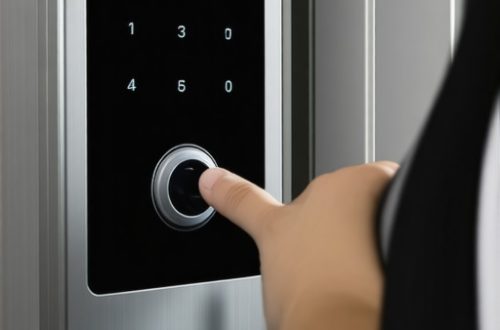
When we look at multi-family building lock rekeying or commercial master key systems, we often deal with ‘master wafers.’ These are small brass discs placed between the driver pin and the key pin to allow two different keys to open the same door. The problem is simple physics: every wafer you add doubles the number of shear line possibilities, making the lock exponentially easier to pick. 2026 business key management software removes this physical vulnerability by moving the ‘master’ logic to the cloud. Instead of stacking brass inside the cylinder, the software uses commercial keyless entry benefits to verify credentials against an encrypted database. When a user presents a credential, the software triggers a solenoid that pulls a physical blocking bar. There are no extra shear lines for a thief to exploit. We are seeing a massive shift toward anti-pick locks for front doors 2026 that rely on sidebars and rotating discs rather than traditional pin-tumbler stacks. This tech ensures that the internal mechanics remain robust while the software handles the complex hierarchy of access.
2. Real-Time Audit Trails and the End of ‘Ghost Keys’
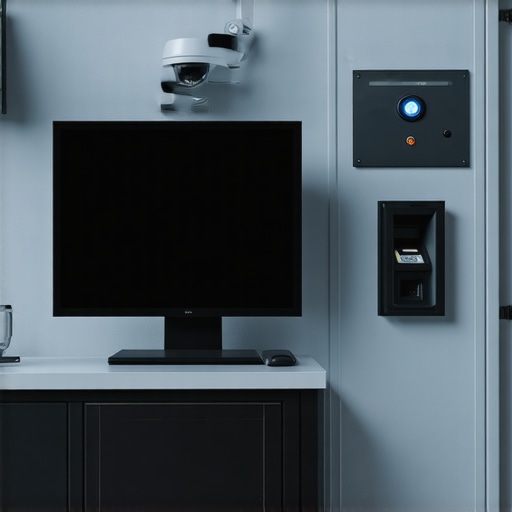
In my 25 years at the bench, the biggest cause of office theft isn’t a burglar with a crowbar; it is an employee with a key they shouldn’t have. Traditional keys are ‘silent.’ They do not tell you who opened the door at 11 PM on a Sunday. Business key management software changes the game by creating a forensic digital footprint for every event. Every time a latch retracts, a log is generated. This is vital for mobile locksmith services for lost car keys and office lockouts because we can see exactly when a key was last active. If an employee tries to use a key after their shift, the system denies the handshake. We are looking at the internal physics of the reader: the reader sends a challenge packet to the key’s microchip, the chip solves the cryptographic puzzle and sends back a response. If that response doesn’t happen within the micro-second window defined by the 2026 software, the actuator stays dead. This level of precision makes internal theft nearly impossible to hide. [IMAGE_PLACEHOLDER]
3. Restricted Keyways and the ‘No-Copy’ Physics
Most ‘Big Box’ locks use open keyways like the SC1 or KW1. Any kid with a file can make a copy. Professional locksmiths for smart home ecosystems and commercial buildings use restricted keyways where the blanks are not available to the public. However, 2026 software takes this further. Each key contains a unique UID (Unique Identifier) embedded in a hardened transponder. Even if a thief could replicate the physical bitting of the key using automotive laser-cut keys costs technology, they cannot replicate the digital signature. I often see business owners complaining about ‘pot metal’ hardware that breaks after a month. I steer them toward sustainable eco-friendly locks for homes and businesses that use high-grade naval brass and stainless steel. When these materials are paired with software-managed keys, the mechanical strength of the lock is finally matched by the digital strength of the credential. You cannot ‘bump’ a lock that requires a digital handshake before the cylinder is even allowed to rotate.
“A lock is only as good as the key control protocol governing its access.” – Security Manual 101
4. Instant Revocation and the Multi-Family Context
Imagine a tenant leaves a building and ‘loses’ their key. In the old days, multi-family building lock rekeying meant a locksmith had to physically visit the site, gut the cylinder, and change the pin stacks. It was expensive and slow. With 2026 management software, revoking access is a matter of clicking a button in a browser. The software sends a command to the mesh network of locks, and that specific UID is now a ‘dead’ piece of metal. This is the ultimate theft deterrent. When criminals know that a stolen key can be deactivated in seconds, the value of that key on the street drops to zero. We also apply this to automotive sectors; car remote programming tutorials often skip the part where the ECU must be cleared of old tokens to prevent theft. The same logic applies to your office. If the software can’t see the key in the authorized list, the pins don’t move. No amount of drilling or key extraction for deadbolts will help a thief if the internal solenoid is locked in a hardened steel housing. This is why a professional install is critical: a flush fit ensures the strike plate is the strongest part of the door, not the weakest. I always check the gap between the door and the frame with a feeler gauge; if it’s more than an eighth of an inch, your security is a joke regardless of the software. We build fortresses, not just doors.