The Anatomy of Access: Why Your Commercial Security is Probably Failing
Walk into any big-box hardware store and you will see rows of shiny, blister-packed locks made of pot metal and zinc. To a burglar, these are not obstacles; they are invitations. As a master locksmith with over 25 years at the bench, I look at security as a physics problem. Most business owners think a lock is just a lock, but they ignore the reality of internal tolerances and key control. If your employees are carrying around a ring of twenty keys like a medieval jailer, you have a security hole the size of a freight train. In 2026, the landscape of physical security is shifting toward smarter, tighter mechanical systems that work in tandem with electronic overrides.
I teach my apprentices that if you have to force the key, you have already lost. Technical wisdom dictates that a lock is a precision instrument. I have seen countless ‘trunk slammers’ ruin expensive storefront doors because they did not understand the relationship between the tailpiece and the cylinder timing. When we talk about a master key system, we are talking about the manipulation of the shear line through the use of master wafers. These tiny brass discs sit between the bottom pin and the top driver pin, creating multiple points where the plug can rotate. If those wafers are off by even .003 of an inch, the lock will eventually bind, leaving you with a costly repair bill and a massive headache.
“Security is always a trade-off between convenience and protection.” – Industry Axiom
1. Hierarchical Access Control and the Physics of the Shear Line
The first advantage of a professional master key system for 2026 is the ability to dictate exactly who goes where without the chaos of individual keys. In a standard pin-tumbler lock, there is one shear line. When the correct key is inserted, the break point between the pins aligns perfectly with the edge of the plug. In a master key system, we introduce a third element: the master wafer. This creates a secondary shear line. This allows a ‘Master’ key to open every door in the facility while ‘Change’ keys only work on specific offices.
This is not just about convenience; it is about risk mitigation. If a janitor loses a key, you only need to rekey the doors that key accessed, not the entire building. For businesses looking at 2026 locksmith insurance claims guide requirements, having a documented master key chart is often a prerequisite for coverage. We use nickel-silver keys rather than cheap brass because they resist the ‘key ramp’ wear that causes pins to hang up over time. When you use high-quality hardware, you are investing in the metallurgical integrity of the system.
2. Rapid Response via Interchangeable Cores (IC)
If you are still using standard fixed-core cylinders, you are living in the 1990s. For a modern office, I always recommend Small Format Interchangeable Cores (SFIC). These are the ‘figure-8’ shaped cylinders you see in hospitals and universities. The advantage here is speed. With a special ‘Control Key,’ I can pull the entire locking mechanism out of the lever handle in two seconds and slap in a new one. This is vital for rekeying after burglary best practices. You do not want to wait for a technician to spend four hours on-site gutting every door when you can swap the cores yourself in minutes.
Compare this to the automotive world where automotive transponder keys 2026 updates have made things incredibly complex. While we deal with transponder chip key cloning 2026 for your company fleet, your physical building security should remain mechanical and modular. SFIC systems allow for immediate lockdown without needing to call me for an emergency 3 AM service visit. It puts the power back in the hands of the facility manager.
3. Elimination of Key Duplication Chaos
The biggest threat to your business is the local hardware store’s automated key machine. If your keys are on an ‘open’ keyway, any employee can go get a copy made for five bucks. That is a total failure of key control. A professional 2026 master key system utilizes restricted keyways. These are patented profiles where the blanks are not available to anyone but the locksmith who designed the system. You cannot get them at a big-box store. This renders car key duplication costs 2026 irrelevant because the physical security of your building relies on the fact that the key cannot be copied without authorization.
“Effective key control is the foundation of any physical security program.” – ANSI/BHMA A156.28 Standard
4. Integration with Push-Button Locks for Offices
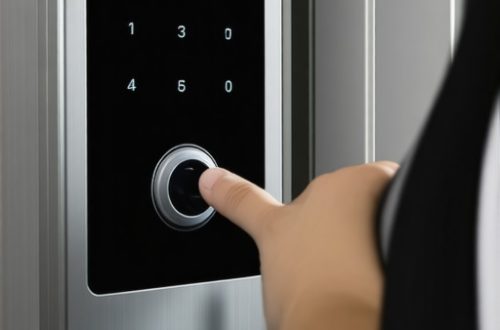
In 2026, we are seeing a heavy lean toward hybrid systems. You use a master key for the exterior perimeter and push-button locks for offices and high-traffic internal doors. This reduces the mechanical wear on the master system. When I install these, I look for signs of tampered locks detection features. Cheap electronic locks are easily bypassed with a strong magnet or a simple drill point. A professional-grade push-button lock should have a hard-plate anti-drill zone and a clutch mechanism that prevents the handle from being forced. This is where we weigh the keyless entry systems pros and cons. Keyless is great for high-turnover staff, but you must have a mechanical master key override in case the batteries leak or the solenoid fails.
5. Future-Proofing and Smart Home Security Integration 2026
Many businesses are now asking for smart home security integration 2026 tech to be applied to their commercial spaces. This means your master key system needs to be compatible with smart cylinders that can be tracked via an audit trail. We can now pin a cylinder so that it accepts a standard mechanical key but also contains an electronic chip that records every time the plug rotates. This is the ultimate ‘Fortress Upgrade.’ If a laptop goes missing from Room 302, we pull the data from the lock and see exactly whose key was in that cylinder at 10 PM on a Tuesday. This level of forensic detail is what separates a real security plan from a basic deterrent.
The Fortress Installation: Ensuring a Flush Fit
When I install a commercial system, the psychology of the burglar is always front of mind. They look for gaps. They look for strike plates that are only held in by half-inch screws. I use three-inch hardened steel screws that bite into the structural framing of the building. I ensure the latch is deadlocking properly. If you can slide a credit card between the door and the frame and push the latch back, your lock is useless. I check the door closer tension to ensure the door latches every single time without slamming. A door that stays a quarter-inch open is not a door; it is an entrance. We also provide auto lockout services for company vehicles, but your primary concern should always be the physical envelope of your workspace. Stop using graphite to lubricate your locks; it gums up with the humidity and turns into a paste. Use a high-quality synthetic lubricant that won’t attract dirt.