
The Hard Lesson of the Shear Line
I teach my apprentices that if you have to force the key, you’ve already lost. That resistance is not a suggestion; it is a mechanical warning from the pins themselves. After twenty-five years at the bench, I have seen every manner of foreign object jammed into a keyway, from broken toothpicks to intentional sabotage with superglue. When a customer calls because their deadbolt feels ‘crunchy’ or won’t accept the key, they are usually one frustrated twist away from snapping the bow off and making my job three times harder. Understanding the professional toolset for removing debris from a lock cylinder requires a deep dive into the physics of the pin tumbler system and a refusal to accept the ‘just drill it’ mentality of modern trunk slammers.
“Security is always a trade-off between convenience and protection.” – Industry Axiom
Forensic Diagnosis: The Anatomy of a Jammed Cylinder
Before reaching for a tool, you must diagnose the material science at play. Most residential hardware from big box stores is made of cheap zinc die-cast or pot metal. These materials are soft and prone to galling. When grit or a broken key fragment enters the plug, it does not just sit there; it interacts with the 0.115-inch diameter pin chambers. If you are dealing with a deadbolt, you are fighting against the spring tension of five or six stacks of brass pins. A single grain of sand can prevent a driver pin from clearing the shear line, the microscopic gap between the plug and the housing. Signs of tampered locks detection often start here: if you see fresh scratches around the face of the plug or a distorted keyway warding, someone has been fishing. In my shop, we look for ‘witness marks’ on the pins themselves. If a burglar used a rake or a pick, they often leave distinct horizontal gouges on the pin sides that differ from the vertical wear of a standard key.
The 2026 Extraction Arsenal
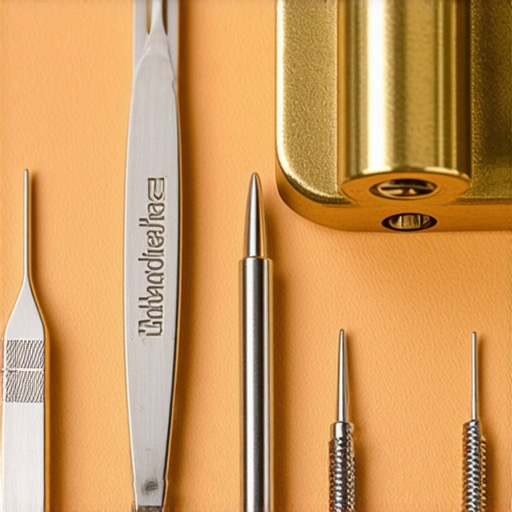
When it comes to broken key extraction tools 2026 reviews, the industry has shifted toward high-tensile stainless steel with thicknesses as low as 0.012 inches. You cannot use a generic pliers set for this. You need a specialized kit containing sawtooth extractors, spiral extractors, and hooked wires. The sawtooth extractor is my go-to for key extraction for deadbolts. It features tiny, rear-facing barbs designed to bite into the soft brass or nickel-silver of a broken key blade. You slide the tool along the side of the debris, past the warding, and then rotate slightly to engage the teeth into the metal before pulling straight back. For non-metallic debris like paper or gum, the spiral extractor works better, acting like a miniature drill bit that grips the material. This is a game of millimeters and tactile feedback. You have to feel the spring of the tool against the binding pressure of the pins. If you push too hard, you risk bypass-driving the debris deeper into the back of the cylinder, potentially damaging the cam or the tailpiece timing.
“The strength of a lock is only as great as the door and frame it is attached to.” – ANSI/BHMA Security Manual
The Forensic Repair Process: Rekeying and Restoration
Once the debris is cleared, the job is not over. You have to evaluate the internal health of the mechanism. If the lock was compromised during an attempted entry, rekeying after burglary best practices dictate a full teardown. I never just pull the fragment and leave. I strip the cylinder to the bare plug. I check the springs for fatigue; a crushed spring will lead to ‘lazy’ pins that fail to reset, causing future house lockouts. This is also the time for garage door lock upgrades 2026, especially as more homeowners move toward locksmith for smart home ecosystems. If the lock was a cheap Grade 3 unit, I usually recommend replacing the entire housing with a Grade 1 solid brass deadbolt that can withstand physical attacks better than the original. For my commercial clients, we look at commercial keyless entry benefits to eliminate the physical keyway entirely, moving the vulnerability from a mechanical shear line to a digital credential. This shift is a massive part of commercial smart access control 2026 trends, where audit trails matter more than a physical piece of metal.
Preventing Future Mechanical Failure
To prevent future house lockouts, maintenance is the only path. Most people think WD-40 is a locksmith’s best friend; in reality, it is a nightmare. It is a solvent, not a long-term lubricant, and it eventually turns into a sticky lacquer that attracts dust and causes pins to hang. I use a dry PTFE or a high-grade graphite, but only after a thorough cleaning with an electronics-grade degreaser. If you are wondering how to choose a reliable locksmith near me, ask them what they use to lubricate a lock. If they pull out a blue and yellow can of multi-purpose spray, send them packing. A real professional understands that the tight tolerances of a high-security cylinder, like a Medeco or a Mul-T-Lock, require specific synthetic lubricants that do not gum up the sidebars or telescopic pins. In our region, where the winter salt air can corrode brass in a single season, this maintenance is the difference between a lock that lasts thirty years and one that fails in three. Security is not a product you buy once; it is a state of mechanical readiness that requires the right tools and a deep respect for the physics of the cylinder. If you suspect your locks have been tampered with or if that key is starting to stick, do not wait for the 3 AM lockout. Get a technician who knows the difference between a drill and a surgical extraction tool.